News & Events

white plant

NEWS

InnovPlantProtect (InPP) recently received approval for an application submitted to COMPETE2030-2024-6 - Collective Actions - Transfer of scientific and technological knowledge - BioLivingLABS - Bioeconomy at the service of the sustainability of inland territories, led by MORE CoLAB - Laboratório Colaborativo Montanhas de Investigação, Associação, in partnership with the Polytechnic Institute of Bragança (IPB), the Polytechnic Institute of Castelo Branco (IPCB) and AQUAVALOR.

BioLivingLABS aims to promote the economic valorization of research and development (R&D) results obtained by various institutions in the North, Center and Alentejo. To this end, it will create an experimental demonstration network, the so-called Living Labs, The project will be held in the innovation hubs of Mirandela, Douro, Covilhã and Elvas. In addition, demonstration actions, workshops, an inland innovation catalog and training on intellectual property protection will be developed with the aim of encouraging the incorporation of innovative solutions in the business sectors of these regions.

Scheduled to begin in October and lasting 24 months, the project has a total eligible investment of over 740,000 euros, financed by COMPETE2030 - Thematic Program for Innovation and Digital Transition. For InPP, this project is a strategic opportunity to strengthen its mission as a center for technology development and transfer, boosting the practical application of scientific knowledge to promote sustainable development.

This initiative confirms InPP's commitment to open and sustainable innovation, integrating science, technology and regional development to respond to the challenges and potential of the interior of the country.

On September 18, the executive director of InnovPlantProtect (InPP), António Saraiva, the director of the New Biopesticides Department, Cristina Azevedo, and researcher Luís Grilo attended the Open Day “The Cereals of Baixo Mondego”, promoted by the Centro Regional Coordination and Development Commission (CCDR Centro), at the Bico da Barca Experimental Unit in Montemor-o-Velho.

The event highlighted the latest innovations from the Coimbra Innovation Hub, from new technologies applied to maize and rice, to fertilization strategies, protection and the use of biostimulants on these key crops in the Baixo Mondego region.

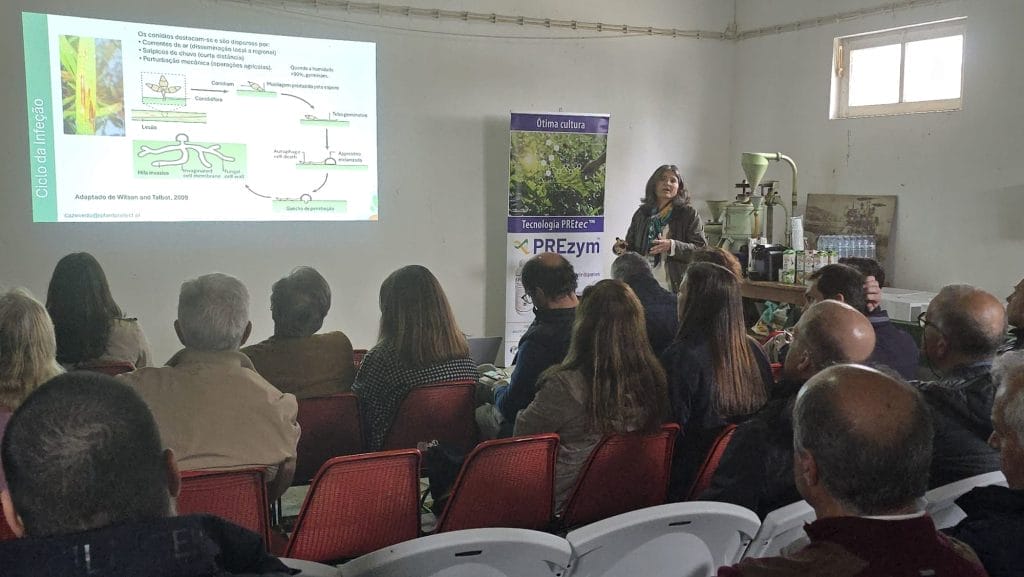
Our team also monitored trials with biofungicides, including the product I21, developed with our collaborative laboratory to combat pyriculariosis in two rice varieties, which is being patented.

In an interview with Voice of the Countryside, Cristina Azevedo shared the work we have been doing in the area of biosolutions.

(Re)watch the interview here.

Image credits: InnovPlantProtect and Voz do Campo magazine

Maize continues to be the Portugal's most important arable crop, The sector has a significant impact on food safety and the national agri-food industry. Involving thousands of producers and generating tens of millions of euros a year, the sector is currently facing increasingly complex phytosanitary challenges.

Among already known pests and emerging diseases, there are risks ranging from cartridge caterpillar until Maize Rugose Dwarfism Virus (MRDV), The presence of this virus is increasing in Portugal. This virus, transmitted by the corn leafhopper, can seriously compromise production and is found in the climate change increasingly favorable conditions for its spread.

However, it's not just MRDV that's worrying. There are new threats that require vigilance, such as the coleopter Diabrotica virgifera or the MDMV virus (Maize Dwarf Mosaic Virus), already detected in neighboring countries, and also toxic weeds, such as the winter fig (Datura stramonium), which in addition to impacting productivity pose public health risks.

Faced with this reality, the answer is integrated and sustainable strategies, matching:

  • crop rotation and good agricultural practices;
  • careful use of insecticides to avoid resistance and environmental impacts;
  • resistant or tolerant varieties, where available;
  • research and technological innovation, including new digital tools for early detection.

As the InnovPlantProtect researcher points out, Nuno Faria, in the article entitled “The main emerging pests and diseases of the maize crop in Portugal”, available in the August edition of Voz do Campo magazine: “The phytosanitary panorama of maize in Portugal requires continuous vigilance, investment in research and the application of integrated and sustainable strategies capable of responding to an increasingly dynamic and unpredictable reality.”

To find out more about the main current risks and mitigation measures, read the full article published in the August issue of Voz do Campo magazine (pages 88-89), available on newsstands and online.

EVENTS

A diretora de departamento Sandra Correia, em entrevista para a newsletter do Núcleo de Engenharia Biológica do Instituto Superior Técnico (NEBIST), lançada no mês de abril, fala sobre a sua carreira, sobre a sua experiência como professora, sobre o seu percurso académico e científico por várias universidades nacionais e estrangeiras, bem como sobre a investigação que tem sido desenvolvida pelo departamento de Proteção de Culturas Específicas do InnovPlantProtect (InPP).

Nesta entrevista, Sandra deixa também umas palavras de inspiração para as futuras gerações de investigadores, que pensam partir à descoberta do fascinante mundo da biotecnologia e das plantas e, que contribuirão para a construção do futuro!

“Se o vosso desejo é trabalhar na área da biotecnologia, tentem integrar-se na malha de intervenientes na cadeia agrícola, desde a produção, até à procura de soluções em si. São precisas pessoas, são precisas soluções e são precisas ideias, para que seja possível atingir as metas de sustentabilidade e produção que nos são exigidas”, sublinha a diretora de departamento ao NEBIST.

“Portanto, se tiverem um verdadeiro desejo e gosto por desenvolver soluções para proteção de plantas, para alcançar um mundo onde consigamos obter mais alimentos de forma sustentável, prossigam esse sonho mesmo que não seja o caminho mais rentável, pois alguém tem de prosseguir nesse caminho”, acrescenta.

Leia a entrevista na íntegra here. A entrevista encontra-se nas páginas 1 a 4.

Créditos de imagem: © Sandra Correia e Inês Ferreira

Nos dias 17 e 18 de abril de 2023 teve lugar a primeira conferência da ação COST “European Network for Innovative Woody Plant Cloning” (CopyTree) na Universidade de Santiago de Compostela, em Espanha.

A conferência teve como público-alvo a comunidade científica, decisores políticos, stakeholders e tecido empresarial e pretendeu abordar os principais desafios da investigação da cultura in vitro de plantas lenhosas, uma técnica que permite multiplicar plantas em laboratório. Durante estes dois dias esteve ainda em debate como se pode melhorar a compreensão de todos os aspetos desta tecnologia, desenvolver novas estratégias de investigação, avaliar o risco da sua utilização e promover a aceitação por parte da sociedade.

A Sandra Correia, diretora de departamento do InnovPlantProtect, foi moderadora do grupo de trabalho 1 que abordou o tema da recalcitrância, isto é, a dificuldade das plantas responderem à cultura in vitro. A recalcitrância é um fator limitante importante para a exploração biotecnológica de espécies de plantas lenhosas relevantes economicamente, e pode também prejudicar a aplicação de outras técnicas de conservação in vitro.

A ação COST (sigla em inglês de European Cooperation in Science and Technology) é uma entidade financiadora para redes de investigação e inovação. Estas ações ajudam a conectar iniciativas de investigação ao redor da Europa que, através da partilha entre a comunidade científica, permitem desenvolver as ideias dos cientistas. Estas ações pretendem assim alavancar a investigação, carreira e inovação da comunidade científica.

Um agradecimento especial a toda a equipa envolvida na organização desta iniciativa.

Os trabalhos desta ação continuarão a todo o gás! Esperamos ter mais novidades em breve!

Créditos de imagem: Ação COST CopyTree

O diretor executivo do InnovPlantProtect (InPP), Pedro Fevereiro participou na 6ª Edição das Jornadas de Homologação de Produtos Fitofarmacêuticos, organizada pela Associação Nacional da Indústria para a Proteção das Plantas (Anipla), e que teve lugar no dia 17 de abril, em formato presencial, no auditório da Direção-Geral de Alimentação e Veterinária (DGAV), em Oeiras.

As Jornadas juntaram indústria, agricultores e entidades do setor agrícola nacional para debater acerca das políticas europeias e de como estas influenciam a disponibilidade de soluções fitofarmacêuticas, bem como acerca do papel fundamental da tecnologia na produção de alimentos, na proteção contra pragas e doenças das plantas e na adaptação às alterações climáticas.

A iniciativa contou ainda com uma mesa redonda dedicada ao tema “A tecnologia na produção de alimentos, na proteção fitossanitária e na adaptação às alterações climáticas” e com a participação da CropLife Europe para falar sobre diplomas europeus e o impacto destes na Indústria e Agricultura.

Em 2024 estará de volta mais uma edição das Jornadas da Anipla.

Mais informações sobre as Jornadas here.

Créditos de imagem: ©️ANIPLA