News & Events

white plant

NEWS

InnovPlantProtect (InPP) recently received approval for an application submitted to COMPETE2030-2024-6 - Collective Actions - Transfer of scientific and technological knowledge - BioLivingLABS - Bioeconomy at the service of the sustainability of inland territories, led by MORE CoLAB - Laboratório Colaborativo Montanhas de Investigação, Associação, in partnership with the Polytechnic Institute of Bragança (IPB), the Polytechnic Institute of Castelo Branco (IPCB) and AQUAVALOR.

BioLivingLABS aims to promote the economic valorization of research and development (R&D) results obtained by various institutions in the North, Center and Alentejo. To this end, it will create an experimental demonstration network, the so-called Living Labs, The project will be held in the innovation hubs of Mirandela, Douro, Covilhã and Elvas. In addition, demonstration actions, workshops, an inland innovation catalog and training on intellectual property protection will be developed with the aim of encouraging the incorporation of innovative solutions in the business sectors of these regions.

Scheduled to begin in October and lasting 24 months, the project has a total eligible investment of over 740,000 euros, financed by COMPETE2030 - Thematic Program for Innovation and Digital Transition. For InPP, this project is a strategic opportunity to strengthen its mission as a center for technology development and transfer, boosting the practical application of scientific knowledge to promote sustainable development.

This initiative confirms InPP's commitment to open and sustainable innovation, integrating science, technology and regional development to respond to the challenges and potential of the interior of the country.

On September 18, the executive director of InnovPlantProtect (InPP), António Saraiva, the director of the New Biopesticides Department, Cristina Azevedo, and researcher Luís Grilo attended the Open Day “The Cereals of Baixo Mondego”, promoted by the Centro Regional Coordination and Development Commission (CCDR Centro), at the Bico da Barca Experimental Unit in Montemor-o-Velho.

The event highlighted the latest innovations from the Coimbra Innovation Hub, from new technologies applied to maize and rice, to fertilization strategies, protection and the use of biostimulants on these key crops in the Baixo Mondego region.

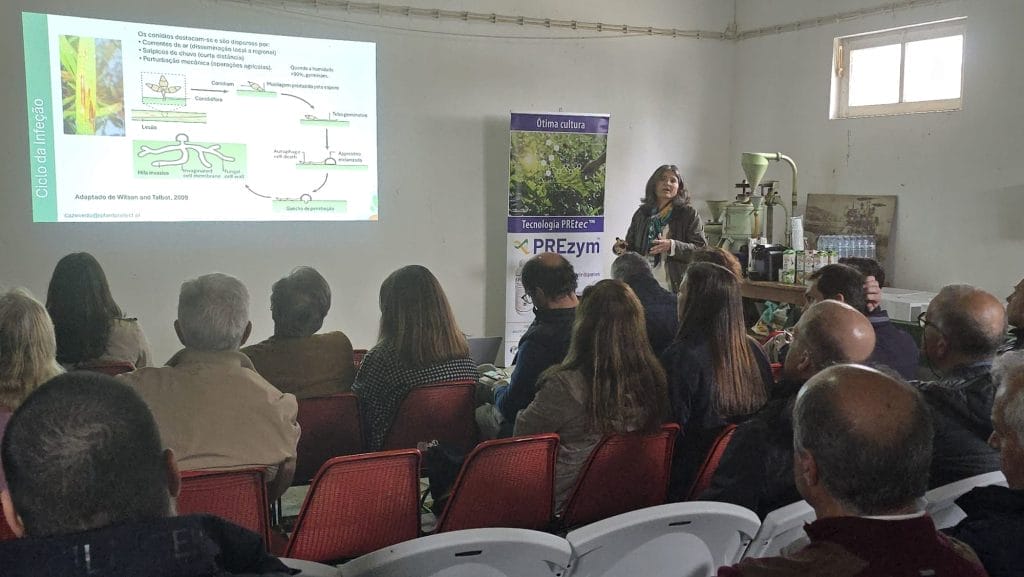
Our team also monitored trials with biofungicides, including the product I21, developed with our collaborative laboratory to combat pyriculariosis in two rice varieties, which is being patented.

In an interview with Voice of the Countryside, Cristina Azevedo shared the work we have been doing in the area of biosolutions.

(Re)watch the interview here.

Image credits: InnovPlantProtect and Voz do Campo magazine

Maize continues to be the Portugal's most important arable crop, The sector has a significant impact on food safety and the national agri-food industry. Involving thousands of producers and generating tens of millions of euros a year, the sector is currently facing increasingly complex phytosanitary challenges.

Among already known pests and emerging diseases, there are risks ranging from cartridge caterpillar until Maize Rugose Dwarfism Virus (MRDV), The presence of this virus is increasing in Portugal. This virus, transmitted by the corn leafhopper, can seriously compromise production and is found in the climate change increasingly favorable conditions for its spread.

However, it's not just MRDV that's worrying. There are new threats that require vigilance, such as the coleopter Diabrotica virgifera or the MDMV virus (Maize Dwarf Mosaic Virus), already detected in neighboring countries, and also toxic weeds, such as the winter fig (Datura stramonium), which in addition to impacting productivity pose public health risks.

Faced with this reality, the answer is integrated and sustainable strategies, matching:

  • crop rotation and good agricultural practices;
  • careful use of insecticides to avoid resistance and environmental impacts;
  • resistant or tolerant varieties, where available;
  • research and technological innovation, including new digital tools for early detection.

As the InnovPlantProtect researcher points out, Nuno Faria, in the article entitled “The main emerging pests and diseases of the maize crop in Portugal”, available in the August edition of Voz do Campo magazine: “The phytosanitary panorama of maize in Portugal requires continuous vigilance, investment in research and the application of integrated and sustainable strategies capable of responding to an increasingly dynamic and unpredictable reality.”

To find out more about the main current risks and mitigation measures, read the full article published in the August issue of Voz do Campo magazine (pages 88-89), available on newsstands and online.

EVENTS

InnovPlantProtect (InPP) took part in the “III Colloquium on the Sustainable Use of Pesticides - What Future?”, which was held on May 24 at the Santarem Polytechnic Institute's Santarém Higher Agricultural School (ESAS).

The colloquium, organized by the Portuguese Horticultural Association, the National Horticultural Operational and Technological Centre (COTHN) and ESAS, aimed to provide policymakers with a current picture of the agricultural sector and the legislation, innovation, difficulties, opportunities and needs of crop protection.

The promoters organized the Colloquium at an opportune moment, following the European Commission's decision last February not to proceed with the revision of the Directive on the Sustainable Use of Pesticides, but in which the goals and ambition of the European Green Deal are maintained.

Portugal is the country in the European Union with the second highest rate of reduction in pesticide use and 10% of authorized plant protection products are biopesticides.

The round-table event brought together speakers from agricultural confederations, associations representing agricultural sub-sectors, universities, public and private laboratories, the Ministry of Agriculture, MPs and MEPs.

Pedro Fevereiro, executive director of InPP, was one of the speakers on the panel “Session II - What is the future?”, which took place between 2:30 and 4:30 p.m. and included the deputy director of the Directorate-General for Food and Veterinary (DGAV), Paula Cruz Garcia, the president of CropLife Portugal, Felisbela Campos, Cristina Carlos from the University of Trás-os-Montes and Alto Douro (UTAD), Social Democratic Party MP Emília Cerqueira, chair of the Assembly of the Republic's Agriculture and Fisheries Committee, and João Frazão, a member of the Portuguese Communist Party's political committee. The moderator was João Baptista, a journalist from the newspaper Mais Ribatejo.

©️ Image credits: Escola Superior Agrária de Santarém and Portuguese Horticultural Association

Last Wednesday morning, May 15, another Farmers“ Day was held at the Innovation Hub in Elvas, under the motto ”Challenges and opportunities for the sustainable intensification of agriculture", which was attended by the Minister of Agriculture and Fisheries, José Manuel Fernandes.

InnovPlantProtect (InPP) was present at this event, promoted by the National Institute for Agrarian and Veterinary Research (INIAV, IP), a founding member of InPP, which aimed to promote the dynamics of innovation that result in the valorization of national production and also in people settling in the territories.

The initiative kicked off with a speech by the Minister for Agriculture and Fisheries, who highlighted the importance of the agricultural sector, stressing that “Agriculture is much more than numbers and GDP. It's territorial cohesion, it's landscape, it's culture, it's gastronomy, it's tourism”, and he also listed as priority areas for action the improvement of farmers' incomes, the attraction of younger people and the link with academia and research, which must be based on a perspective of territorial cohesion.

This was followed by a round table on “Territory, Capacity Building, Research and Innovation”, moderated by José Palha, representing the CerealTech Competence Center, and with the participation of Nuno Canada, President of INIAV, Paulo Fernandes, Mayor of Fundão, Bernardo Albino, Vice-President of the National Association of Protein, Oilseed and Cereal Producers (ANPOC) and João Madeira, from the Extensive Grazing Competence Center.

The round table concluded with the presentation of the Cereais do Alentejo range of products, a registered trademark of ANPOC which, like the Fundão Cherry, aims to enhance national cereal production; and with the launch of the technical guide “Cereais Praganosos - A Produtividade e a Qualidade Constroem-se”, a manual that results from the compilation of the most relevant knowledge transmitted over the years in the Technical Training for Autumn/Winter Cereal Production, jointly promoted by ANPOC, INIAV and the Polytechnic Institute of Beja since 2016.

Congratulations to INIAV for the initiative!

Farmers' Day is an annual initiative that brings together hundreds of farmers and companies in the sector.

Today, May 16, is National Scientists' Day in Portugal and InnovPlantProtect (InPP) has issued a challenge to its scientists - to record their day-to-day lives in the Collaborative Lab. InPP promoted a photo competition open to its entire community who submitted photos showing a little of what their day-to-day life as scientists is like.

The team then chose the three best photos through an internal voting process and today opened the voting to the online community on the institutional social networks so that they can choose who the big winner is.

To choose your favorite photo, all you have to do is vote in the poll that we will be launching on the social networks LinkedIn and Facebook from 2pm, and which will be available until the end of today.

Congratulations to researchers Maria Miguel, Francisca Rodrigues and Francesca Messina, authors of the photos below. Thanks to all the participants for the fantastic photos submitted!

We wish a Happy National Scientist Day to all our scientists and researchers who dedicate their lives to curiosity, to trying to understand how the world works, and who are increasingly concerned about sharing this knowledge with others. Together we all contribute to building the future!

National Scientists' Day was established in 2016 and aims to recognize the contribution of the scientific community to the advancement of knowledge, progress and the well-being of society.