Já está disponível a iCountPests, uma nova aplicação desenvolvida pelo InnovPlantProtect para apoiar a monitorização de pragas agrícolas através da análise automática de imagens captadas em campo.
A app utiliza inteligência artificial para contabilizar automaticamente pragas presentes em armadilhas adesivas, permitindo obter resultados rápidos e fiáveis diretamente no telemóvel.
Pensada para produtores e técnicos agrícolas, a iCountPests contribui para uma monitorização mais eficiente e precisa, reduzindo o tempo associado às contagens manuais e apoiando a tomada de decisão na proteção das culturas.
O funcionamento é simples:
Captar uma imagem da armadilha
Analisar automaticamente
Consultar resultados organizados e acessíveis
A app permite ainda acompanhar a evolução das pragas ao longo do tempo, facilitando a gestão e o registo da informação no terreno.
A monitorização de pragas é uma tarefa essencial na gestão agrícola, mas continua a depender, em muitos casos, de processos manuais demorados e sujeitos a erro.
A pensar nesta realidade, o InnovPlantProtect irá lançar brevemente a iCountPests, uma aplicação inovadora que utiliza inteligência artificial para automatizar a contagem de pragas a partir de imagens captadas no campo.
Com a iCountPests, será possível obter resultados rápidos e fiáveis, contribuindo para uma tomada de decisão mais informada e eficiente na proteção das culturas.
A aplicação estará brevemente disponível, sendo direcionada a produtores agrícolas e técnicos que procuram otimizar o tempo dedicado à monitorização e melhorar a precisão dos dados recolhidos.
Uma nova tecnologia de revestimento biológico de sementes desenvolvida pelo InnovPlantProtect (InPP), em colaboração com a Fertiprado, poderá vir a transformar o desempenho de pastagens e forragens, contribuindo para sistemas agrícolas mais eficientes e sustentáveis.
Baseada em compostos derivados de algas, esta solução inovadora apresenta efeito bioestimulante e foi concebida para atuar desde as fases iniciais do desenvolvimento das plantas. Os ensaios realizados demonstraram resultados promissores ao nível da estimulação da nodulação em leguminosas, do crescimento vegetativo e da resistência das plantas a condições adversas, com impacto positivo no valor nutricional do pasto.
Este desenvolvimento resulta de um percurso de investigação conjunta que decorreu ao longo de cinco anos, refletindo o compromisso contínuo do InPP em transformar conhecimento científico em soluções com aplicação prática no setor agrícola. A tecnologia encontra-se atualmente em processo de patenteamento e representa um marco relevante no pipeline de inovação do laboratório.
Para a Fertiprado, parceiro estratégico neste projeto, esta tecnologia constitui uma alternativa aos revestimentos tradicionais baseados em compostos sintéticos, reforçando a aposta em soluções mais sustentáveis e alinhadas com as necessidades futuras da agricultura.
O desenvolvimento desta solução insere-se na Agenda Mobilizadora Pacto da Bioeconomia Azul, financiada pelo Plano de Recuperação e Resiliência (PRR), iniciativa que promove a valorização de recursos marinhos através da criação de novos produtos e tecnologias. Como parte do processo de valorização da tecnologia, foi assinado um memorando de entendimento com vista à sua futura exploração comercial.
Num contexto em que a procura por biosoluções agrícolas continua a crescer, iniciativas colaborativas como esta demonstram o papel fundamental da investigação aplicada na resposta aos desafios da sustentabilidade e da produtividade agrícola.
Investigação com impacto no setor agrícola
O trabalho desenvolvido pelo InPP evidencia o valor da colaboração entre ciência e indústria, permitindo acelerar processos de inovação e criar soluções ajustadas às necessidades reais do setor agrícola.
A parceria com empresas constitui um dos pilares estratégicos do InPP, promovendo a transferência de conhecimento científico e o desenvolvimento de tecnologias que contribuem para sistemas agrícolas mais resilientes e sustentáveis.
Discover the latest advances in project WhYRust, regarding fungal epidemiology and population structure studies, data collection and model validation of a warning system, and identification of wheat genes involved in YR resistance.
Supporting the Portuguese wheat breeding program in the climate change scenario is the purpose of the WhYRust project. Yellow rust (YR), caused by Puccinia striiformis f. sp. tritici (Pst), is one of the most destructive diseases for wheat (Triticum ssp.), with global annual losses of US$ 979 million. Planting resistant cultivars is the most effective, economic, and environmental-friendly way to control diseases. Among other things, WhYRust aims to identify the wheat's genome areas associated with resistance or susceptibility to YR, a major threat to this cereal.
InnovPlantProtect, namely through its Department of Protection of Specific Crops - Department 2, leads this project, with the participation of INIAV Elvas and ITQB NOVA, and the collaboration of ANPOC and CERSUL.We are (1) studying the fungus epidemiology in Portugal, evaluating the fungal pathogenesis mechanisms by (2) sequencing the fungus genome, (3) investigating its transcriptome during plant interaction and (4) proteome of secreted proteins under conditions of low versus high temperature, (5) performing genome-wide association studies to identify resistance genes in the plant, and (6) developing genomic prediction models through machine learning in order to support precision breeding.
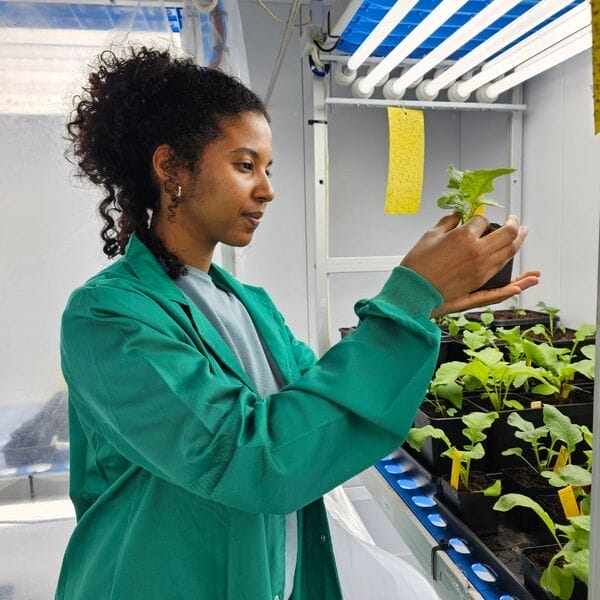
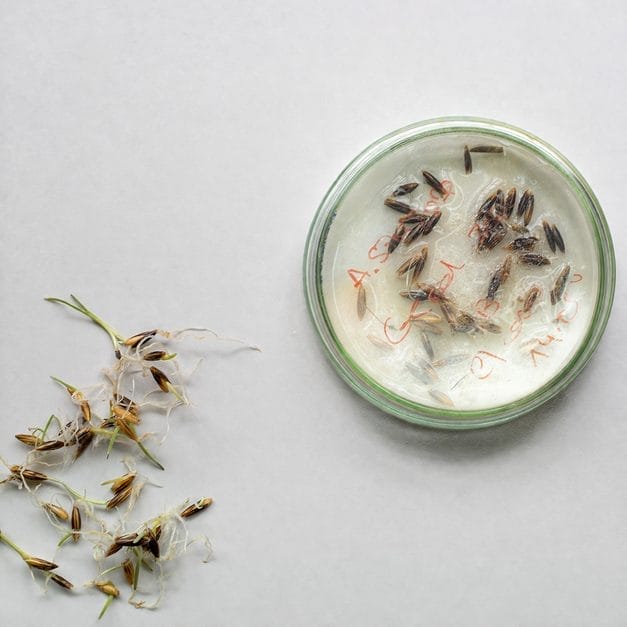
Wheat seeds germination in vitro. Two-week-old wheat plants in our growth chamber. Sampling of yellow rust fungal spores from wheat leaf showing symptoms of YR disease (by Miguel Teixeira and Cláudia Rato)
As far as fungal epidemiology and population structure studies are concerned, the quarantine enforced by COVID-19 in the first trimester of 2020 imposed some difficulties, but some wheat infected leaves were sampled in the 2019/2020 season. New sampling will be performed for the 2020/2021 season. Collected spores are being used to isolate single pustules, which will be further used to identify the specific fungus races.
Germination of YR fungus spores (called urediniospores) in vitro conditions (by Miguel Teixeira and Cláudia Rato)
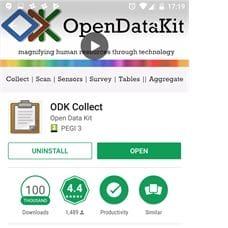
Sampling app, by iLaria Marengo
InPP's Department 2 is also collaborating with Department 4 (Monitoring and Diagnosis). Portuguese agronomists are going to be trained on data collection and model validation of a yellow rust warning system. The goal is to use Open Data Kit (ODK), an open source software for (android) mobile devices that uses a form designed by InPP (Dep. 4) to collect data in the field and offline. The submission of the data to the InPP server is made once back to the office, when Internet connectivity is available. The app not only speeds up the data collection but also improves its management and accessibility.
Regarding the identification of wheat genes involved in YR resistance, the first field trial for the evaluation of disease symptoms in a panel of 250 wheat accessions of INIAV's breeding pool has been sown in the INIAV Elvas field. The crop of common or bread wheat (Triticum aestivum) is checked by the team every week, to remove weeds and check accessions status.
Disease evaluation will begin as soon as first symptoms develop. Image analysis of infected leaves will be performed to identify the percentage of pustules per leaf. This experiment will be performed in three consecutive years, and the data will be used to access the genetic and phenotypic variability within this panel and for future genome-wide association studies.
Field work by researchers Miguel Teixeira, Asmae Jlilat, Ana Miguel Reis, Diana Acácio, Flavio Storino, Diana Sousa and Hadi Sheikhnejad
For 2021, we also expect the most prevalent YR fungus race will have its genome sequenced and potential virulent factors will be identified by in silico analysis.
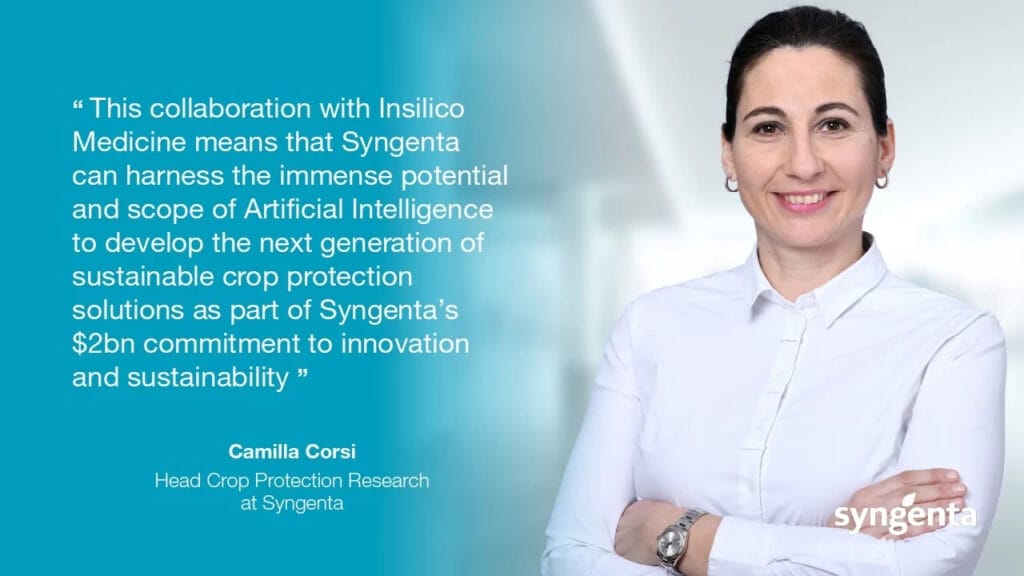
Accelerating technological innovation and creating new sustainable solutions for the protection of agricultural crops against pests, diseases and weeds, while protecting ecosystems, is the aim of the new collaboration between Syngenta Crop Protection, an InnovPlantProtect (InPP) member, and Insilico Medicine, which specializes in artificial intelligence (AI) and deep learning.
The partnership “will further transform agriculture by providing farmers around the world with the tools they need to produce healthy, nutritious, affordable and sustainably grown food in the most efficient way, while minimizing environmental impact,” Camilla Corsi said in a statement, head of Crop Protection Research at Syngenta.
Insilico Medicine's solid and proven experience in the use of AI and deep learning to develop, synthesize and validate new active substances promises to “transform the development of new solutions that help keep plants safe, from planting to harvest,” Syngenta points out. The safety of agricultural products and the protection of human health, in the short and long term, are also top priorities.
Twelve founding members, the InnovPlantProtect team and all those who contributed to giving birth to this young CoLab are to be congratulated today: two years ago, the formal constitution of InPP was registered with a notary in Elvas.
On January 24, 2019, in pre-pandemic times, the public deed was signed to establish the InnovPlantProtect - Associação collaborative laboratory in Elvas. Today, a highly qualified team is now complete, work is underway and projects are in progress, marking the second anniversary of the formal establishment of the collaborative laboratory, which has twelve founding partners.
Despite the restrictions imposed on all of us by the Covid-19 crisis, 2021 promises to be auspicious. “The conditions are beginning to be created for the careful and dedicated management to achieve the desired results,” says the mayor of Elvas (CME), an InnovPlantProtect (InPP) member. “Now it's ‘hands on’,” says Nuno Mocinha.
Admitting that “it's been a Herculean task to set up the CoLab”, the chairman of the board of Casa do Arroz has no doubt that “it's been worth it” and that InPP “will be on the map”. “It has everything it takes to succeed,” assures Pedro Monteiro. “For us, the CoLab is our insurance for the future. It's a laboratory that represents a great opportunity for the defense of rice cultivation in Portugal.”
InPP members sign the public deed of incorporation, on January 24, 2019, at the notary's office in Elvas.
The traditional “family photo”.
The great satisfaction with the quality of the technical staff is shared by CME, CEBAL and Fertiprado - and by InPP's executive director and “man at the helm”, Pedro Fevereiro. “The high level of professionalism, the dedication of all the professionals who make it up and its great organization put this institution on the map of major international organizations in the field of plant protection,” says Liliana Marum, a researcher at CEBAL. “CEBAL, as a founding partner, congratulates InnovPlantProtect on its excellent work and its mission of great importance for the sustainability of national agriculture.”.
“Although it's still in the installation phase, the excellent team already set up by Professor Pedro Fevereiro gives us high hopes for the success of the important projects already underway in the InnovPlantProtect collaborative laboratory,” says Ana Barradas, Fertiprado's R&D director. The company is already working with InPP on the Pythium project, the aim of which is to “identify the pathological organism that causes root rot and find a solution to eliminate it”.
“The CoLab is our insurance for the future.” Pedro Monteiro, Casa do Arroz
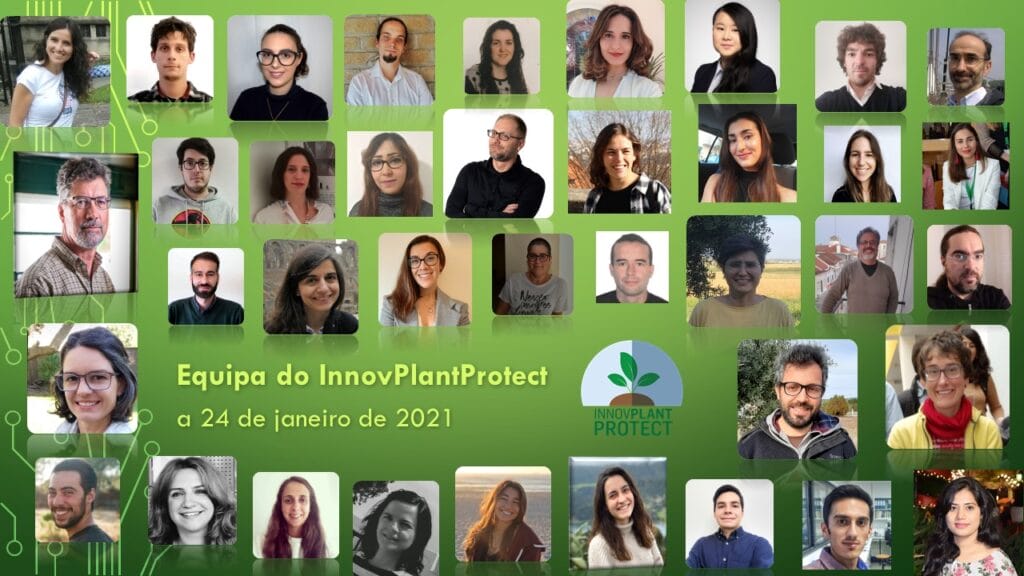
“Fertiprado is very proud to be a founding member of the InnovPlantProtect CoLab and we are very pleased to be celebrating its second anniversary,” concludes Ana Barradas. “After two years, the CoLab has a team of 38 employees, the vast majority of whom are highly educated, highly motivated and competent. It's a team that is expected to make a difference on the agricultural innovation scene and to be able to respond to the challenge of developing biopesticides and services that reduce the impact of pests and diseases on Mediterranean crops,” stresses Pedro Fevereiro.
“Our resilience lies and will lie in the fact that we have created a friendly and interactive working environment, which we want to maintain and expand,” argues InPP's CEO, who bet on this project “because it is a way of participating in the transfer of academic knowledge to real life, on the one hand, and of participating in the construction of solutions for a more productive and sustainable agriculture, on the other.”.
For Pedro Fevereiro, the second anniversary of the establishment of CoLab means above all that the institution has survived the initial installation phase, “which is not over yet, even despite the pandemic situation we are living in”. “It means that what we invested in is still in a position to progress and develop. The preliminary process of setting up was the effort of a team that knew how to put the common interest ahead of individual agendas and that knew how to find a way to make this project viable,” stresses the executive director.
“CoLab has a team of 38 highly motivated and competent employees.” Pedro Fevereiro, CEO of InPP
In the current context, the biggest challenge “is to keep the team active and working, while we wait for the possibility of having everyone working in the same place and in suitable conditions to develop the projects we already have in hand” - a goal that Pedro Fevereiro hopes to achieve within six months. “Another challenge is to create a modern institution of reference in a territory far from the major centers.” For Nuno Mocinha, InnovPlantProtect represents, in fact, “a qualitative leap in the affirmation of Elvas as a research hub in the national context and a special partnership between academia, companies and local government”.
The 38 members of the InnovPlantProtect team in January 2021.
The main objective now is to “develop national and international projects in the field of crop protection that have the capacity to present solutions as soon as possible, while guaranteeing the CoLab's financial balance,” says Pedro Fevereiro. New bio-based solutions for protecting plants against pests and diseases are “a market that is expected to double in the next five years at international level and which will certainly expand enormously in the European Union in the light of the European Green Deal and the ‘Farm to Fork’ and ‘Biodiversity’ Strategies”, recalls Felisbela Torres de Campos, responsible for Regulatory and Business Sustainability at Syngenta Portugal, an InPP member.
“This collaborative laboratory is on the right track: towards the sustainability of agriculture,” says Felisbela Campos, who considers CoLab “a strategic partnership for Syngenta and also because of the company's strong commitment to R&D in biological solutions for agriculture”. In addition, “InnovPlantProtect positions Portugal as a creator of technologies to solve specific phytosanitary problems in Portuguese agriculture, which will certainly help to reduce the country's dependence on foreign technologies and ensure that the solutions found are more effective from the outset”.
“We welcome this partnership and its potential to accelerate innovationfor farmers and nature”. Felisbela Torres de Campos, Syngenta Portugal
“CEBAL, as a founding partner, congratulates InnovPlantProtect for its excellent work and its mission of great importance for the sustainability of national agriculture,” agrees Liliana Marum, a researcher at the biotechnology center based in Beja.
InPP's founding partners are the National Institute for Agricultural and Veterinary Research, Elvas City Council, the New University of Lisbon, Syngenta Crop Protection, the Alentejo Agricultural and Agri-Food Biotechnology Center, Casa do Arroz, Bayer Crop Science, the University of Évora, Fertiprado, the National Federation of Fruit and Vegetable Producers' Organizations, the National Association of Protein, Oilseed and Cereal Producers, and the National Association of Maize and Sorghum Producers.






 Português
  English