News & Events

white plant

NEWS

InPP took part in the kick-off meeting for the European PROSPER project, held on October 2 and 3 in Pavia, Italy. In attendance were the director of the Monitoring and Diagnostics Department, Ilaria Marengo, and the project manager, Bruno Orrico.

PROSPER's main objective is to transform European agriculture by valorizing highly resilient “orphan” legumes - forgotten crops, but full of potential to face the climate and food challenges of the future.

The project promotes sustainable, innovative practices adapted to different agricultural realities.

Over the two days, 27 partners from 13 countries met for presentations, in-depth discussions and strategic talks about the project's next steps.

We are excited about what comes next, certain that this journey will be more than a collaboration - it will be a true cooperation within an exceptional team.

Join us and keep up to date with all the news from the PROSPER Project!

InnovPlantProtect (InPP) was present at the project launch meeting BioLivingLABS - Bioeconomia ao Serviço da Sustentabilidade dos Territórios do Interior (Bioeconomy at the Service of the Sustainability of Inland Territories), which took place on October 1st at the School of Agriculture of the Polytechnic Institute of Castelo Branco (IPCB).

Funded by COMPETE 2023, the BioLivingLABS project, led by MORE CoLAB - Laboratório Colaborativo Montanhas de Investigação, in partnership with the InPP, the IPCB, from AQUAVALOR and the Polytechnic Institute of Bragança (IPB).

This project's mission is to add value to the low-density territories in the north, center and south of the country by demonstrating and economically boosting the work carried out by the partners - through the creation, demonstration and application of products, processes and services resulting from joint research.

Four living laboratories will be created (Living Labs) in the innovation hubs of Mirandela, Douro, Covilhã and Elvas, which they intend to promote:

  • the transfer of knowledge;
  • technology demonstration;
  • strategic roadmapping and
  • the protection of intellectual property.

BioLivingLABS strengthens the link between academia, business and society, driving innovation and sustainability.

Expected impact:
Over the course of 24 months, and with Living Labs dedicated to sectors such as olive groves and olive oil, vineyards and wine, fruit and cereals, legumes, among others, the project will contribute to:

  • increase regional competitiveness;
  • promote sustainable practices and
  • responding to the environmental, social and economic challenges facing inland territories.

More news about this new project soon.

On September 25, InnovPlantProtect (InPP) was present at the National Exhibition of Blue Bioeconomy Pact Projects, held at the Port of Leixões Cruise Terminal, for the exhibition session of the Algae Vertical project, led by PhytoBloom by Necton.

InPP, leader of sub-project 6 - Agriculture, was represented by department director Cristina Azevedo and executive director António Saraiva, who presented some of the new algae-based biosolutions that our team and partners are developing.

There were more than 300 participants and 80 entities, including companies, research centers and political decision-makers. The Opening Conference was attended by the Chairman of Inovamar's General and Supervisory Board, José Soares dos Santos, and round tables were held on the future of the blue economy in Portugal.

Algae Vertical explores the biotechnological potential of algae in sectors as diverse as food, cosmetics, pharmaceuticals, agriculture and energy.

Find out more about the Algae Vertical Project here

EVENTS

Researchers have found evidence that Huanglongbing, also known as citrus greening, This is an immune-mediated disease, which can be mitigated with antioxidants and phytohormones such as gibberellin, lifting the veil on the mechanism that causes this disease. O article on this study was recently published in Nature Communications.

Huanglongbing disease, which affects citrus fruits and ornamental plants, is caused by the bacterium Candidatus liberibacter transmitted by the citrus psyllid, a biting-sucking insect vector that also causes considerable direct damage to plants. The African psyllid (Trioza erytreae), vector of the bacterium Candidatus liberibacter africanus, is listed as a quarantine pest in Europe and its presence in Portugal has been expanding. O citrus greening is considered the most serious disease for these plant species worldwide.

The team from the Citrus Research and Education Center at the University of Florida (USA) shows that the infection of orange trees (Citrus sinensis) by the bacterium Candidatus liberibacter asiaticus induces a chronic systemic immune response in the plant's phloem, mimicking chronic systemic inflammatory diseases in humans, which leads to the death of the cells that make up the phloem tissue.

The conclusion that this is an immune-mediated phytopathology “helps guide the battle against this infamous disease”, the authors state in the article. The researchers consider it likely that horticultural approaches that suppress the oxidative stress of infected plants could mitigate the damage, including the optimal use of plant growth hormones such as gibberellin and brassinosteroids, as well as treatments with antioxidants.

Feature image © UF/IFAS Citrus Research and Education Center

Members of the Elvas CoLAB team tell the camera what brought them to the raia and the “Queen of the Border”, and what led them to accept the challenge of building the InPP.

Because I believe in a more sustainable future

Joana Castro

January 24, 2022. 3rd anniversary of the signing of the public deed setting up the InnovPlantProtect - Association collaborative laboratory. What a journey! Congratulations to the entire team, associates, members of the governing bodies and partners who have contributed and are contributing today to the birth and growth of this young CoLAB.

Because it represented a huge challenge for my return to Portugal

Cristina Azevedo

Why our lives depend on plants

iLaria Marengo

Completing the multilingual, multicultural and multidiverse team of 39 people that make up InPP today was one of the great achievements of the last year. Find out what brought us to Elvas and why we decided to stake our professional and personal lives on the challenge that is InnovPlantProtect. Watch the video on our YouTube channel.

To put into practice the knowledge I've acquired over more than 12 years abroad in the service of my country's scientific development.

Cláudia Rato da Silva

“Building a new institution is always a challenge and a risk. These three years have shown just that: the need to take risks and accept the challenge of overcoming difficulty after difficulty,” recognizes Pedro Fevereiro, executive director of “CoLAB de Elvas”. “The pillar that sustains InnovPlantProtect is people. And it is to all the people who have accepted the challenge of coming to build that the (over)experience and growth of InPP is due. It will continue to grow. Thank you for that.”

For the chance to settle in the country I chose to live in and live in a beautiful city like Elvas

Márcio Almeida

To rid crops of pests using artificial intelligence

Manisha Sirsat

The chance to do what I love

Tiago Amaro

To apply the knowledge acquired in the biopharmaceutical industry to the discovery of biopesticides

Miguel Carvalho

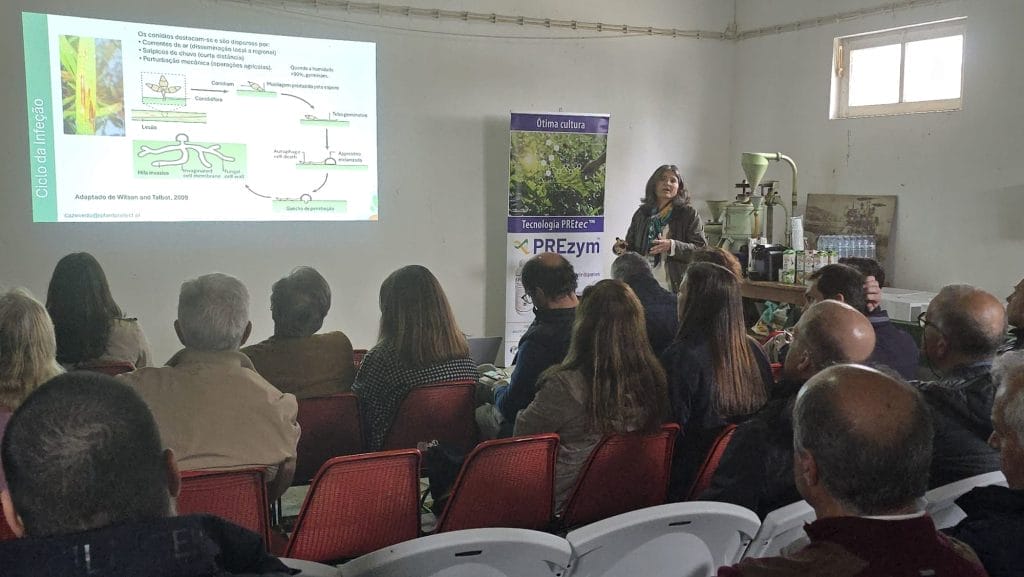
“AI applied to a prediction and early detection system for Phytophthora cinnamomi in dehesa ecosystems/ dehesa” is the name of the winning project of the 2020 edition of the Promove Program, which brings together InnovPlantProtect (InPP), the National Institute for Agricultural and Veterinary Research (INIAV), the Centro de Investigaciones Científicas y Tecnológicas de Extremadura (CICYTEX), a ACPA - Association of Alentejo Pig Breeders and the Aflosor - Agro-Forestry Association of the Ponte de Sor Region. Now you can find out more about this collaborative initiative, which has won a own page on the InPP website.

With three study areas, two in Portugal (the municipalities of Avis and Ourique) and one in Spain (Alcuescar), the overall aim is to apply monitoring and warning systems to large patches of forest, using digital robotic and artificial intelligence (AI) technologies on a large scale.

This project is funded under Promove - The Future of the Interior, a program of the la Caixa“ Foundation” launched in partnership with BPI and Foundation for Science and Technology, The aim is to support innovative initiatives in strategic areas for the development of Portugal's inland regions.