A monitorização de pragas é uma tarefa essencial na gestão agrícola, mas continua a depender, em muitos casos, de processos manuais demorados e sujeitos a erro.
A pensar nesta realidade, o InnovPlantProtect irá lançar brevemente a iCountPests, uma aplicação inovadora que utiliza inteligência artificial para automatizar a contagem de pragas a partir de imagens captadas no campo.
Com a iCountPests, será possível obter resultados rápidos e fiáveis, contribuindo para uma tomada de decisão mais informada e eficiente na proteção das culturas.
A aplicação estará brevemente disponível, sendo direcionada a produtores agrícolas e técnicos que procuram otimizar o tempo dedicado à monitorização e melhorar a precisão dos dados recolhidos.
Uma nova tecnologia de revestimento biológico de sementes desenvolvida pelo InnovPlantProtect (InPP), em colaboração com a Fertiprado, poderá vir a transformar o desempenho de pastagens e forragens, contribuindo para sistemas agrícolas mais eficientes e sustentáveis.
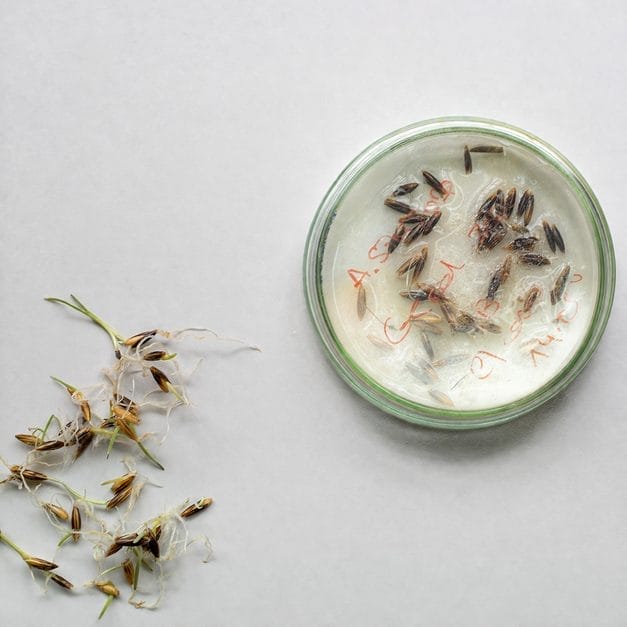
Baseada em compostos derivados de algas, esta solução inovadora apresenta efeito bioestimulante e foi concebida para atuar desde as fases iniciais do desenvolvimento das plantas. Os ensaios realizados demonstraram resultados promissores ao nível da estimulação da nodulação em leguminosas, do crescimento vegetativo e da resistência das plantas a condições adversas, com impacto positivo no valor nutricional do pasto.
Este desenvolvimento resulta de um percurso de investigação conjunta que decorreu ao longo de cinco anos, refletindo o compromisso contínuo do InPP em transformar conhecimento científico em soluções com aplicação prática no setor agrícola. A tecnologia encontra-se atualmente em processo de patenteamento e representa um marco relevante no pipeline de inovação do laboratório.
Para a Fertiprado, parceiro estratégico neste projeto, esta tecnologia constitui uma alternativa aos revestimentos tradicionais baseados em compostos sintéticos, reforçando a aposta em soluções mais sustentáveis e alinhadas com as necessidades futuras da agricultura.
O desenvolvimento desta solução insere-se na Agenda Mobilizadora Pacto da Bioeconomia Azul, financiada pelo Plano de Recuperação e Resiliência (PRR), iniciativa que promove a valorização de recursos marinhos através da criação de novos produtos e tecnologias. Como parte do processo de valorização da tecnologia, foi assinado um memorando de entendimento com vista à sua futura exploração comercial.
Num contexto em que a procura por biosoluções agrícolas continua a crescer, iniciativas colaborativas como esta demonstram o papel fundamental da investigação aplicada na resposta aos desafios da sustentabilidade e da produtividade agrícola.
Investigação com impacto no setor agrícola
O trabalho desenvolvido pelo InPP evidencia o valor da colaboração entre ciência e indústria, permitindo acelerar processos de inovação e criar soluções ajustadas às necessidades reais do setor agrícola.
A parceria com empresas constitui um dos pilares estratégicos do InPP, promovendo a transferência de conhecimento científico e o desenvolvimento de tecnologias que contribuem para sistemas agrícolas mais resilientes e sustentáveis.
O InPP participou no Fórum Nacional de Clubes Ciência Viva na Escola, que teve lugar no dia 27 de março, integrando a Mostra de Ciência e Tecnologia com um stand dedicado à proteção das plantas.
Neste espaço, foram apresentados diversos materiais demonstrativos, incluindo placas de Petri com fungos e bactérias, plantas, algas e exemplos de produtos formulados, com o objetivo de despertar o interesse e a curiosidade dos visitantes para a importância da saúde das plantas e da investigação científica nesta área.
Ao longo do dia, a Gestora de Comunicação, Inês Ferreira, e o Gestor de Inovação, Paulo Madeira, dinamizaram o contacto com o público visitante, explicando de que forma a investigação em proteção das plantas contribui para melhorar a proteção das culturas e promover uma agricultura mais resiliente e sustentável.
O Fórum Nacional de Clubes Ciência Viva na Escola decorreu no CNEMA, em Santarém, reunindo escolas, centros Ciência Viva, universidades, centros de investigação e diversas outras entidades, num encontro dedicado à ciência, tecnologia e inovação.
O InPP agradece a todos os visitantes que passaram pelo seu stand, destacando a importância destes momentos de partilha para promover o conhecimento científico junto da comunidade.
The new InnovPlantProtect (InPP) space, which involved an investment of 2.8 million euros, was officially inaugurated this Thursday, July 28, at 2:30 p.m. in the building of the National Institute for Agricultural and Veterinary Research (INIAV) - Elvas Pole, in Elvas, in the presence of 120 guests.
The inauguration session was attended by the Minister for Science, Technology and Higher Education, Elvira Fortunato, the Minister for Territorial Cohesion, Ana Abrunhosa, the Secretary of State for Regional Development, Isabel Ferreira, the Secretary of State for Agriculture and Rural Development, Rui Martinho, and the Councillor for Elvas Municipal Council (C.M. Elvas), Hermenegildo Rodrigues, who was representing the Mayor of Elvas.
Ana Abrunhosa began by congratulating and thanking the entire InPP team for their work and emphasized that “in order to carry out quality research, anywhere and not just in the geographies considered to be the most usual, it is necessary to provide highly qualified human resources in the areas to be researched, adequate facilities, cutting-edge equipment and state-of-the-art technology” and, according to the minister, “the InPP has all these conditions”.
The Minister for Territorial Cohesion stressed the role of “fair working conditions and salaries” as additional factors that contribute to InPP being a project of “excellence”, which “has everything it needs to fulfill its scientific aspirations” and also warned of the “importance that European funds have had and must continue to have for projects like this: a regional development project based on a marriage that we want to be a happy one between knowledge, research, companies and the community”.
Elvira Fortunato highlighted the importance of the InPP and its mission to “work actively to find practical, innovative and sustainable solutions in such an important and vital area as agriculture and the preservation of the environment and natural resources” in the current national and global context and added that the InPP “is a meeting of minds of various national and international players, to do more and better science, to offer society more technology and innovation and to transform knowledge into practical solutions that improve people's lives.”
“We need all the players, all the researchers and all the institutions like the ones that have come together today around this collaborative laboratory,” stressed the Minister of Science, Technology and Higher Education and concluded her speech with a message of strength for the entire InPP team: “May this be a house where your work is consolidated and strengthened for many years to come. Your success will be everyone's success”.
Isabel Ferreira highlighted the importance of the InPP's areas of activity, especially in the “context of the pandemic and the war that we are experiencing, which has increasingly shown the importance of the agri-food sector as a response to emergency and crisis situations. And, therefore, this approach that the InPP takes of focusing its intervention on a phase even before production itself, and assuming this fundamental role of bringing scientific knowledge of excellence that exists in these themes, and especially in this theme of the fight against pests and diseases that affect the largest and most important agricultural crops.”
The Secretary of State for Regional Development wished the CoLABs a “successful journey” and stressed the importance of funding, namely “competitive funding, the provision of services, so that the CoLABs are increasingly self-sustainable”.
Rui Martinho highlighted the work that has been carried out by the InPP team, particularly in the control and eradication of Xylella fastidiosa and in mitigating the effect of bacterial fire, which “constitute very significant threats to our productive activity”.
“We are dealing with an organization [the InPP] that plays a central role in the development of agriculture, in the economic and environmental performance of our farms and, due to its composition, will ensure the necessary transfer of knowledge to the sector and to companies and entities involved in the production process,” said the Secretary of State for Agriculture and Rural Development.
Finally, Hermenegildo Rodrigues began his speech by expressing the municipality's “pride in being part of this project, as a privileged partner, recognizing the added value it brings to this region, which is essentially agricultural, and at the same time allowing us, through scientific knowledge, to make ourselves known to the world”.
After the inauguration session, CoLAB was presented by Margarida Oliveira, chairman of the InPP Board of Directors, and Pedro Fevereiro, executive director.
Pedro Fevereiro began by thanking all the guests present and congratulating the associates for the “path they have traveled”, considering them to be “the soul of the institution”, without whom, according to the CEO, “it would not be possible to build what we have built”. The executive director also thanked the funding and promoting bodies, the entire team, as well as InPP's clients “for the trust they have shown”, and the institutions that have agreed to partner and collaborate with CoLAB.
According to Pedro Fevereiro, InPP “has to develop innovation, protect it and deliver it to those capable of putting it on the market”. One of InPP's strategic objectives is to create industrial property by developing new products that can be patented and then handed over to companies and placed on the market, thus generating value.
During his speech, the executive director also referred to the initial funding of around seven million euros, of which 2.8 million were used to modernize the infrastructure and equipment, which “give the opportunity to develop innovative products”, and highlighted the 110,000 euros that resulted from InPP's activity in 2021, a figure that will be “far exceeded” in 2022.
Pedro Fevereiro ended his speech looking to the future. According to the CEO, the future of the institution will involve maintaining the team, ensuring InPP's financial sustainability, attracting public and private funding for CoLAB and creating services that meet the needs of clients and solve their problems.
The event ended with a tour of the new facilities.
On January 18, 2021, InPP began work on its permanent premises in the building of INIAV Elvas, a founding member of InPP, and is now fully operational, having completed all the refurbishment of the building and installed all the equipment. The inauguration thus marks a new stage for InPP, in which it intends to continue developing new products (new biopesticides and new resistant plants) and services for farmers, as well as at a social and regional level, insofar as it positions itself as a hub for attracting investment to the Alentejo region and also boosts the creation of qualified jobs and the densification of the country's interior.
This is a fundamental milestone in the history of InPP, its associates, members of the governing bodies and partners, and an essential tool for the future of the institution, being central to the affirmation of the mission to develop innovative, biological and digital solutions to promote safer, more sustainable and productive agricultural production methods, adjustable to the variations introduced by climate change in the Alentejo region.
Researchers at InnovPlantProtect (InPP) have just submitted, on July 21, 2022, the first provisional patent application for the industrial protection of a bacterial strain, isolated from nature and ecologically safe, which is highly effective in controlling fire blight.
Bacterial fire is a disease caused by the bacterium Erwinia amylovora, This is a major cause of the disease, which affects several plant species, particularly those in the rosaceae family, namely pear and apple trees, and has had a huge negative impact on rock pear and apple orchards in Portugal, as there are no efficient solutions for controlling it.
“This is the first of several innovative biological products under development at InnovPlantProtect. We are certain that this and other biological agents under development in this CoLab will have a decisive impact on the protection of Mediterranean crops and the achievement of the objectives of the European Green Deal,” says Pedro Fevereiro, Executive Director of InPP.
Example of a pear plant with fire blight, caused by the bacterium Erwinia amylovora
InPP has seen the approval of two mobilizing agendas of the Recovery and Resilience Plan (PRR) “Mobilizing Agendas for Business Innovation - Proposals for the Economy of the Future” in which it participates: InsectERA and the Blue Bioeconomy Pact.
The InsectERA agenda, which involves a total investment of €57 million, aims to apply circular economy concepts to the insect industry. The idea is to return by-products from the agro-industry, and some agricultural and urban waste, to the value chain, in the form of nutritional solutions for people, animals and plants, as well as new industrial solutions, from cosmetics to bioplastics. The consortium is led by INGREDIENT ODYSSEY, S.A.
The Blue Bioeconomy Pact agenda, led by Inovamar and corresponding to a total investment of €220 million, aims to reindustrialize the blue bioeconomy by creating new economic models based on the use of marine bio-resources, also creating the first blue bioeconomy in the world. hub european blue bioeconomy.



 Português
  English