News & Events

white plant

NEWS

There are days when science begins long before you enter the laboratory or the field. It starts at dawn, when the alarm clock goes off too early. When you mentally review the day's list: an experiment that can't be missed, a trip to the field that depends on the weather, an unfinished report, a meeting scheduled at the wrong time. In between, someone to wake up, someone to drop off, someone to call. And yet science moves forward.

At InnovPlantProtect, there are now 15 women who give a face to the science and innovation developed here. Women who represent commitment, demand, resilience, overcoming, quality, talent, excellence and creativity. But they are only part of a greater whole. There are many more - and each one brings with it a story that doesn't fit into a CV, a patent application or an article.

Today, February 11th, marks the International Day of Women and Girls in Science, a UNESCO initiative that underlines the importance of the female role in the production of scientific and technological knowledge and the need to continue promoting equal access to careers in science and innovation. Portugal has encouraging figures: women represent almost 50% researchers in the country. It's a relevant figure, reflecting decades of progress. But the figures don't show what happens between them.

Because science, for many women, is made up of fragile balances.

There are women with intense family lives, others with more solitary journeys, still others who build support networks outside traditional models, with effort and creativity. There are difficult choices and decisions, unexpected circumstances, forced breaks, changes of pace, different phases of life. All legitimate. Many are invisible when you only look at the end result of a project, an article or a biosolution developed. - but they all influence the paths of science.

One day, one of our researchers - let's just call her that - told us that she had finished a field trial close to sunset. The phone rang while she was putting away her materials. It was the school. A delay. Nothing extraordinary. It was business as usual. She came home exhausted, with dirt still on her boots, opened her computer after dinner and went back to her data, because the experiment couldn't wait.
“It wasn't a heroic day,” she said. “It was just a normal day.”

And perhaps that is what is most remarkable.

In the field of crop protection, the work is demanding, technical and often unpredictable. It takes place in the laboratory and in the field, between strict protocols and decisions made under real conditions. It requires persistence, adaptability, attention to detail and an integrated view of problems. Characteristics that so many women bring with them - not by nature, but by experience, by path, by everything they have learned to manage at the same time.

Each personal story profoundly shapes the way we do science. The doubts, the challenges, the forced breaks, the changes of pace, the new beginnings. None of this is left at the laboratory door. It all silently enters into the way we observe, question and build knowledge.

To celebrate the International Day of Women and Girls in Science is to recognise this reality as a whole. It is to honour the women who continue to do science despite the challenges — and often because of them. And it is to remember that innovation is also born from lives fully lived, shaped by imperfection, effort and courage.

Today we celebrate them. Not just for what they produce, but for all that they are. In science, in the field, in the laboratory - and in the life that happens in between.

O InnovPlantProtect (InPP), Collaborative Laboratory specializing in biological and digital solutions for crop protection, aligned with the emerging challenges of agriculture, will launch its new institutional website on January 24th, on a symbolic date marking 7 years working in the agricultural sector.

This launch is part of a phase of institutional evolution and consolidation InPP, reinforcing its strategy of proximity to the sector, clarity in the communication of its competencies and affirmation as a strategic partner for companies, producers, associations and public bodies.

An even clearer, more up-to-date and sector-oriented platform

With a renewed structure and a more intuitive browsing experience, the new website features:

  • an area of Services and Products completely reorganized, which facilitates access to specialized services, laboratory capabilities and biological and digital solutions developed by InPP, as well as to a updated catalog of services and biosolutions;
  • more complete institutional content that reinforces transparency, scientific rigor and CoLAB's mission;
  • a clearer presentation of scientific skills and research areas, highlighting the impact of the work carried out by InPP's multidisciplinary teams.

New image, same mission - but reinforced

The launch of the website is accompanied by the implementation of InnovPlantProtect's new visual identity, This reflects the maturity of CoLAB and its future ambitions.

The new image - accompanied by the slogan “Innovate together. Protect better.” - reflects InPP's ongoing commitment to:

  • Developing new generation biological and digital solutions;
  • Promoting safer, more innovative and more productive agriculture;
  • Strengthen collaboration and partnership with the agricultural sector and the innovation ecosystem.

A new phase for InPP

The digital and visual renovation is part of a broader strategy of maturity and consolidation, Through this initiative, InPP aims to strengthen its role as a scientific and technological partner for the agricultural sector in applied research and the development of crop protection solutions.

According to António Saraiva, InPP's executive director: “This new website isn't just a digital revamp - it's a reflection of the ambition we have for our future and how we want to communicate with the sector. We want every visitor to understand the purpose that drives us: to create innovative solutions that protect crops, boost productivity and contribute to more sustainable agricultural systems. InPP is entering a new phase, with a clearer, more accessible identity aligned with the real needs of agriculture and a renewed commitment to real impact on the ground.”

Available from January 24th

The new InnovPlantProtect website will be available from January 24th at: https://iplantprotect.pt/

The start of a new year also marks a new cycle for InnovPlantProtect. In 2026, InPP enters a phase of evolution and consolidation, with several new features that reinforce its position as a strategic partner for the intelligent transformation of agriculture.

Over the next few months, initiatives, content and tools will be presented that reflect the work carried out by our teams in the areas of applied research, biological solutions, specialized services and digital innovation.

The first step in this new phase will be presented in the next January 24th, InnovPlantProtect is celebrating the date 7 years in business at the service of the agricultural sector.

Until then, we continue to prepare a range of new products that reflect our mission to promote safer, more innovative and more productive agriculture.

Stay tuned. What's coming is just the beginning.

EVENTS

O InnovPlantProtect (InPP) participou no workshop “PREPSOIL Regional Soil Needs” que teve lugar no dia 13 de abril de 2023, em Finca La Cocosa, em Badajoz, Espanha. Este workshop visou debater sobre o estado de saúde do solo no Montado ou Dehesa e os laboratórios vivos como ferramentas para o futuro.

O workshop teve como principal objetivo envolver a comunidade local e compreender qual a sua perspetiva em relação às principais necessidades do solo dos sistemas agroflorestais da região espanhola.

Os diretores de departamento do InPP, iLaria Marengo e Ricardo Ramiro, e a investigadora Manisha Sirsat participaram na iniciativa, que teve como público-alvo o setor privado, a academia, investigadores e políticos, e na qual se explorou os seguintes temas: desafios na saúde do solo do montado/dehesa, relação entre a captura de carbono e a saúde do solo e laboratórios vivos como ferramenta para a saúde futura do solo destes sistemas agroflorestais.

O wokshop foi organizado no âmbito do projeto “PREPSOIL – Preparing for the Soil Deal for Europe Mission”, cofinanciado pelo programa Horizonte Europa, que pretende aumentar a consciencialização e o conhecimento sobre a saúde do solo através da interação, partilha de conhecimento e co-aprendizagem sobre o papel dos solos saudáveis para a sociedade. Impulsionado por um consórcio de 19 parceiros na vanguarda das iniciativas europeias e nacionais do solo, o projeto arrancou a 1 de julho de 2022 com o objetivo de apoiar a Missão da UE para a Saúde do Solo.

Cartaz de divulgação do workshop “PREPSOIL Regional Soil Needs”, que decorreu no passado dia 13 de abril, em Badajoz.

O InnovPlantProtect (InPP) participou no evento “Agendas Mobilizadoras no Alentejo”, um seminário de apresentação e debate de Agendas Mobilizadoras no âmbito do Plano de Recuperação e Resiliência (PRR) com investimentos na região do Alentejo, organizado pelo Parque do Alentejo de Ciência e Tecnologia (PACT) e pela Comissão de Coordenação e Desenvolvimento Regional do Alentejo (CCDR Alentejo), e que decorreu no passado dia 4 de abril, no auditório do PACT, em Évora.

A sessão teve como objetivo fazer um ponto de situação das várias agendas e contou com a participação de representantes do Governo, do Professor Pedro Dominguinhos, Presidente da Comissão Nacional de Acompanhamento do PRR, bem como com a presença de vários representantes de empresas líderes de agenda e entidades copromotoras de agendas, representantes de municípios da região, entre outros, e uma breve intervenção de Isabel Ferreira, Secretária de Estado do Desenvolvimento Regional.

No seminário, que contou com mais de 100 participantes, foram apresentadas 17 das 32 agendas mobilizadoras com investimentos na região, das quais o InPP faz parte de duas – a InsectERA e o Pacto de Bioeconomia Azul -, às quais se seguiu um momento de discussão, moderado por Tiago Teotónio Pereira, Vogal Executivo na CCDR Alentejo, com Pedro Dominguinhos, e António Oliveira das Neves, consultor para a EREI 2030 do Alentejo.

Nesta iniciativa existiu ainda um momento de networking e coffee break, durante o qual foi também possível analisar os 32 posters em exposição que davam conta das diferentes dimensões de cada agenda.

De acordo com os dados disponibilizados no site do IAPMEI – Agência para a Competitividade e Inovação, na globalidade, estas 32 agendas mobilizadoras representam um valor total de aproximadamente 5 936 562 795,22 €, dos quais 770 168 093,18 € estão alocados ao Alentejo. Esta aposta na região provém de cerca de 110 entidades copromotoras de agendas que declararam em candidatura efetuar investimentos na região, no âmbito do PRR.

Esta iniciativa é ímpar a nível regional e está alinhada com a responsabilidade do PACT, enquanto líder do Sistema Regional de Transferência de Tecnologia (SRTT) e entidade agregadora, tendo em vista a coordenação de atividades de desenvolvimento regional, bem como a apresentação à comunidade do impacto que os investimentos do PRR estão a ter na região.

O PACT planeia realizar uma nova sessão no final do ano de 2023, na qual pretende fazer um novo ponto de situação e análise de resultados, em conjunto com as entidades que a nível nacional tutelam a gestão destas Agendas: o IAPMEI e o Ministério da Economia e do Mar.

Créditos de imagem: PACT

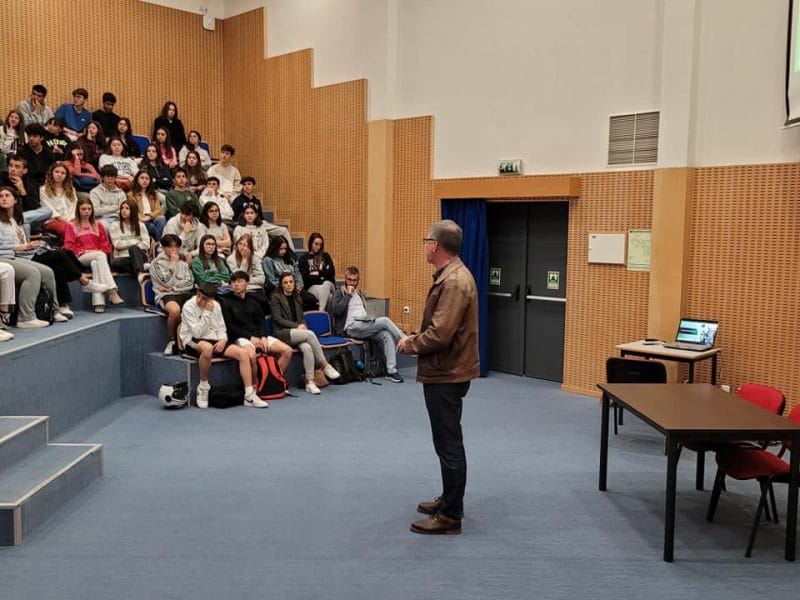
Na passada terça-feira, dia 28 de março, o InnovPlantProtect (InPP) esteve no Clube de Ciência do Agrupamento de Escolas n.° 3 de Elvas (Clube de Ciência AE3Elvas). Na iniciativa marcaram presença Pedro Fevereiro, diretor executivo do InPP, e Sandra Correia e Ricardo Ramiro, diretores de departamento.

O Pedro Fevereiro deu a conhecer o laboratório colaborativo e o trabalho de investigação e de inovação que tem sido desenvolvido por terras elvenses. Sandra Correia abordou o tema o que são biopesticidas, como se fazem, quais as vantagens e desvantagens destes em comparação com os pesticidas de síntese química, bem como os tipos de biopesticidas existentes. Ricardo Ramiro apresentou o conceito de microbioma aos alunos e explicou para que serve na agricultura.

A iniciativa realizou-se a convite do Clube de Ciência AE3Elvas, no âmbito dos “Dias Abertos do Agrupamento de Escolas n.° 3 de Elvas”.

Créditos de imagem: ©️Clube de Ciência AE3Elvas