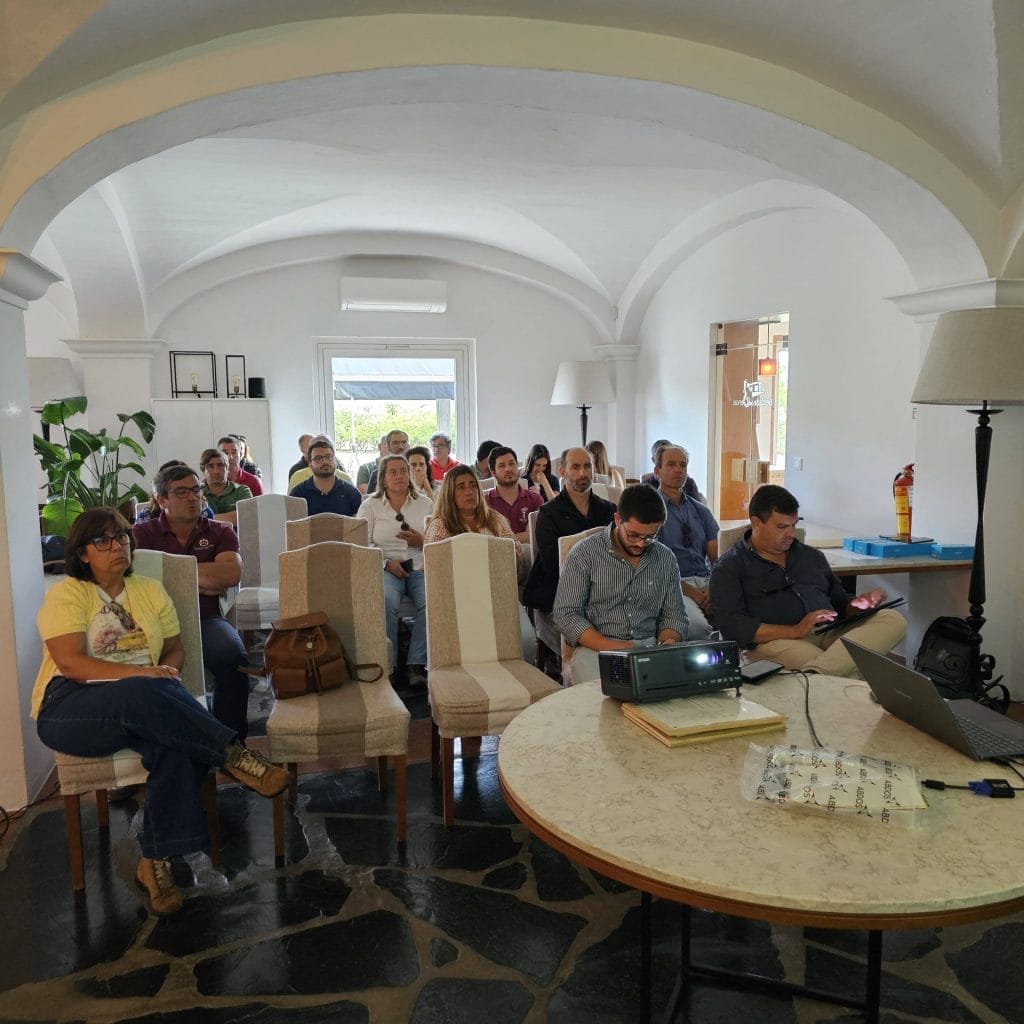
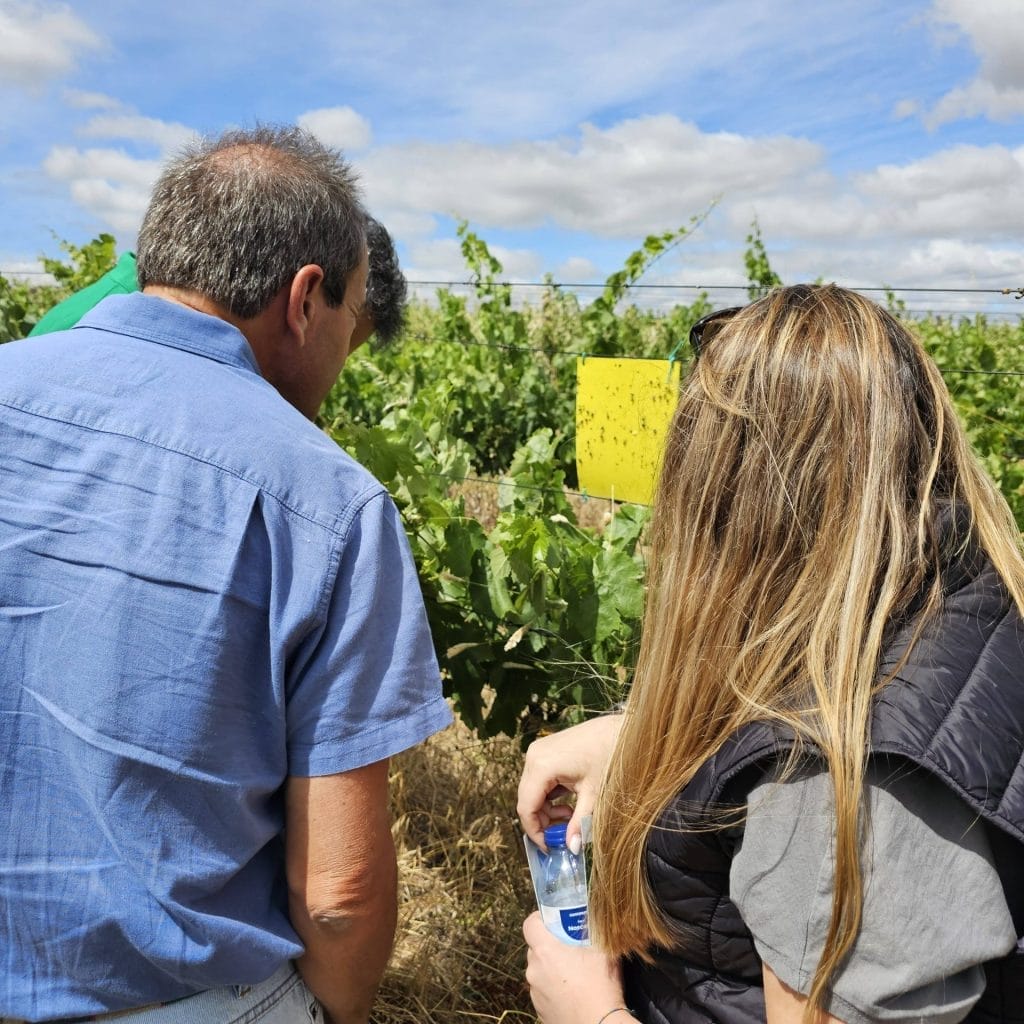
O InPP marcou presença no Encontro com orizicultores e técnicos(as) em Portugal, promovido pela EDAF, que decorreu no dia 5 de março, no Pólo de Inovação de Salvaterra de Magos, em Santarém.
A Diretora de Biosoluções do InPP, Cristina Azevedo, integrou o painel de oradores convidados, tendo apresentado a comunicação intitulada “A problemática da Pyricularia na cultura do arroz”. A apresentação incidiu sobre os principais desafios fitossanitários associados a esta doença, que continua a constituir uma das maiores ameaças à produção de arroz a nível mundial e também em Portugal.
O encontro reuniu produtores, técnicos e especialistas da fileira do arroz, proporcionando um espaço de partilha de conhecimento e debate sobre soluções atuais e em desenvolvimento para o controlo da piriculariose. Foram igualmente abordados outros temas relevantes para a sustentabilidade e produtividade da cultura, nomeadamente a gestão da fertilização.
A participação do InPP neste tipo de iniciativas reforça o compromisso da instituição com a inovação, a transferência de conhecimento e o desenvolvimento de soluções sustentáveis para a agricultura nacional.
O InPP agradece à EDAF e ao COTArroz o convite e a organização deste importante encontro, esperando que esta colaboração continue a fortalecer-se no futuro.
The project TomaBioTec started in January with the aim of developing and validating innovative solutions that contribute to a more sustainable and efficient production of tomatoes in the industry, in line with the current challenges of the agri-food sector, by integrating biotechnology and digital technologies.
The initiative aims to evaluate, under real field conditions, the effectiveness and efficiency of a biosolution with bioprotective and/or biostimulant properties, developed by InnovPlantProtect (InPP), This could help improve the quality and productivity of industrial tomato crops.
The rehearsals take place at Alentejo and Spanish Extremadura and combine traditional agronomic methods with advanced technologies, such as drones, multispectral sensors and artificial intelligence models. This approach allows detailed monitoring of the health of the crop, the presence of pests and diseases and the impact of the bioproduct throughout the production cycle.
The project “TomaBioTec: New biological and digital solutions for tomato crop protection and fertilization” is led by the InPP, in collaboration with the Centro Tecnológico Nacional Agroalimentario Extremadura (CTAEX) and Cordeiro Group, and was selected as one of the winners of the 7th edition of the Promove Program, The prize was awarded by the “la Caixa” Foundation, in partnership with Banco BPI and the Foundation for Science and Technology (FCT), in the category of innovative pilot projects.
This project reinforces the commitment to biological and digital solutions as drivers of more sustainable, competitive agriculture based on scientific evidence, with a direct impact on producers and industry.
InnovPlantProtect (InPP) was present at the XVI National Maize Congress, which also included the 2nd Meeting of Cereal Crops, organized by ANPROMIS, in collaboration with ANPOC and AOP. The event took place on February 11 and 12 at CNEMA in Santarém, bringing together national and international experts to discuss the sector's main challenges.
António Saraiva, Executive Director of InPP, took part in the panel “Cereal Production: What technical challenges are we facing?”, where he highlighted the decisive role of research in responding to the emerging challenges of cereal production, in a context of growing demographic, environmental and economic pressure.
“I'm proud that today, after seven years, we have 28 researchers working full-time on this topic, 12 of whom have PhDs, with experience in crops such as rice, which has been central to our work,” he said, emphasizing the multifunctional and international nature of InPP's teams.
He also pointed out that the work being done extends beyond rice to include maize, through ongoing projects and new operational groups focused on emerging crop problems. Among the initiatives in the spotlight is an application to Horizon Europe focused on developing improved and more resilient varieties.
For António Saraiva, anticipation is the key to success: “These challenges can't wait too long to be discussed or resolved. The sooner we anticipate the issues, the easier, more effective and more economical the solutions will be.”
In a debate that also marked the 40th anniversary of Portugal's integration into Europe and the role of the Common Agricultural Policy in the cohesion of the European Union, one message was clear across the board: “Climate change is the biggest threat we have.”
InPP thus reaffirms its commitment to innovation, science and the development of sustainable solutions for the future of cereal crops.
Elvas collaborative laboratory distinguished by Rural Life as “the most significant investment in the last year in the agricultural and agro-industrial sector”.
“Investment that makes a mark” 2021 is the name of the prize awarded today to InnovPlantProtect by Rural Life. The award, conferred by the editorial board of the professional agribusiness magazine, recognizes the most significant investment in the last year in the agricultural and agro-industrial sector at a national level.
The choice of the collaborative laboratory (CoLab), based in Elvas, “aims to reinforce the importance of investing in research and innovation in a key area for the future of agriculture: the search for biologically-based solutions for crop protection, in a challenging context, in which it is necessary to ensure the production of food in an increasingly sustainable way,” explains Isabel Martins, director of the company. Rural Life and publications coordinator at IFE.
One of the laboratories in the current, temporary premises.
Field work on a property owned by Fertiprado.
This award “honors the initiative of the 12 founding partners to create an innovative institution to develop biological and digital solutions for crop protection,” says Pedro Fevereiro, the CoLab's executive director, adding: “It's an incentive for InnovPlantProtect, which set up in a low-density region and managed to attract 38 highly qualified human resources to set up a modern innovation unit. It also rewards the vision of the municipality of Elvas, which embraced this challenge from the outset.”
The “Investment that Makes a Mark” 2021 award was presented during the 8th edition of the AgroIn - Annual Agribusiness Congress, organized by Rural Life/ IFE, held in the auditorium of the Faculty of Dental Medicine of the University of Lisbon.
Pedro Fevereiro, executive director of InnovPlantProtect
The InPP team, like scientists around the world, concludes that new techniques can mitigate the challenges posed by climate change and the continuing increase in the world's population.
We know that in order to feed the world's population in 2050, we will have to increase food production by 70% [1]. And we also know that agriculture is under intense pressure to meet the sustainability goals of the European Green Deal and Farm to Fork Strategy, This is under pressure from climate change and the increase in pests and diseases attacking crops.
A team from InnovPlantProtect (InPP) reviewed hundreds of scientific articles published in recent years and concluded that “genome editing is an important tool for improving food security in a sustainable way and mitigating the challenges posed by global climate change and the expansion of the world's population”. The review article [2], entitled Genome editing for resistance against plant pests and pathogens, has just been published in Transgenic Research.
“The development of new tools to improve plant protection is critical in the context of current agricultural, environmental and ecological challenges,” say the researchers, adding that “various efforts in the area of genome editing have resulted in plants with potentially beneficial characteristics that can be quickly and easily applied in the field.”.
Crops are invariably exposed to pests and diseases (left). In order to speed up the plant breeding process, genome editing technologies such as CRISPR-Cas make it possible to introduce resistance mechanisms or remove susceptibility quickly and precisely (right).
The team analyzed the latest advances in genome editing with a view to improving plant protection, focusing on editing the genomes of crops, pests and pathogens based on the CRISPR-Cas technique (Nobel Prize in Chemistry in 2020). The researchers did not forget other technologies, such as host-induced gene silencing (HIGS) and the use of biocontrol agents, discussing how CRISPR-Cas can be used to accelerate the development of ecological strategies that promote sustainable agriculture in the future.
[HIGS consists of the plant producing small molecules of RNA (ribonucleic acid), which lead to the silencing of the pathogen's genes; silencing a gene means “canceling” its expression].
As genome editing does not require crossbreeding, the authors of the article point out, it avoids the introduction of unwanted characteristics through genetic linkage (a situation in which a gene with a positive characteristic is physically linked to a gene that confers negative characteristics) in improved varieties, speeding up the entire breeding process.
In addition, genome editing technologies can directly target the susceptibility genes or virulence factors of pests and pathogens, either by directly editing the genome of the pest in question, or by adding genome editing mechanisms to the plant genome, or to microorganisms that act as biocontrol agents.
Several studies have shown that the targeted inactivation of susceptibility genes through genome editing is a solid strategy for crop protection, capable of producing non-transgenic plants. The technique has been shown to be particularly effective in editing susceptibility genes to pathogenic bacteria and fungi.
“The potential impact of genome editing, and CRISPR technology in particular, on plant synthetic biology to improve resistance to pests and diseases is enormous and will have a direct effect on agricultural sustainability on a scale never seen before,” the team concludes.
Original article:
Rato, C., Carvalho, M.F., Azevedo, C. & Oblessuc, Paula. Genome editing for resistance against plant pests and pathogens. Transgenic Research (2021). https://doi.org/10.1007/s11248-021-00262-x
Elvas City Council promotes a visit to the works in progress at InnovPlantProtect and at the Elvense pole of the National Institute for Agrarian and Veterinary Research.
The work in progress at INIAV Elvas, including those that will accommodate the permanent facilities of the InnovPlantProtect (InPP), were visited yesterday, June 16, by a delegation that included the president of the Elvas City Council, Nuno Mocinha, the vice-president of the municipality, Cláudio Carapuça, as well as a number of council technicians, the presidents of parish councils in the municipality and representatives of the media.
InPP is an institution that wants to last for many, many years, not a “one-off project”, said the executive director of the collaborative laboratory (CoLab). Pedro February He also highlighted the fact that the research and innovation carried out here “leaves” the laboratory for the field, in the form of specific, biologically-based products and services supplied to companies, farmers and producers, among others.
Nuno Mocinha stressed the CoLab's great importance for agriculture and the region, particularly thanks to the establishment of highly qualified workers dedicated to science and technology applied in the field.
The visit took place as part of a tour promoted by the CME of some of the works underway in the municipality.