News & Events

white plant

NEWS

O InPP marcou presença no Encontro com orizicultores e técnicos(as) em Portugal, promovido pela EDAF, que decorreu no dia 5 de março, no Pólo de Inovação de Salvaterra de Magos, em Santarém.

A Diretora de Biosoluções do InPP, Cristina Azevedo, integrou o painel de oradores convidados, tendo apresentado a comunicação intitulada “A problemática da Pyricularia na cultura do arroz”. A apresentação incidiu sobre os principais desafios fitossanitários associados a esta doença, que continua a constituir uma das maiores ameaças à produção de arroz a nível mundial e também em Portugal.

WhatsApp Image 2026 03 06 at 14.28.18

O encontro reuniu produtores, técnicos e especialistas da fileira do arroz, proporcionando um espaço de partilha de conhecimento e debate sobre soluções atuais e em desenvolvimento para o controlo da piriculariose. Foram igualmente abordados outros temas relevantes para a sustentabilidade e produtividade da cultura, nomeadamente a gestão da fertilização.

A participação do InPP neste tipo de iniciativas reforça o compromisso da instituição com a inovação, a transferência de conhecimento e o desenvolvimento de soluções sustentáveis para a agricultura nacional.

O InPP agradece à EDAF e ao COTArroz o convite e a organização deste importante encontro, esperando que esta colaboração continue a fortalecer-se no futuro.

The project TomaBioTec started in January with the aim of developing and validating innovative solutions that contribute to a more sustainable and efficient production of tomatoes in the industry, in line with the current challenges of the agri-food sector, by integrating biotechnology and digital technologies.

TomaBioTec Logo

The initiative aims to evaluate, under real field conditions, the effectiveness and efficiency of a biosolution with bioprotective and/or biostimulant properties, developed by InnovPlantProtect (InPP), This could help improve the quality and productivity of industrial tomato crops.

The rehearsals take place at Alentejo and Spanish Extremadura and combine traditional agronomic methods with advanced technologies, such as drones, multispectral sensors and artificial intelligence models. This approach allows detailed monitoring of the health of the crop, the presence of pests and diseases and the impact of the bioproduct throughout the production cycle.

The project “TomaBioTec: New biological and digital solutions for tomato crop protection and fertilization” is led by the InPP, in collaboration with the Centro Tecnológico Nacional Agroalimentario Extremadura (CTAEX) and Cordeiro Group, and was selected as one of the winners of the 7th edition of the Promove Program, The prize was awarded by the “la Caixa” Foundation, in partnership with Banco BPI and the Foundation for Science and Technology (FCT), in the category of innovative pilot projects.

This project reinforces the commitment to biological and digital solutions as drivers of more sustainable, competitive agriculture based on scientific evidence, with a direct impact on producers and industry.

More information about the project here.

InnovPlantProtect (InPP) was present at the XVI National Maize Congress, which also included the 2nd Meeting of Cereal Crops, organized by ANPROMIS, in collaboration with ANPOC and AOP. The event took place on February 11 and 12 at CNEMA in Santarém, bringing together national and international experts to discuss the sector's main challenges.

António Saraiva, Executive Director of InPP, took part in the panel “Cereal Production: What technical challenges are we facing?”, where he highlighted the decisive role of research in responding to the emerging challenges of cereal production, in a context of growing demographic, environmental and economic pressure.

“I'm proud that today, after seven years, we have 28 researchers working full-time on this topic, 12 of whom have PhDs, with experience in crops such as rice, which has been central to our work,” he said, emphasizing the multifunctional and international nature of InPP's teams.

He also pointed out that the work being done extends beyond rice to include maize, through ongoing projects and new operational groups focused on emerging crop problems. Among the initiatives in the spotlight is an application to Horizon Europe focused on developing improved and more resilient varieties.

For António Saraiva, anticipation is the key to success: “These challenges can't wait too long to be discussed or resolved. The sooner we anticipate the issues, the easier, more effective and more economical the solutions will be.”

In a debate that also marked the 40th anniversary of Portugal's integration into Europe and the role of the Common Agricultural Policy in the cohesion of the European Union, one message was clear across the board: “Climate change is the biggest threat we have.”

InPP thus reaffirms its commitment to innovation, science and the development of sustainable solutions for the future of cereal crops.

EVENTS

Casa da História Judaica da Rainha da Fronteira wins a government award for actions and initiatives by local authorities to “save, protect and dignify human lives in Portugal in the face of contemporary threats and atrocities”.

A Elvas City Council won the first municipal award “Aristides de Sousa Mendes and other Portuguese saviors - Holocaust, universal values, humanism and justice”, in the category “Arts, Heritage and other Cultural Domains”, with the application of the House of Jewish History.

The honorary distinction, which is national in scope, was launched by the government in 2021. Among other things, it “aims to distinguish practices, programs, projects, symbols and material and immaterial works, which, inspired by memories and teachings arising from the Holocaust, and/or developed around universal values of humanism and justice, are factors of identification, aggregation and recognition by the respective communities, and valorization by differentiation, of localities and territories”.

The House of Jewish History is located at Rua dos Açougues, nº 4-6, in Elvas, and is open from Tuesday to Sunday, from 10am to 6pm.

In addition to the diploma that will be presented to the Municipality of Elvas by the Directorate-General for Local Authorities, The government undertakes to publicize the winning project.

Elvas City Council is a founding member of CoLAB InnovPlantProtect, which is based in the city.

Image: Elvas City Council

InnovPlantProtect and the Municipality of Sabugal install sensors in the municipality's chestnut groves and launch an educational program to value the chestnut tree as a local natural capital.

The trees will communicate their state of health thanks to TreeTalker sensors. The project “Educate to know, protect and monitor chestnut trees through IoT technology”, which has been approved by the Environmental Fund, is led by InnovPlantProtect (InPP) and managed by the Sabugal Municipal Council (CMS).

The initiative is aimed at the sustainable management of chestnut trees, the enhancement of ecosystem services and protection against diseases, particularly ink disease, for which there is still no concrete solution. The project includes training courses for those currently and potentially responsible for the sustainable management and protection of chestnut trees: CMS and chestnut producers associated with CastCoa - Associação de Produtores de Castanha do Coa; and secondary school students from the Sabugal School Group.

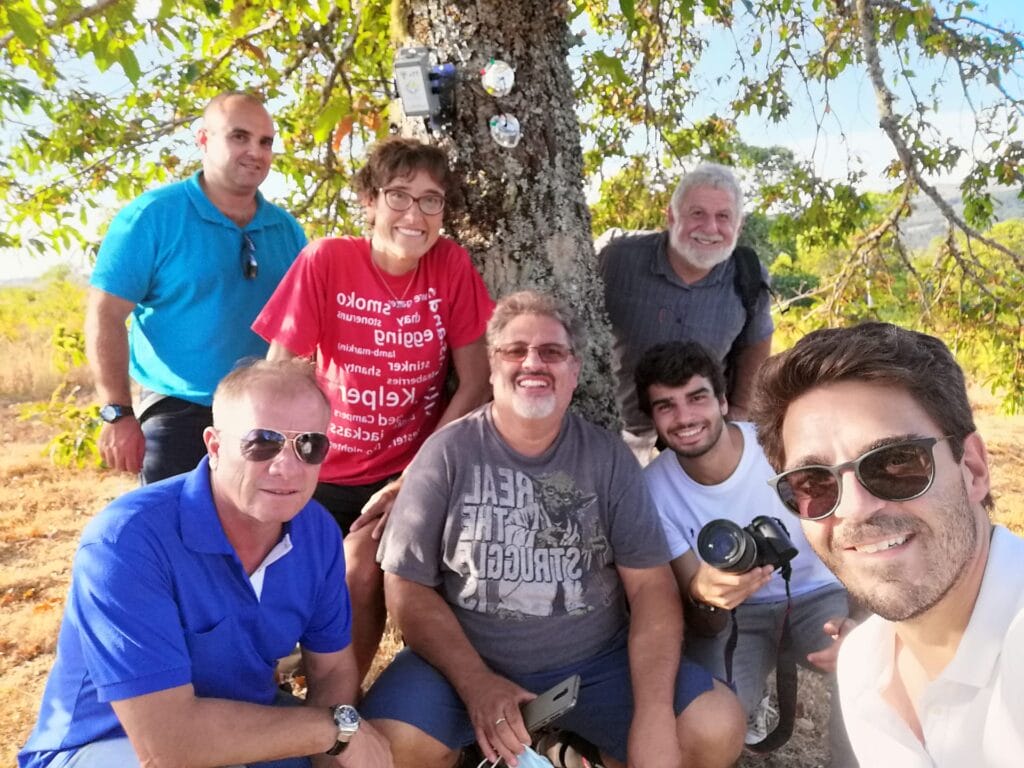
The CMS and InPP team in Sabugal at the beginning of September 2021.

The novelty of the educational program, however, is that digital 4.0 technology, based on the “Internet of Things” (IoT), is being applied to support and add value to traditional teaching methods. The TreeTalker sensors, installed around the trunk, allow the phytosanitary conditions of the trees to be monitored in real time, detecting water consumption (through sap flow), biomass growth (diameter), stem humidity, absorbed solar radiation and the state of health of the leaves through spectral indices (light reflection).

Sabugal City Council has just publicize the project. Don't miss the newly released video, which highlights the importance of the chestnut tree to the livelihoods of local communities and the value of the souto ecosystem, and shows the team at work in the field. It's also a unique opportunity to see InPP researchers in action Manuel Simões, Márcio Almeida e Ilaria Marengo, director of Pest and Disease Monitoring and Diagnosis Department, and coordinator of this project.

Pedro Fevereiro in podcast version, as part of a partnership between CiB - Centro de Informação de Biotecnologia and TSF radio. In total, 5 Notes on Gene Editing were produced.

The executive director of InnovPlantProtect answers the question “Can gene editing increase agricultural production?” in this podcast, produced as part of a CiB / TSF partnership. The initiative resulted in 5 Notes on Gene Editing in food production and health. The recordings were broadcast by TSF during the week of October 4 to 8, 2021.

The challenge for 2050 is how to feed 10 million people without destroying the planet. This requires changes in food production. Pedro Fevereiro explains how gene editing can help in this process.

Listen too the other four podcasts, which feature:

Jorge Canhoto, researcher, head of the Plant Biotechnology Laboratory of the Functional Ecology Center of the University of Coimbra and president of CiB - Biotechnology Information Center

Margarida Oliveira, who leads the Plant Functional Genomics research group of the GPlantS - Plant Genomics under Stress unit at the Institute of Chemical and Biological Technology (ITQB NOVA).

Ana Sofia Coroadinha, professor at ITQB NOVA

Filipe Castro, researcher at the Interdisciplinary Center for Marine and Environmental Research, and professor at the Faculty of Sciences of the University of Porto 

Feature image: CiB