News & Events

white plant

NEWS

The project TomaBioTec started in January with the aim of developing and validating innovative solutions that contribute to a more sustainable and efficient production of tomatoes in the industry, in line with the current challenges of the agri-food sector, by integrating biotechnology and digital technologies.

TomaBioTec Logo

The initiative aims to evaluate, under real field conditions, the effectiveness and efficiency of a biosolution with bioprotective and/or biostimulant properties, developed by InnovPlantProtect (InPP), This could help improve the quality and productivity of industrial tomato crops.

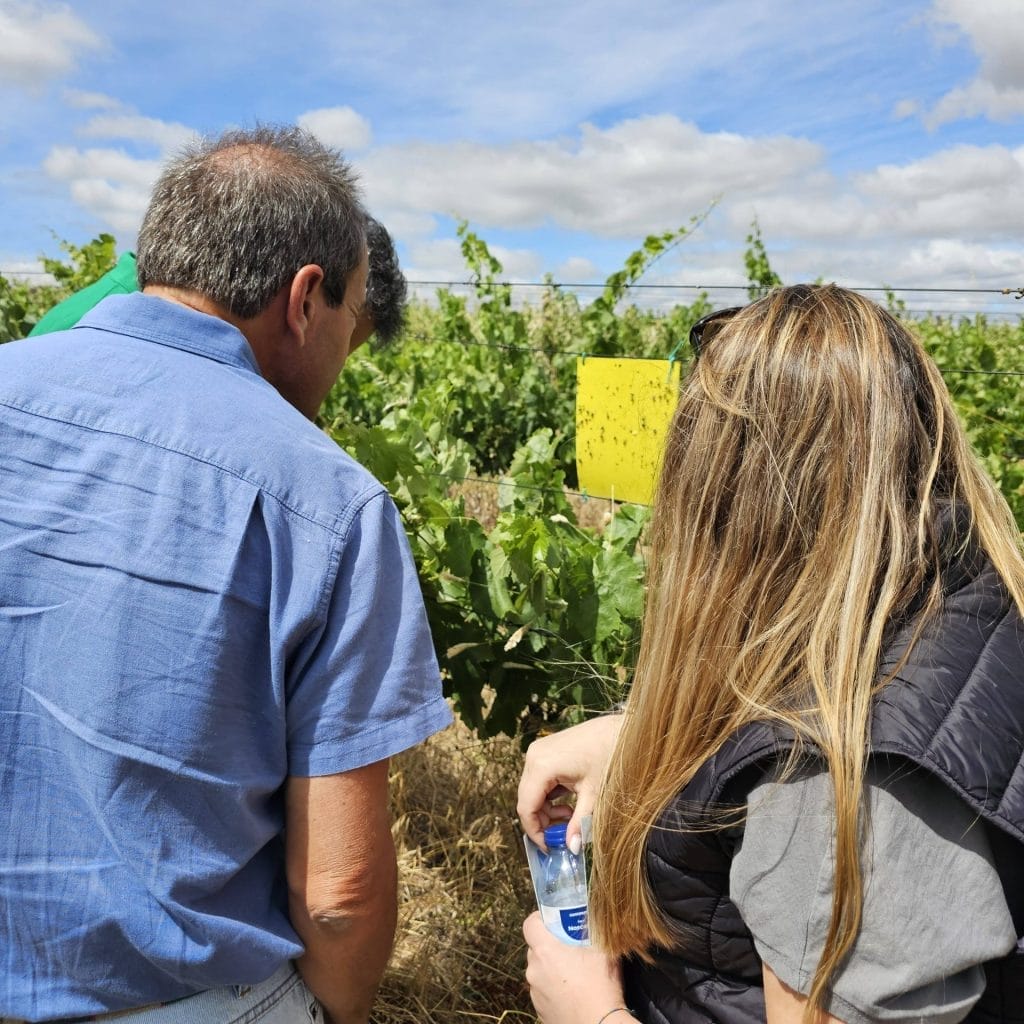
The rehearsals take place at Alentejo and Spanish Extremadura and combine traditional agronomic methods with advanced technologies, such as drones, multispectral sensors and artificial intelligence models. This approach allows detailed monitoring of the health of the crop, the presence of pests and diseases and the impact of the bioproduct throughout the production cycle.

The project “TomaBioTec: New biological and digital solutions for tomato crop protection and fertilization” is led by the InPP, in collaboration with the Centro Tecnológico Nacional Agroalimentario Extremadura (CTAEX) and Cordeiro Group, and was selected as one of the winners of the 7th edition of the Promove Program, The prize was awarded by the “la Caixa” Foundation, in partnership with Banco BPI and the Foundation for Science and Technology (FCT), in the category of innovative pilot projects.

This project reinforces the commitment to biological and digital solutions as drivers of more sustainable, competitive agriculture based on scientific evidence, with a direct impact on producers and industry.

More information about the project here.

InnovPlantProtect (InPP) was present at the XVI National Maize Congress, which also included the 2nd Meeting of Cereal Crops, organized by ANPROMIS, in collaboration with ANPOC and AOP. The event took place on February 11 and 12 at CNEMA in Santarém, bringing together national and international experts to discuss the sector's main challenges.

António Saraiva, Executive Director of InPP, took part in the panel “Cereal Production: What technical challenges are we facing?”, where he highlighted the decisive role of research in responding to the emerging challenges of cereal production, in a context of growing demographic, environmental and economic pressure.

“I'm proud that today, after seven years, we have 28 researchers working full-time on this topic, 12 of whom have PhDs, with experience in crops such as rice, which has been central to our work,” he said, emphasizing the multifunctional and international nature of InPP's teams.

He also pointed out that the work being done extends beyond rice to include maize, through ongoing projects and new operational groups focused on emerging crop problems. Among the initiatives in the spotlight is an application to Horizon Europe focused on developing improved and more resilient varieties.

For António Saraiva, anticipation is the key to success: “These challenges can't wait too long to be discussed or resolved. The sooner we anticipate the issues, the easier, more effective and more economical the solutions will be.”

In a debate that also marked the 40th anniversary of Portugal's integration into Europe and the role of the Common Agricultural Policy in the cohesion of the European Union, one message was clear across the board: “Climate change is the biggest threat we have.”

InPP thus reaffirms its commitment to innovation, science and the development of sustainable solutions for the future of cereal crops.

There are days when science begins long before you enter the laboratory or the field. It starts at dawn, when the alarm clock goes off too early. When you mentally review the day's list: an experiment that can't be missed, a trip to the field that depends on the weather, an unfinished report, a meeting scheduled at the wrong time. In between, someone to wake up, someone to drop off, someone to call. And yet science moves forward.

At InnovPlantProtect, there are now 15 women who give a face to the science and innovation developed here. Women who represent commitment, demand, resilience, overcoming, quality, talent, excellence and creativity. But they are only part of a greater whole. There are many more - and each one brings with it a story that doesn't fit into a CV, a patent application or an article.

Today, February 11th, marks the International Day of Women and Girls in Science, a UNESCO initiative that underlines the importance of the female role in the production of scientific and technological knowledge and the need to continue promoting equal access to careers in science and innovation. Portugal has encouraging figures: women represent almost 50% researchers in the country. It's a relevant figure, reflecting decades of progress. But the figures don't show what happens between them.

Because science, for many women, is made up of fragile balances.

There are women with intense family lives, others with more solitary journeys, still others who build support networks outside traditional models, with effort and creativity. There are difficult choices and decisions, unexpected circumstances, forced breaks, changes of pace, different phases of life. All legitimate. Many are invisible when you only look at the end result of a project, an article or a biosolution developed. - but they all influence the paths of science.

One day, one of our researchers - let's just call her that - told us that she had finished a field trial close to sunset. The phone rang while she was putting away her materials. It was the school. A delay. Nothing extraordinary. It was business as usual. She came home exhausted, with dirt still on her boots, opened her computer after dinner and went back to her data, because the experiment couldn't wait.
“It wasn't a heroic day,” she said. “It was just a normal day.”

And perhaps that is what is most remarkable.

In the field of crop protection, the work is demanding, technical and often unpredictable. It takes place in the laboratory and in the field, between strict protocols and decisions made under real conditions. It requires persistence, adaptability, attention to detail and an integrated view of problems. Characteristics that so many women bring with them - not by nature, but by experience, by path, by everything they have learned to manage at the same time.

Each personal story profoundly shapes the way we do science. The doubts, the challenges, the forced breaks, the changes of pace, the new beginnings. None of this is left at the laboratory door. It all silently enters into the way we observe, question and build knowledge.

To celebrate the International Day of Women and Girls in Science is to recognise this reality as a whole. It is to honour the women who continue to do science despite the challenges — and often because of them. And it is to remember that innovation is also born from lives fully lived, shaped by imperfection, effort and courage.

Today we celebrate them. Not just for what they produce, but for all that they are. In science, in the field, in the laboratory - and in the life that happens in between.

EVENTS

MASSA - Knowledge Centre for Sustainable Agricultural Modernization and Food Security is one of the priority CAIS of the South Campus and is based at the Elvas CoLAB.

InnovPlantProtect (InPP) is the headquarters of one of the three priority centers for applied knowledge and innovation of the recently created South Campus, This consortium brings together the University of Évora (UÉ), NOVA University Lisbon and the University of the Algarve. NOVA and UÉ are members of the collaborative laboratory (CoLAB).

The Centers of Applied Knowledge and Innovation for Sustainability (CAIS) focus on designing “innovative solutions in specific areas of sustainable development in the South, based on existing infrastructures,” explain the consortium's leaders. The specific objective of MASS CAISES - The Knowledge Centre for Sustainable Agricultural Modernization and Food Security, based at the InPP in Elvas, aims to “promote agriculture based on a sustainable model, aligned with the principles of the circular economy and the eco-economy (...), contributing to the development and cohesion of the territories of the Iberian South and Interior”.

Innovation applied to agricultural production, the valorization of endogenous natural resources, the promotion of the Mediterranean diet and the training of human resources in the area of sustainable agriculture are the main thematic lines of action. The strategic partners of this CAIS include local authorities, CCDRs (Algarve, Alentejo, Lisbon), the Institute of Agricultural and Veterinary Research (INIAV, also an InPP associate), Bayer Crop Science, Syngenta Crop Protection (both InPP associates), the Eugénio de Almeida Foundation, the Fraunhofer Institute and the Association of Young Farmers of Portugal (AJAP), as well as other academic partners at Iberian and international level.

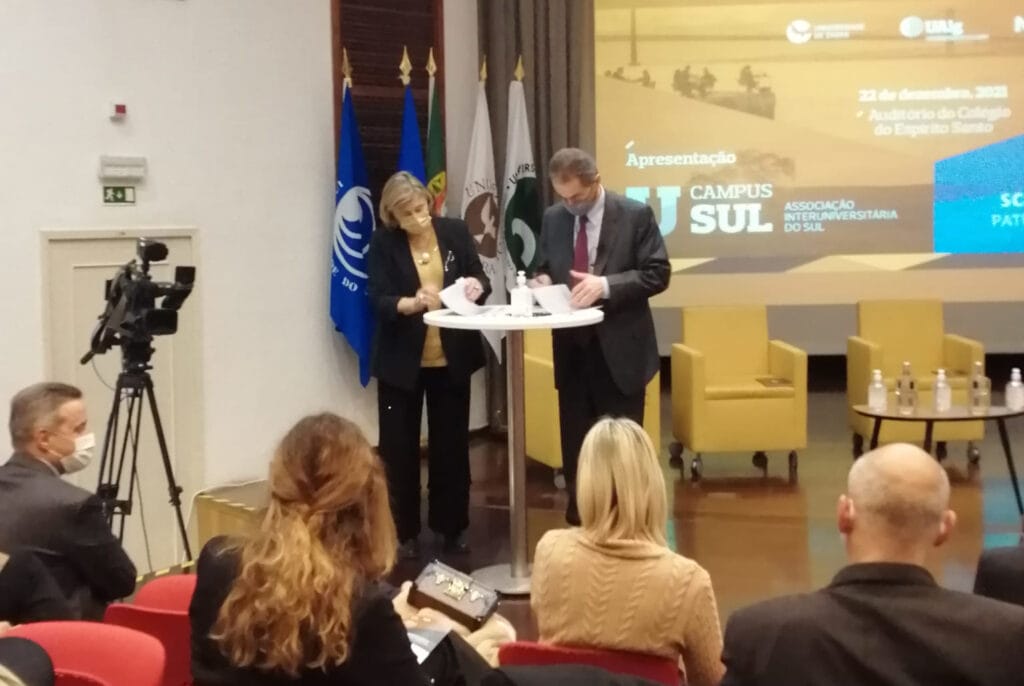
The South Campus - Interuniversity Association of the South was presented was publicly announced on December 22, 2021, in the Auditorium of the Colégio do Espírito Santo at the University of Évora. InPP's executive director was one of the speakers at the afternoon session (Science Day@South). Pedro Fevereiro spoke on the panel “Earth Research and Social Innovation”, with a presentation entitled “Innovative Bio-based Solutions for Crop Protection”.

Read more on the Innovation component of the South Campus and on the priority CAIS, including MASSA.

InnovPlantProtect (InPP) would like to wish the entire team, Associates and partners Happy Holidays by sharing the Christmas Tree set up by CoLAB's newly created sustainability team, InPP Greeners.

The maritime pine (Pinus pinaster) was purchased locally from the Elvas Volunteer Fire Brigade for a symbolic price, helping to raise funds for the organization, which collects the trees for the benefit of the Serra de São Mamede forest.

It is decorated with repurposed laboratory materials, including reused paper ribbons and recycled cardboard balls.

Follow the team on @InPPGreeners

The Elvas Volunteer Fire Brigade is selling the pine trees at a symbolic price of €5 and €10. The maritime pine is widely used in Portugal as a Christmas tree. Plastic, paper and cardboard, among other materials, were reused in the decorations.

InnovPlantProtect is participating in three ideas that applied to the Recovery and Resilience Plan (PRR) measure “Mobilizing Agendas for Business Innovation - Proposals for the Economy of the Future”, which have been selected to move on to phase two of the process: InsectERA, the Blue Bioeconomy Pact and OesteFruta 4.0.

OesteFruta 4.0 is a mobilizing agenda for fruit growing in the West. The aim is to provide the region and the sector with tools that will enable them to face current and future challenges, with a focus on the Rocha pear and the Alcobaça apple. The consortium is led by Atlantic Portuguese Apple - Clube da Maçã and the idea, presented on Friday in Leixões by Armando Torres Paulo, corresponds to a total investment of €97 million.

The public session to present the Mobilizing Agendas took place on December 2nd and 3rd at the Port of Leixões Cruise Terminal. At the day 3 Daniel Murta, CEO of Ingredient Odyssey, and Tiago Pitta e Cunha, representing Inovamar, which is leading the Blue Bioeconomy Pact. This idea, which corresponds to a total investment of €220 million, aims to reindustrialize the blue bioeconomy by creating new economic models based on the use of marine bio-resources, as well as creating the first blue bioeconomy in the world. hub european blue bioeconomy.

The InsectERA agenda, which involves a total investment of €57 million, aims to apply circular economy concepts to the insect industry. The idea is to return by-products from the agro-industry, and some agricultural and urban waste, to the value chain in the form of nutritional solutions for people, animals and plants, as well as new industrial solutions, from cosmetics to bioplastics.

The information is public and can be consulted on the from IAPMEI.