News & Events

white plant

NEWS

InPP participa em sessão com comitiva checa do setor das biotecnologias

No dia 26 de março, o InPP participou numa sessão promovida pela Agência Nacional de Inovação (ANI), em Lisboa, que contou com a presença de uma comitiva da República Checa ligada ao setor das biotecnologias.

Em representação do InPP estiveram Cristina Azevedo, Diretora de Biosoluções, e Paulo Madeira, Gestor de Inovação, que apresentou a instituição e as suas principais áreas de atuação e competências.

A iniciativa teve como principal objetivo identificar oportunidades de cooperação entre entidades portuguesas e checas, nomeadamente nas áreas de transferência de tecnologia, codesenvolvimento, ensaios pré-clínicos e diagnósticos, coinvestimento e internacionalização da inovação.

A sessão contou com a participação de representantes de entidades relevantes da República Checa, incluindo Petra Kinzlova, CEO da Prague.bio, Katarina Psenakova, Head of Biology da PharmTheon, bem como representantes da Embaixada da República Checa e da Academia das Ciências da República Checa.

Este encontro contribuiu para reforçar o posicionamento do InPP na promoção de parcerias internacionais e no desenvolvimento de soluções inovadoras, evidenciando o compromisso contínuo da instituição em fortalecer redes de colaboração científica e tecnológica e em contribuir para o crescimento e internacionalização da inovação.

InPP participa em encontro técnico dedicado à cultura do arroz

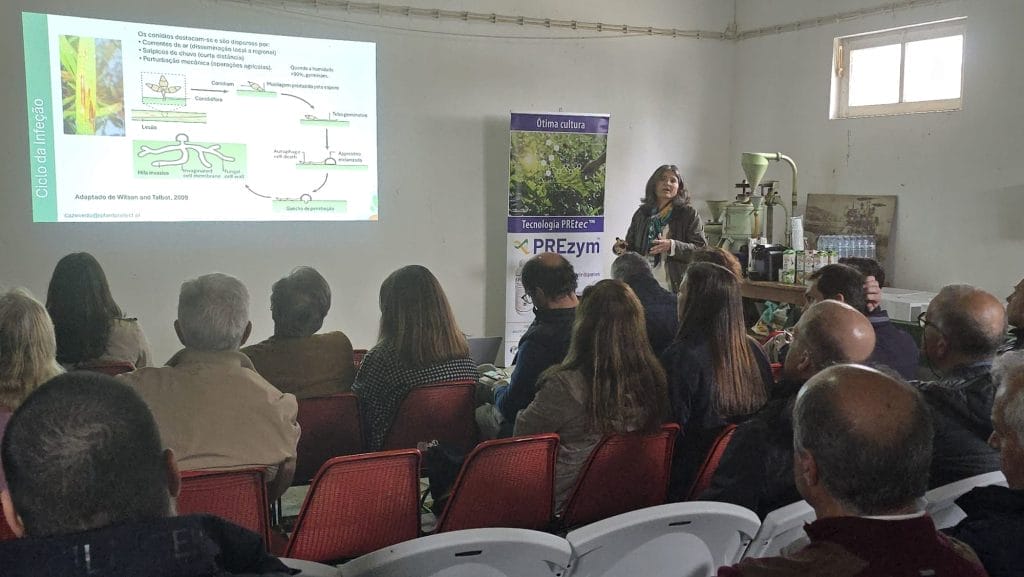
O InPP marcou presença no Encontro com orizicultores e técnicos(as) em Portugal, promovido pela EDAF, que decorreu no dia 5 de março, no Pólo de Inovação de Salvaterra de Magos, em Santarém.

A Diretora de Biosoluções do InPP, Cristina Azevedo, integrou o painel de oradores convidados, tendo apresentado a comunicação intitulada “A problemática da Pyricularia na cultura do arroz”. A apresentação incidiu sobre os principais desafios fitossanitários associados a esta doença, que continua a constituir uma das maiores ameaças à produção de arroz a nível mundial e também em Portugal.

WhatsApp Image 2026 03 06 at 14.28.18

O encontro reuniu produtores, técnicos e especialistas da fileira do arroz, proporcionando um espaço de partilha de conhecimento e debate sobre soluções atuais e em desenvolvimento para o controlo da piriculariose. Foram igualmente abordados outros temas relevantes para a sustentabilidade e produtividade da cultura, nomeadamente a gestão da fertilização.

A participação do InPP neste tipo de iniciativas reforça o compromisso da instituição com a inovação, a transferência de conhecimento e o desenvolvimento de soluções sustentáveis para a agricultura nacional.

O InPP agradece à EDAF e ao COTArroz o convite e a organização deste importante encontro, esperando que esta colaboração continue a fortalecer-se no futuro.

TomaBioTec project focuses on biological and digital solutions for growing industrial tomatoes

The project TomaBioTec started in January with the aim of developing and validating innovative solutions that contribute to a more sustainable and efficient production of tomatoes in the industry, in line with the current challenges of the agri-food sector, by integrating biotechnology and digital technologies.

TomaBioTec Logo

The initiative aims to evaluate, under real field conditions, the effectiveness and efficiency of a biosolution with bioprotective and/or biostimulant properties, developed by InnovPlantProtect (InPP), This could help improve the quality and productivity of industrial tomato crops.

The rehearsals take place at Alentejo and Spanish Extremadura and combine traditional agronomic methods with advanced technologies, such as drones, multispectral sensors and artificial intelligence models. This approach allows detailed monitoring of the health of the crop, the presence of pests and diseases and the impact of the bioproduct throughout the production cycle.

The project “TomaBioTec: New biological and digital solutions for tomato crop protection and fertilization” is led by the InPP, in collaboration with the Centro Tecnológico Nacional Agroalimentario Extremadura (CTAEX) and Cordeiro Group, and was selected as one of the winners of the 7th edition of the Promove Program, The prize was awarded by the “la Caixa” Foundation, in partnership with Banco BPI and the Foundation for Science and Technology (FCT), in the category of innovative pilot projects.

This project reinforces the commitment to biological and digital solutions as drivers of more sustainable, competitive agriculture based on scientific evidence, with a direct impact on producers and industry.

More information about the project here.

EVENTS

InnovPlantProtect is an EFSA Competent Organization

The InnovPlantProtect (InPP) collaborative laboratory (CoLAB) has been integrated in the list of Competent Organizations of the European Food Safety Authority, or EFSA) designated by the member states, with the capacity to assist that European Union agency.

This integration “represents EFSA's recognition of the skills installed at the InPP,” notes CoLAB's executive director, Pedro Fevereiro, expressing CoLAB's full willingness to collaborate with the European Food Safety Authority in pursuing its objectives.

Ministers of Science and Territorial Cohesion visit InnovPlantProtect

Today, March 21, 2022, InnovPlantProtect (InPP) received a visit from the Ministers of Science, Technology and Higher Education, Manuel Heitor, and Territorial Cohesion, Ana Abrunhosa, and the Secretary of State for the Enhancement of the Interior, Isabel Ferreira.

“Seeing these renovated facilities shows that there is an effort here that now needs to continue,” said Manuel Heitor, congratulating the InPP, particularly in terms of retaining highly qualified human resources, such as the 16 doctoral graduates from CoLAB. Ana Abrunhosa also congratulated InPP's associates on the combination of wills that gave birth to this collaborative laboratory, adding that the government will continue to give priority to interface structures such as CoLABs within the scope of European funding programs.

InPP's executive director, Pedro Fevereiro, led the tour of the new and old facilities at INIAV's Elvas Campus and presented InnovPlantProtect's structure, team, projects and future plans. Asked by Manuel Heitor about InPP's potential for internationalization, and while stressing that CoLAB is still in the installation phase, Pedro Fevereiro mentioned the various relationships already established in Spain and contacts to be explored with Brazil.

The fact that CoLAB has two multinationals (Bayer and Syngenta) as associates is aimed precisely at this strategy, recalled Isabel Rocha, vice-rector of NOVA University Lisbon, representing the InPP board of directors, arguing that this is a two-year project.

The visit was also attended by José Rondão Almeida, mayor of Elvas, Luís Loures, president of the Portalegre Polytechnic Institute (IPPortalegre), Fernando Rebola, vice-president of IPPortalegre, Rosário Félix, representing the University of Évora, Miguel de Castro Neto, from NOVA IMS, the president and vice-president of CCDR Alentejo, António Ceia da Silva and Carmen Carvalheira, Margarida Oliveira, from ITQB NOVA and coordinator of the InPP working group, the director of INIAV's Elvas Pole, Benvindo Maçãs, and Pedro Viterbo, manager of Fertiprado.

InnovPlantProtect endorses FAO pillars for more sustainable agri-food systems

Better production, better nutrition, a better environment and a better life, leaving no one behind: InnovPlantProtect (InPP) subscribes to the principle of the “four bests” by FAO, The transformation to agri-food systems is achievable. more efficient, inclusive, resilient and sustainable, within the framework of the The organization's Strategic Framework for 2022-2031 and the 2030 Agenda for Sustainable Development.

With the “top four”, the Food and Agriculture Organization (FAO) of the United Nations aims to contribute to achieving the agenda of the Sustainable Development Goals (SDGs), namely SDGs #1 (Eradicate poverty), #2 (Eradicate hunger) and #10 (Reduce inequalities). InPP is committed to achieving this vision through its mission to develop bioinspired solutions for protecting crops against pests and diseases.

The interconnection between the economic, social and environmental dimensions of agri-food systems is reflected in the “four bests”, encouraging a strategic and systems-oriented approach. “Better production” refers to efficient and inclusive agri-food supply chains at local, regional and global levels, ensuring resilience and sustainability in the face of climate and environmental change, with a view to achieving more sustainable consumption and production patterns.

The “better nutrition” pillar represents the goals of eradicating hunger, achieving food security, promoting nutritious food and increasing access to healthy diets. On the other hand, more efficient, inclusive, resilient and sustainable agri-food systems must also contribute to a “better environment” by protecting, restoring and encouraging the sustainable use of terrestrial and marine ecosystems, and combating climate change.

Last not least, By reducing inequalities (between urban and rural areas, rich and poor countries, men and women), the FAO hopes that we can promote inclusive economic growth and a better life for all, leaving no one behind.