Já está disponível a iCountPests, uma nova aplicação desenvolvida pelo InnovPlantProtect para apoiar a monitorização de pragas agrícolas através da análise automática de imagens captadas em campo.
A app utiliza inteligência artificial para contabilizar automaticamente pragas presentes em armadilhas adesivas, permitindo obter resultados rápidos e fiáveis diretamente no telemóvel.
Pensada para produtores e técnicos agrícolas, a iCountPests contribui para uma monitorização mais eficiente e precisa, reduzindo o tempo associado às contagens manuais e apoiando a tomada de decisão na proteção das culturas.
O funcionamento é simples:
Captar uma imagem da armadilha
Analisar automaticamente
Consultar resultados organizados e acessíveis
A app permite ainda acompanhar a evolução das pragas ao longo do tempo, facilitando a gestão e o registo da informação no terreno.
A monitorização de pragas é uma tarefa essencial na gestão agrícola, mas continua a depender, em muitos casos, de processos manuais demorados e sujeitos a erro.
A pensar nesta realidade, o InnovPlantProtect irá lançar brevemente a iCountPests, uma aplicação inovadora que utiliza inteligência artificial para automatizar a contagem de pragas a partir de imagens captadas no campo.
Com a iCountPests, será possível obter resultados rápidos e fiáveis, contribuindo para uma tomada de decisão mais informada e eficiente na proteção das culturas.
A aplicação estará brevemente disponível, sendo direcionada a produtores agrícolas e técnicos que procuram otimizar o tempo dedicado à monitorização e melhorar a precisão dos dados recolhidos.
Uma nova tecnologia de revestimento biológico de sementes desenvolvida pelo InnovPlantProtect (InPP), em colaboração com a Fertiprado, poderá vir a transformar o desempenho de pastagens e forragens, contribuindo para sistemas agrícolas mais eficientes e sustentáveis.
Baseada em compostos derivados de algas, esta solução inovadora apresenta efeito bioestimulante e foi concebida para atuar desde as fases iniciais do desenvolvimento das plantas. Os ensaios realizados demonstraram resultados promissores ao nível da estimulação da nodulação em leguminosas, do crescimento vegetativo e da resistência das plantas a condições adversas, com impacto positivo no valor nutricional do pasto.
Este desenvolvimento resulta de um percurso de investigação conjunta que decorreu ao longo de cinco anos, refletindo o compromisso contínuo do InPP em transformar conhecimento científico em soluções com aplicação prática no setor agrícola. A tecnologia encontra-se atualmente em processo de patenteamento e representa um marco relevante no pipeline de inovação do laboratório.
Para a Fertiprado, parceiro estratégico neste projeto, esta tecnologia constitui uma alternativa aos revestimentos tradicionais baseados em compostos sintéticos, reforçando a aposta em soluções mais sustentáveis e alinhadas com as necessidades futuras da agricultura.
O desenvolvimento desta solução insere-se na Agenda Mobilizadora Pacto da Bioeconomia Azul, financiada pelo Plano de Recuperação e Resiliência (PRR), iniciativa que promove a valorização de recursos marinhos através da criação de novos produtos e tecnologias. Como parte do processo de valorização da tecnologia, foi assinado um memorando de entendimento com vista à sua futura exploração comercial.
Num contexto em que a procura por biosoluções agrícolas continua a crescer, iniciativas colaborativas como esta demonstram o papel fundamental da investigação aplicada na resposta aos desafios da sustentabilidade e da produtividade agrícola.
Investigação com impacto no setor agrícola
O trabalho desenvolvido pelo InPP evidencia o valor da colaboração entre ciência e indústria, permitindo acelerar processos de inovação e criar soluções ajustadas às necessidades reais do setor agrícola.
A parceria com empresas constitui um dos pilares estratégicos do InPP, promovendo a transferência de conhecimento científico e o desenvolvimento de tecnologias que contribuem para sistemas agrícolas mais resilientes e sustentáveis.
Wheat is a crop of great importance for human nutrition around the world. Due to climate change, the Puccinia striiformis tritici (Pst), the fungus that causes yellow rust on wheat, has developed the ability to overcome the plant's defenses. The spores of the fungus spread by aerial dispersal and can reach thousands of kilometers.
Consequently, the rust disease is transboundary and must therefore be dealt with internationally. Around the world, there are several institutions (CIMMYT, ICARDA, GRRC) and initiatives (RustWatch, RustTracker, Globalrust) committed to solving this problem by improving disease diagnostic tools, building new online research and communication infrastructures to share knowledge.
InPP's Crop Protection and Monitoring and Diagnostics Departments are working together, and in collaboration with RustWatch, to fill gaps in the data on the epidemiology of yellow rust, in order to understand the special dynamics of the disease and build an early warning system (EWS).
The form developed by InPP for ODK Collect makes it easier for producers to collect data in the field.
The Monitoring and Diagnostics Department has developed a form for a mobile application (ODK Collect), through which wheat growers can easily collect data in the field. This information will be fed in real time into a spatial database and a map of sampling sites, published from a webGIS service ad hoc.
To this end, we are also instructing producers on how to use the application and access the maps from the webGIS service. Paulo Velez, from Cersul - Agrupamento de Produtores de Cereais do Sul, was the first to receive the training. Thank you very much for your participation!
See one teaser of our tutorial for accessing app and forms here.
As part of the XfSTOP project, led by InnovPlantProtect's New Biopesticides Department, which aims to use biological control tools to manage the bacterium Xylella fastidiosa in olive groves, members of the team that makes up this department went on a field trip to Herdade de Reguengo, belonging to INIAV, in Elvas, on February 10th.
With the help of INIAV researchers Rocio Calderón-Arias and António Cordeiro, the InPP team collected olive tree samples of different varieties (Leccino, Cobrançosa and Arbequina), making it possible to optimize protocols for the isolation of symbiotic bacteria that live inside olive trees, the endophytes.
These endophytes, inhabitants of the same ecological niche as the Xylella, The endophyte will be used to produce our biopesticide, explains Cristina Azevedo, director of the Department. The idea is to reintroduce the endophyte into the olive tree, which represents a sustainable way of producing a growth inhibitor for Xylella.
Researchers from InPP and INIAV collect olive tree samples at Herdade de Reguengo.
The Bio-based Industries Consortium has appointed InnovPlantProtect as the CoLab at the forefront of Portugal's bid to become a leader in the European Green Deal.
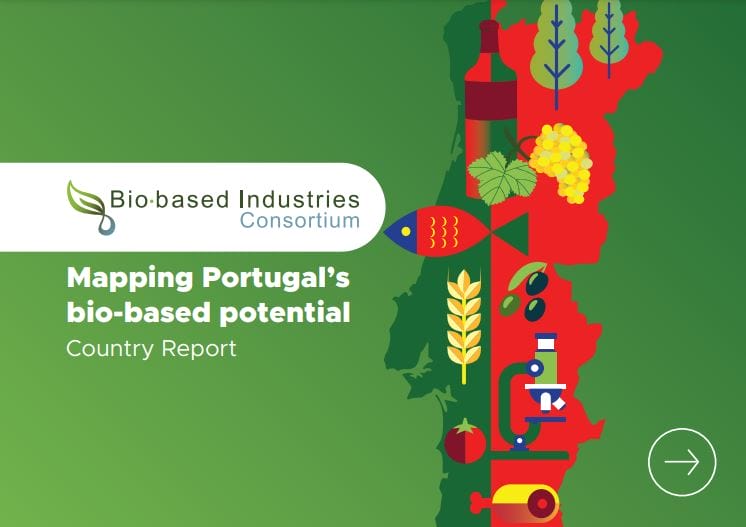
InnovPlantProtect is mentioned as a player to take into account in the latest Bio-based Industries Consortium (BIC) report on Portugal's bio-based potential. The document lists 14 collaborative laboratories, public-private entities “dedicated to developing market-oriented research” related to the bioeconomy.
Entitled Mapping Portugal's bio-based potential - Country Report, The report draws attention to the existence in Portugal of several research centers “well located in all regions” that support the bioeconomy and bio-based R&D and industrial activities. Among them is the InnovPlantProtect (InPP) collaborative laboratory (CoLab), based in Elvas, which is dedicated to developing innovative bio-based solutions for crop protection.
The BIC report on Portugal is available online.
The 61-page document, available in full online, reveals “all the potential that Portugal possesses to become one of the world's front-runners European Green Deal”. The study also underlines “the existence of a robust innovation ecosystem in Portugal and highlights the country's growing influence as a leader in the biotechnology sector”.
“The emerging bioeconomy sector in Portugal already contributes nearly 20 billion euros to the national economy and the BIC study shows that there are new opportunities to accelerate green economic growth in the country,” reads a PRESS RELEASE of the organization, which brings together more than 240 members and represents the private sector in the European Bio-based Industries Joint Undertaking.