News & Events

white plant

NEWS

AlViGen project strengthens genomic surveillance of agricultural diseases in Alentejo

The final workshop highlighted three years of research dedicated to the early detection of pathogens in crops such as wheat and olive groves.

The project AlViGen has reached its final stretch, concluding three years of research focused on the genomic surveillance of agricultural diseases. The results now presented promise to strengthen the Alentejo agricultural sector's ability to respond to emerging phytosanitary threats.

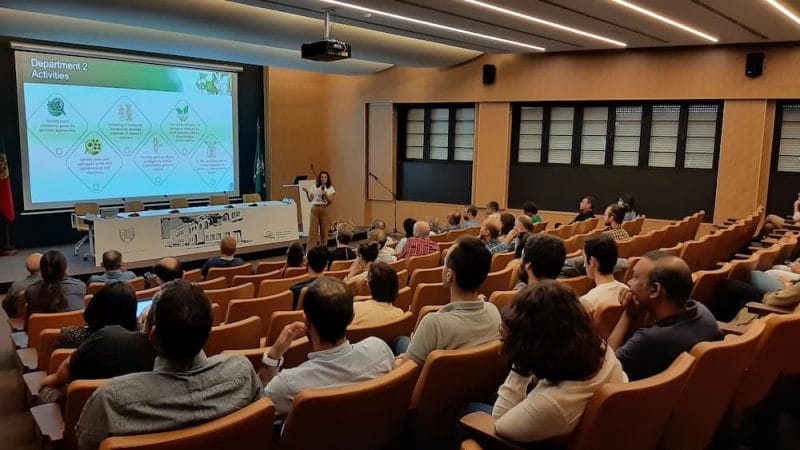
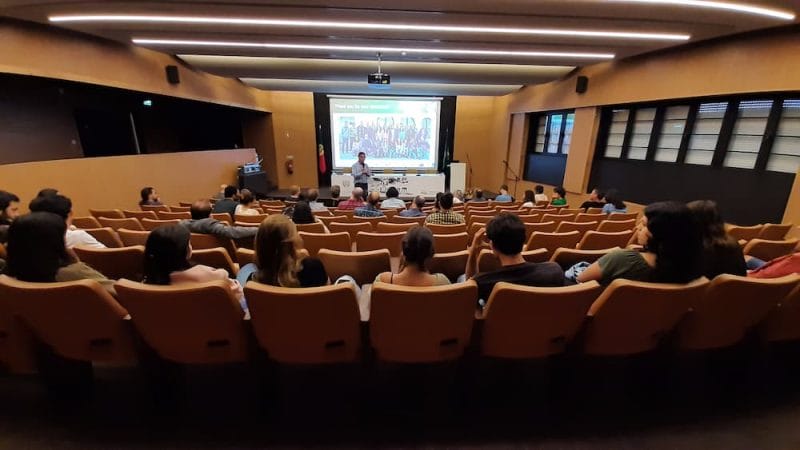
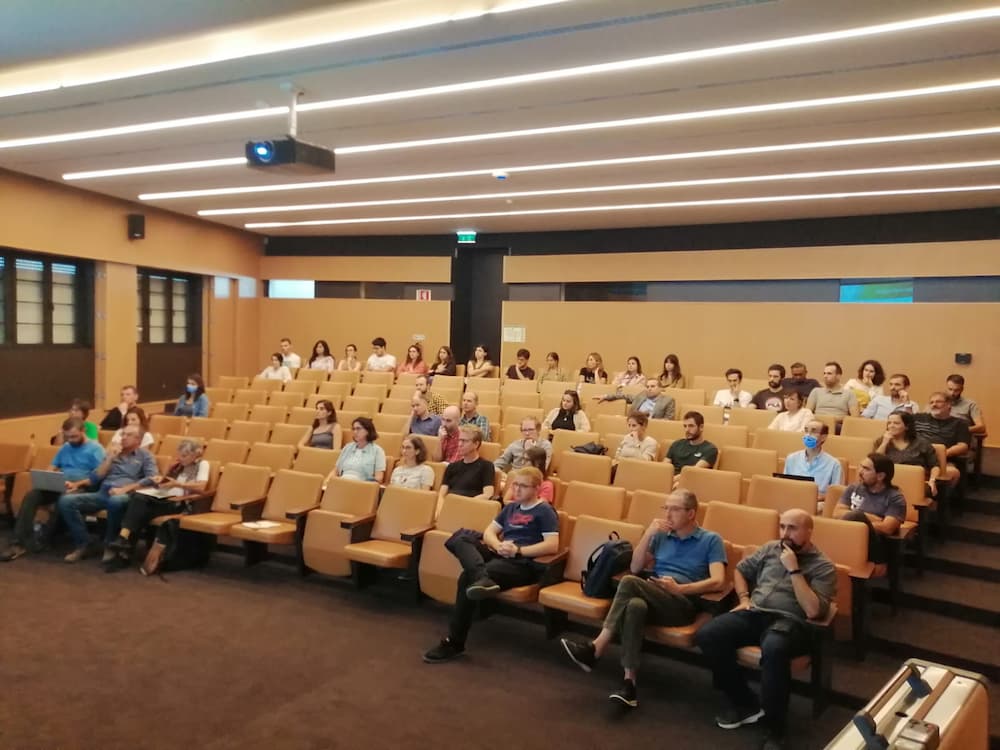
On the day October 23rd, The final project workshop, The event brought together researchers, producers and technicians to share results and reflect on the future of genomic surveillance in Portuguese agriculture.

A pioneering genomic surveillance center

During AlViGen, the Alentejo's first genomic surveillance center, an infrastructure with capacity for early detection of diseases in strategic crops such as wheat and olive grove. This breakthrough marks a decisive step towards a more precise, sustainable and science-based agriculture.

Results and scientific contributions

Using innovative molecular tools, the project team succeeded:

  • Identify pathogenic fungi before visible symptoms appear on the plants;
  • Characterizing yellow rust strains, genetically linking them to others known at a global level;
  • Detecting resistance genes in wheat to the strains currently present in Portugal;
  • Developing diagnostic methods able to distinguish the different species of the fungus that causes gafa in olive groves.

During the workshop, the potential of the analysis of the airborne fungi community as a tool for early warning for multiple pathogens, allowing for more effective and preventive management of crop diseases.

From research to practical application

The event ended with a debate on how transform AlViGen results in a detection and warning service accessible to the agricultural sector. The initiative reflects the joint commitment between science, innovation and production, with a view to protecting national agriculture from the challenges of the future.

Partnerships and thanks

InnovPlantProtect would like to thank all the partners and funders of the project:
University of Évora, John Innes Centre, INIAV, De Prado, CERSUL, Eugénio de Almeida Foundation, Torre das Figueiras Estate, Almojanda, Malheiro Estate, Directorate-General for Food and Veterinary (DGAV), la Caixa“ Foundation”, BPI Bank e Foundation for Science and Technology (FCT).

Image credits: InnovPlantProtect - Inês Ferreira

InPP was in Italy for the kick-off meeting of the European PROSPER project

InPP took part in the kick-off meeting for the European PROSPER project, held on October 2 and 3 in Pavia, Italy. In attendance were the director of the Monitoring and Diagnostics Department, Ilaria Marengo, and the project manager, Bruno Orrico.

PROSPER's main objective is to transform European agriculture by valorizing highly resilient “orphan” legumes - forgotten crops, but full of potential to face the climate and food challenges of the future.

The project promotes sustainable, innovative practices adapted to different agricultural realities.

Over the two days, 27 partners from 13 countries met for presentations, in-depth discussions and strategic talks about the project's next steps.

We are excited about what comes next, certain that this journey will be more than a collaboration - it will be a true cooperation within an exceptional team.

Join us and keep up to date with all the news from the PROSPER Project!

InPP is part of the BioLivingLABS project, dedicated to the sustainability of inland territories

InnovPlantProtect (InPP) was present at the project launch meeting BioLivingLABS - Bioeconomia ao Serviço da Sustentabilidade dos Territórios do Interior (Bioeconomy at the Service of the Sustainability of Inland Territories), which took place on October 1st at the School of Agriculture of the Polytechnic Institute of Castelo Branco (IPCB).

Funded by COMPETE 2023, the BioLivingLABS project, led by MORE CoLAB - Laboratório Colaborativo Montanhas de Investigação, in partnership with the InPP, the IPCB, from AQUAVALOR and the Polytechnic Institute of Bragança (IPB).

This project's mission is to add value to the low-density territories in the north, center and south of the country by demonstrating and economically boosting the work carried out by the partners - through the creation, demonstration and application of products, processes and services resulting from joint research.

Four living laboratories will be created (Living Labs) in the innovation hubs of Mirandela, Douro, Covilhã and Elvas, which they intend to promote:

  • the transfer of knowledge;
  • technology demonstration;
  • strategic roadmapping and
  • the protection of intellectual property.

BioLivingLABS strengthens the link between academia, business and society, driving innovation and sustainability.

Expected impact:
Over the course of 24 months, and with Living Labs dedicated to sectors such as olive groves and olive oil, vineyards and wine, fruit and cereals, legumes, among others, the project will contribute to:

  • increase regional competitiveness;
  • promote sustainable practices and
  • responding to the environmental, social and economic challenges facing inland territories.

More news about this new project soon.

EVENTS

Diretor executivo do InnovPlantProtect participa no Café de Ciência no Parlamento

O sistema alimentar global é um dos setores mais ameaçados pela emergência climática. Mas afinal quais poderão ser os contributos da ciência e da inovação para garantir uma alimentação variada, saudável e sustentável, no exigente contexto de alterações climáticas?

O tema do 20.⁰ Café de Ciência no Parlamento, organized by Ciência Viva, foi “Emergência climática: o carteiro não toca duas vezes” e teve lugar ontem, dia 19 de outubro, pelas 18h, na Assembleia da República. O diretor executivo do InnovPlantProtect (InPP), Pedro February, participou no encontro.

Pedro Fevereiro alertou que “nós estamos em mudança e temos que saber gerir a mudança e adaptarmo-nos a ela e não fixarmos os pés na terra e pensar que podemos continuar a ser como somos. Temos de ser outra coisa”. “E como é que compatibilizamos este desejo de nos ajustarmos, com a necessidade de sermos sustentáveis a diversos níveis?”, questionou o diretor executivo.

Vídeo da intervenção do Diretor executivo do InPP na iniciativa “Café de Ciência no Parlamento”

Esta iniciativa juntou cientistas, deputados e empresários para debater o impacto das alterações climáticas no sistema alimentar global e apresentar medidas concretas para travar o atual paradigma. Estiveram presentes Augusto Santos Silva, Presidente da Assembleia da República, Elvira Fortunato, Ministra da Ciência, Tecnologia e Ensino Superior, Alexandre Quintanilha, Presidente da Comissão Parlamentar de Educação e Ciência, Tiago Brandão Rodrigues, Presidente da Comissão Parlamentar de Ambiente e Energia e Rosalia Vargas, Presidente da Ciência Viva.

O encontro teve transmissão via streaming. Pode (re)ver o encontro na íntegra no canal de YouTube do Pavilhão do Conhecimento here.

InPP participa em debate sobre segurança alimentar

Mas afinal quais são os principais obstáculos atuais à segurança alimentar? A nossa alimentação está segura? O que vai mudar nos próximos anos?

O diretor executivo do InnovPlantProtect, Pedro Fevereiro, foi um dos oradores convidados na mais recente reunião do Conselho de Segurança, um projeto promovido pelo Expresso e Continente, que decorreu no passado dia 10 de Outubro em Lisboa, e que serviu para discutir os principais desafios relacionados com a segurança alimentar, um tema central em tempos de inflação e de guerra.

O diretor executivo falou no painel sobre “Como garantir a segurança alimentar junto dos portugueses? O papel da ciência e o papel do negócio”, que contou também com a participação de Ondina Afonso, presidente do Clube de Produtores Continente e diretora da Qualidade & Investigação da Sonae MC.

O debate foi transmitido via Facebook. Pode (re)ver o debate na íntegra na página de Facebook do Jornal Expresso here.

Pedro Fevereiro e Ondina Afonso falaram sobre “Como garantir a segurança alimentar junto dos portugueses? O papel da ciência e o papel do negócio” © João Girão – Jornal Expresso

O InnovPlantProtect recebeu a visita da GREEN-IT

Na passada terça-feira, dia 11 de Outubro, o InnovPlantProtect (InPP) recebeu a visita do Prof. Sophien Kamoun e do Prof. Paul Christou do Conselho Consultivo da Unidade de Investigação GREEN-IT do Instituto de Tecnologia Química e Biológica António Xavier (ITQB NOVA) e de alguns dos seus investigadores.

Durante a visita, o diretor executivo Pedro February e os diretores de departamento Cristina Azevedo, Sandra Correia, Ricardo Ramiro, Ilaria Marengo e David Learmonth apresentaram o InPP e as diferentes áreas de investigação que estão a ser exploradas pelos cinco departamentos do laboratório colaborativo (CoLAB). As apresentações foram seguidas por uma visita às novas instalações e laboratórios.

Esta visita pretendeu não só dar a conhecer as atividades do CoLAB, como também potenciar futuras oportunidades de parcerias e colaborações entre as duas instituições.

Um agradecimento especial à GREEN-IT pela visita.

Apresentações de Pedro Fevereiro, Cristina Azevedo, Sandra Correia, Ricardo Ramiro, iLaria Marengo e David Learmonth, membros da GREEN-IT (da esquerda para a direita e de cima para baixo)