News & Events

white plant

NEWS

The magic of the unexpected: How chance drives innovation in agriculture

Beyond strategy: The secret ingredient of innovation

On the road to success, organizations define strategies, plan every step and invest in crucial resources such as selling services and products, applying for projects, drawing up solid business plans and protecting intellectual property. However, there is an element that is often overlooked, but which is fundamental to the flourishing of innovation: serendipity. But what exactly is this mysterious force and why is it so vital to the advancement of agriculture and so many other areas?

When chance opens doors: The power of unplanned discovery

Serendipity is the art of finding something valuable when you're looking for something else. It's the unintentional discoveries that arise from unexpected situations. Throughout history, some of the most transformative innovations have not been the result of a rigorous plan, but rather a chance encounter with the unknown. While deliberate research and methodical experimentation are pillars of scientific and technological progress, openness to the unexpected proves to be a powerful catalyst. When researchers cultivate this openness, they often stumble upon revelations that have the potential to revolutionize entire industries, transform technologies and expand our understanding of the world around us.

A close look at “error”: The genesis of an innovative biofungicide

Today, we unveil the surprising and inspiring story of Maria Miguel, a talented researcher from InPP's New Biopesticides Department, whose acumen turned a chance event into a priceless discovery: a broad-spectrum biofungicide capable of combating the Botrytis cinerea, the relentless fungus responsible for the devastating gray rot disease in tomato plants. This pathology represents one of the biggest phytosanitary challenges in tomato cultivation, especially when grown in greenhouses, causing significant losses to producers if it is not controlled in good time.

From discard to discovery: The insight of a researcher

The journey of this discovery began in a setting familiar to any researcher: the observation of Petri dishes, used to grow cultures of cells or microorganisms. On Maria Miguel's plates, colonies of the fungus Botrytis cinerea were growing, intentionally introduced there for study. However, something else caught her eye: one of the plates was contaminated by mold, and curiously, a clear area surrounded this intruder. Instead of discarding the plate and dismissing it as mere contamination, Maria Miguel decided to investigate the reason behind the clear area. Her curiosity revealed that the mold had a surprising ability to prevent the growth of Botrytis cinerea in its vicinity.

“Sometimes we look at something and think it's a mistake. The truth is that in a failure there can be something good,” the researcher shares. The excitement and enthusiasm of a researcher realizing that what at first glance seemed like an obstacle, a negative result, could actually be an opportunity, is contagious. For Maria Miguel, this “mistake” turned into a serendipitous discovery with enormous potential.

Maria Miguel, a researcher at InPP's New Biopesticides Department, who turned an unexpected event into a discovery that changed the course of her work: a broad-spectrum biofungicide to combat gray rot in tomato plants.

Beyond chance: The active ingredients of scientific discovery

As the history of this biofungicide shows, the world of science is full of examples of discoveries that came out of the blue. One of the most famous cases is Alexander Fleming's discovery of penicillin in 1928. While observing Petri dishes, Fleming noticed that a mold was producing a substance that eliminated bacteria Staphylococcus aureus around him. He identified the mold as Penicillium notatum and named his revolutionary antibiotic penicillin. Penicillin ended up becoming an extremely important medicine for fighting infections.

However, chance is not the only protagonist of these important revelations. “Sometimes we have to follow our intuition and be able to prove ourselves right or wrong,” explains Maria Miguel. In addition to intuition, a generous dose of curiosity, an open mind to accept unexpected results, solid scientific knowledge and the ability to see and move on to further research into surprising results play a crucial role in the alchemy of discovery.

The discovery ecosystem: Fostering an environment conducive to innovation

There are other ingredients that contribute to the recipe for scientific success:

  • Creativity: The ability to generate new perspectives, concepts, questions or solutions, and the willingness to explore existing ideas in a new light.
  • Flexibility: The courage to venture into unknown territory without the fear of failure, thus increasing the chances of serendipitous encounters.

But no discovery flourishes in isolation. At InPP, the strong team spirit and culture of collaboration transcend departmental boundaries. The case of Maria Miguel's discovery is testimony to this synergy, as she herself acknowledges: “My colleagues opened doors so that I could do my research”.

To foster innovation, organizations need to cultivate an environment that encourages open discussions and connects people from different areas of knowledge and life experiences, without judgment; that encourages curiosity and receptiveness to new experiences; and that promotes an incessant quest to improve scientific knowledge, the fertile ground where serendipity can germinate.

Sowing the future: The impact of a discovery and the path of research

Although Maria Miguel is about to embark on a new journey, boosted by a prestigious Marie Skłodowska-Curie PhD scholarship - a program that supports the careers of researchers and promotes excellence and innovation in research - her legacy at InPP is already flourishing. Her groundbreaking discovery is opening promising new doors for future research in the field of crop protection, demonstrating how sometimes it is in the unexpected that the potential to transform our world lies.
InPP featured in Frutas, legumes e flores magazine

In the March issue of Fruits, vegetables and flowers you will find the opinion article entitled “The role of InnovPlantProtect in Organic Farming: Paths to sustainable and efficient solutions”, in which the executive director of InnovPlantProtect (InPP), António Saraiva, reveals how our CoLAB is contributing to the success of organic farming.

“By boosting research, collaboration and knowledge sharing, InPP is helping to solve the central challenges of this practice [organic farming], allowing it to expand and enhancing the supply of agricultural products to consumers. The solutions developed by InPP make organic farming a more viable option for producers,” says the executive director.

Read the full article and find out how we are shaping the future of agriculture.

We thank Frutas, legumes e flores magazine for its recognition and reiterate our commitment to the agriculture of the future.

Smart Vineyards: AI helps monitor vine health and fight green leafhopper

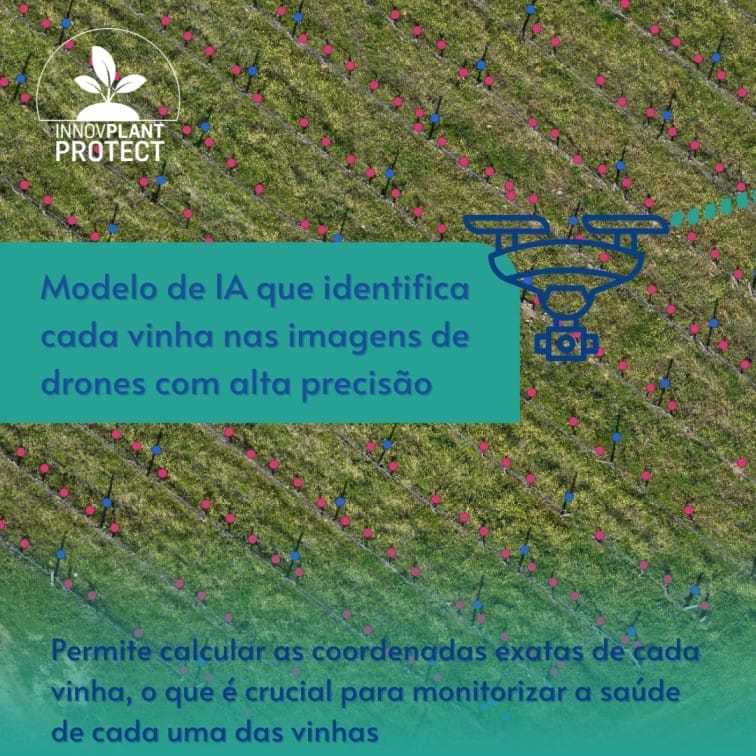
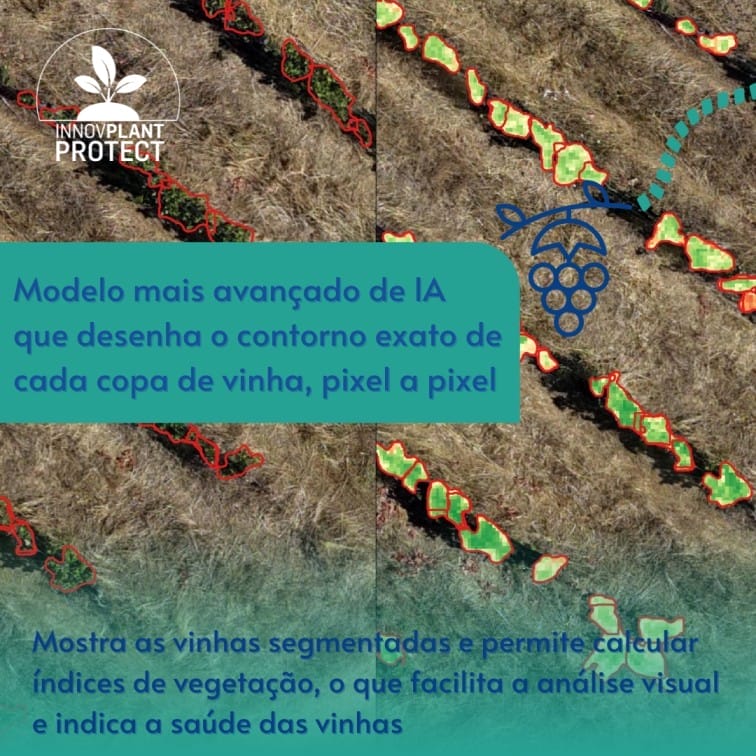
Imagine a future where drones and artificial intelligence work together to protect your vineyards. That's what the AI4Leafhopper project is making a reality!

Manisha Sirsat, a researcher on the AI4Leafhopper team, has developed two artificial intelligence models that analyze the aerial images captured by our latest generation drone... and these models make it possible:

  • geolocation of each vine
  • to know if there are vine failures
  • quickly identify “sick” vines”
  • optimize the application of treatments

The result? Growers can have a detailed view of the health of their vineyards, detect problems early and make more informed decisions.

Find out all about it here.

AI4Leafhopper is a project led by InPP and funded by the ICAERUS Horizon Europe program, which began in April 2024 and ended on April 30 with a final meeting involving the six European projects approved in the 1st edition of the ICAERUS program's PULL applications. The project team presented the AI-based models for detecting and monitoring the impact of the green leafhopper on vineyards.

EVENTS

InPP is one of the partners in an 8.3 million European project to reduce 50% chemicals in viticulture

InnovPlantProtect (InPP) is taking part in a European project, coordinated by the University of Minho (UMinho), which aims to create nanobiopesticides and nanobiofertilizers to combat pests in viticulture, protecting the environment, increasing production, reducing costs and tackling climate change. The project is called VINNY, brings together 19 partners from ten countries and will receive 8.3 million euros over the next four years from the Horizon Europe program. The European Union is the world's largest wine producer and is therefore looking to invest in ecological and economically sustainable production based on Portuguese know-how.

The VINNY kick-off meeting took place on July 25 and 26 in Porto and the Douro wine region, in an experimental field at Quinta do Pôpa, and was attended by InPP, represented by the directors of the New Biopesticides and Specific Crop Protection departments Cristina Azevedo and Sandra Correia. Moving from intensive to sustainable viticulture on a global scale and cutting agrochemicals in the sector by 50% are the main objectives of the consortium led by Margarida Fernandes, from the Center for Microelectromechanical Systems (CMEMS) at UMinho's School of Engineering.

The kick-off meeting of the VINNY project brought together all the partners in Porto and the Douro wine region

“We're going to study the microbiomes of vineyards in Portugal, Spain, Austria and Denmark to create potent cocktails with antifungal and plant protection profiles which, through nanoencapsulation and stimulation, will be more stable and effective. We're also going to create biofertilizers with nitrogen, phosphorus and potassium based on by-products from the meat industry and wastewater treatment,” he explains. The project will also propose agrotextiles impregnated with these nanobiofertilizers, as well as testing their efficiency, efficacy and safety in the laboratory, in pilot areas and in the field.

VINNY is expected to give rise to several projects in co-promotion with companies and associations. The project also has a social aspect, establishing the “European Vineyard Network” made up of three Living Labs and a Lighthouse to disseminate sustainable practices to farmers and organizations in the area, thus boosting innovation and sustainability in the primary sector.

At a national level, in addition to InPP, the consortium includes CMEMS (which is joined by the Center for Biological Engineering, as part of the associated laboratory LABBELS), the Center for Molecular and Environmental Biology, all from UMinho, as well as ADVID - Cluster da Vinha e do Vinho, and the communication agency LKCOM. At European level, it brings together five universities, eleven companies and three associations from ten countries. VINNY stands for “Advanced nano encapsulation of bio-based pesticides and fertilizers for a circular and sustainable viticulture”.

InPP organized a webinar on the use of organic insect fertilizer in agriculture

On July 24th, Eixo InFrass organized a webinar as part of the New Bioindustry - The future has already begun series of sessions, on the topic of “Agronomic valorization of organic insect fertilizer”.

The Secretary General of the Agenda, António Campos, opened the session and presented the InsectERA Mobilizing Agenda, followed by Sandra Correia, representing InnovPlantProtect as the leader of this WP, who presented the objectives of this axis.

This was followed by Ivã Lopes, from the Swedish University of Agricultural Sciences, who spoke about “The Potential and Advantages of Using Organic Insect Fertilizer”, resulting from the research he is carrying out. This included evaluating the chitin of three insects (black soldier fly, crickets and mealworms).

He concluded his speech by outlining the prospects for using frass:

  • Frass is an organic fertilizer with similar characteristics to conventional organic compounds... but there are differences!
  • The concentration of biostimulants in frass seems to be higher than other organics, which results in superior growth and metabolic effects
  • Frass contains a large amount of chitin, a natural stimulant of plant immunity
  • Can we consider applying frass alone? Yes. However, combining it with other raw materials results in more significant effects
  • We need to unravel the mechanisms behind how frass works! To do this: tests and more tests, with partnerships between industry and academia
  • Frass stimulates microorganisms that affect communication between plants. How can this synergistic effect be optimized?

Clarice Sousa (EntoGreen), Marisa Santos (Thunder Foods) and José Gonçalves (The Cricket) addressed the topic “Innovative Production of Organic Fertilizers: Insect Companies Present Sustainable Solutions”, which focused on the technical aspects of producing black soldier fly, tenebrio and cricket (Acheta domesticus), including the physical and chemical composition of the frass.

Sara Campos, from INEGI, presented “Challenges and Solutions in Frass Processing: Efficiency and Regulation”, addressing the issue of experimental analyses of frass quality, with variations in time and temperature and the technologies/processes used by partners for heat treatment, recalling that the work underway is for the development and application of new methods for processing insect excrement (frass) that comply with European standards and increase the efficiency of the process in terms of time and energy, without jeopardizing the quality obtained.

Ana Rita Caranova, from the DGAV, spoke about the “Legal Framework for Farmed Insect Excrement, its Treatment and Use”. She began by presenting the DGAV, its Mission and Vision. He then outlined the Agenda, in particular the legal issues, such as technical clarifications, meetings with partners, clarifications and the preparation of material to support the interpretation of the legislation in force. He referred to the definition of frass, as well as the legal requirements for placing frass on the market, as FOCOS (Organic Fertilizer and Organic Soil amendment), supported by Regulation (EU) 142/2011, points a), b), d) and e) of section 2, Chapter I, Annex XI.

He finished by referring to labeling, transport and placing on the market, which are covered by specific regulations.

Regina Menino and António Cordeiro, from INIAV, developed “Frass as an Organic Fertilizer”. Regina Menino began the presentation by saying that frass is being used in various greenhouse and field trials, with the aim of assessing its agronomic potential (both in soils and in different crops). She also mentioned the trials in pots, which are being carried out using ryegrass as a model crop, and whose aim is the agronomic enhancement of frass from different origins.

António Cordeiro presented information on the work being carried out in the olive grove field trials - hedged and intensive, and in partnership with Nutrifarms. There are many expectations in terms of monitoring and analyzing the results.

Ricardo Ramiro and Leonor Martins, from InnovPlantProtect, presented “The Impact of Frass on Plant and Soil Health”. Trials are being carried out which include assessing the effect of different frass: on vegetables (physiological parameters and crop productivity), on corn (physiological parameters and growth assessment), and on the susceptibility of different crops to diseases, by carrying out controlled infection trials. The effect of different frass on the microbiome of different crops will also be tested.

The intervention culminated in a very important question: Frass: a new tool for manipulating the microbiome? Since frass is rich in organic matter, macro- and micronutrients, with chitin being a key component, the properties of frass vary according to several factors:

  • insects' diet
  • application of treatments (e.g. temperature)
  • incorporation of other products
  • ==> such versatility could allow for customized applications

The application of frass to the soil leads to an increase in the abundance of organisms capable of degrading chitin (e.g. Actinobacteria; Bacillus; Mortierellomycetes), with multiple benefits for the plant.

Diogo Cardoso, from the University of Aveiro, closed the presentations with the topic “Analysis of Soil Functionality and Ecosystem Services with the Use of Insect Frass: Sustainability and Impact Assessment”. He began by highlighting the problem of food sustainability for the global population and the need to adopt more sustainable agricultural practices. This is where organic fertilizer (Insect frass) can come in, boosting enzymatic activity, benefiting soil health, making it biologically active, with high microbial activity and good nutrient recycling. It is in this context that laboratory work is being carried out to assess the impact of frass on soil and plants, and on soil leaching. Tests are also being carried out in greenhouses and in the field.

Source: Insectera

