News & Events

white plant

NEWS

Sessão Tree Talkers reúne produtores e técnicos para conhecer tecnologia de monitorização florestal

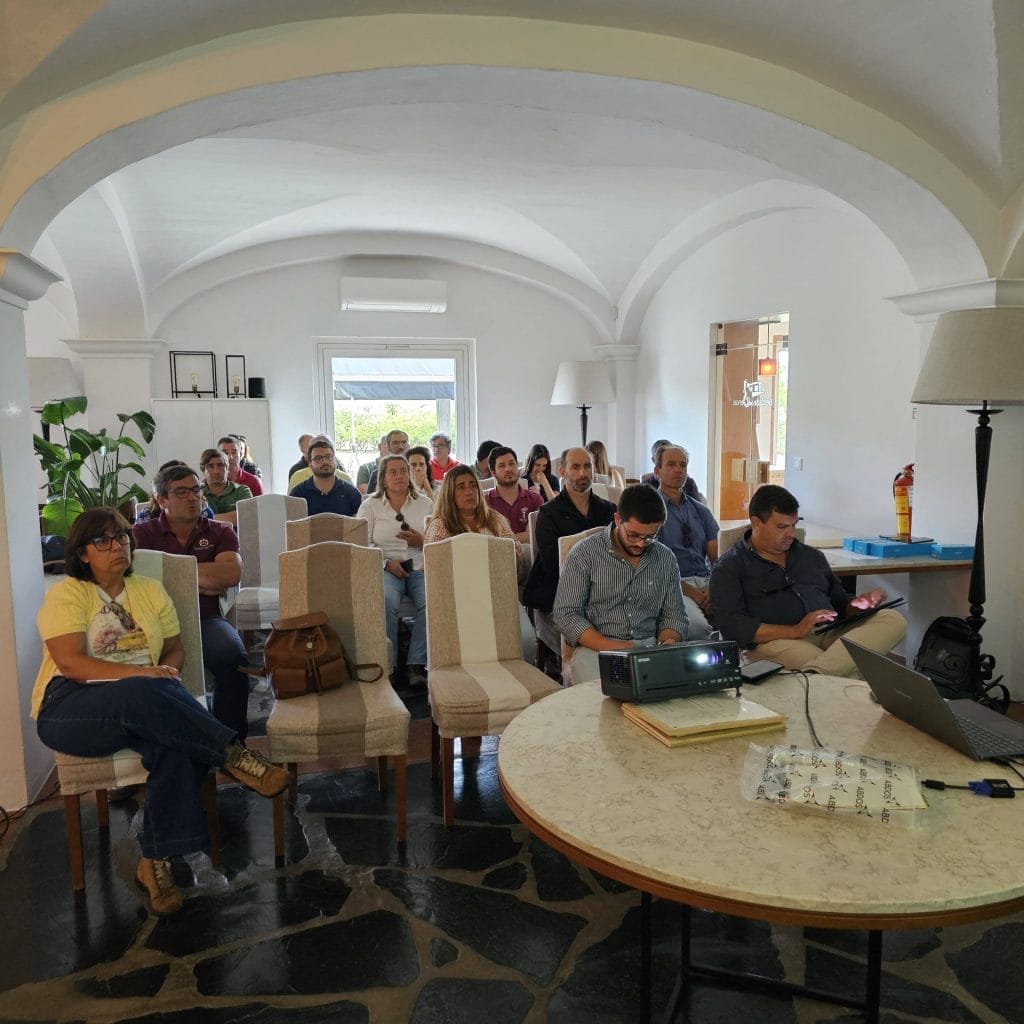
No passado dia 17 de junho, a Herdade de Rui Vaz, em Avis, recebeu a sessão prática “Tree Talkers: Sensores IoT que permitem compreender a fisiologia das árvores”, uma iniciativa promovida pelo InnovPlantProtect, no âmbito do projeto BioLivingLABs.

A ação reuniu produtores, académicos, técnicos e representantes de diferentes entidades interessados em conhecer uma tecnologia inovadora de monitorização florestal capaz de recolher e transmitir, em tempo real, informação detalhada sobre o estado fisiológico das árvores e as condições ambientais envolventes.

A sessão teve início com um conjunto de apresentações técnicas dedicadas à gestão sustentável do montado e da floresta mediterrânica, ao funcionamento dos sensores Tree Talkers e à interpretação dos dados recolhidos pela tecnologia.

Seguiu-se uma demonstração prática em campo, durante a qual os participantes puderam observar os sensores instalados numa área florestal, compreender os parâmetros monitorizados e visualizar exemplos de resultados obtidos em condições reais.

Os Tree Talkers permitem monitorizar indicadores como o crescimento das árvores, o fluxo de seiva, a disponibilidade hídrica e outras variáveis ambientais relevantes, contribuindo para uma melhor compreensão da resposta das árvores a diferentes fatores de stress e apoiando uma gestão florestal mais informada e sustentável.

A sessão ficou ainda marcada pela participação ativa dos presentes, que colocaram diversas questões sobre as potencialidades da tecnologia e as suas aplicações em contexto florestal.

O InnovPlantProtect agradece a todos os participantes pela sua presença e interesse, bem como à Herdade de Rui Vaz pela disponibilidade para acolher a iniciativa.

Sobre o projeto BioLivingLABs

A ação foi realizada no âmbito do projeto BioLivingLABS: Bioeconomy at the service of the sustainability of inland territories, cofinanciado pelo COMPETE 2030, que visa aproximar a ciência das empresas e dos produtores, transformando os resultados da investigação em soluções práticas e sustentáveis que tragam valor económico e ambiental aos territórios de baixa densidade das regiões Norte, Centro e Alentejo.

O consórcio integra cinco instituições de investigação e inovação – o Instituto Politécnico de Bragança, o Instituto Politécnico de Castelo Branco, o Laboratório Colaborativo Montanhas de Investigação (MORE), o Laboratório Colaborativo InnovPlantProtect e o Centro de Valorização e Transferência de Tecnologia da Água (AquaValor).

Demonstração da iCountPests reúne produtores e técnicos agrícolas em Estremoz

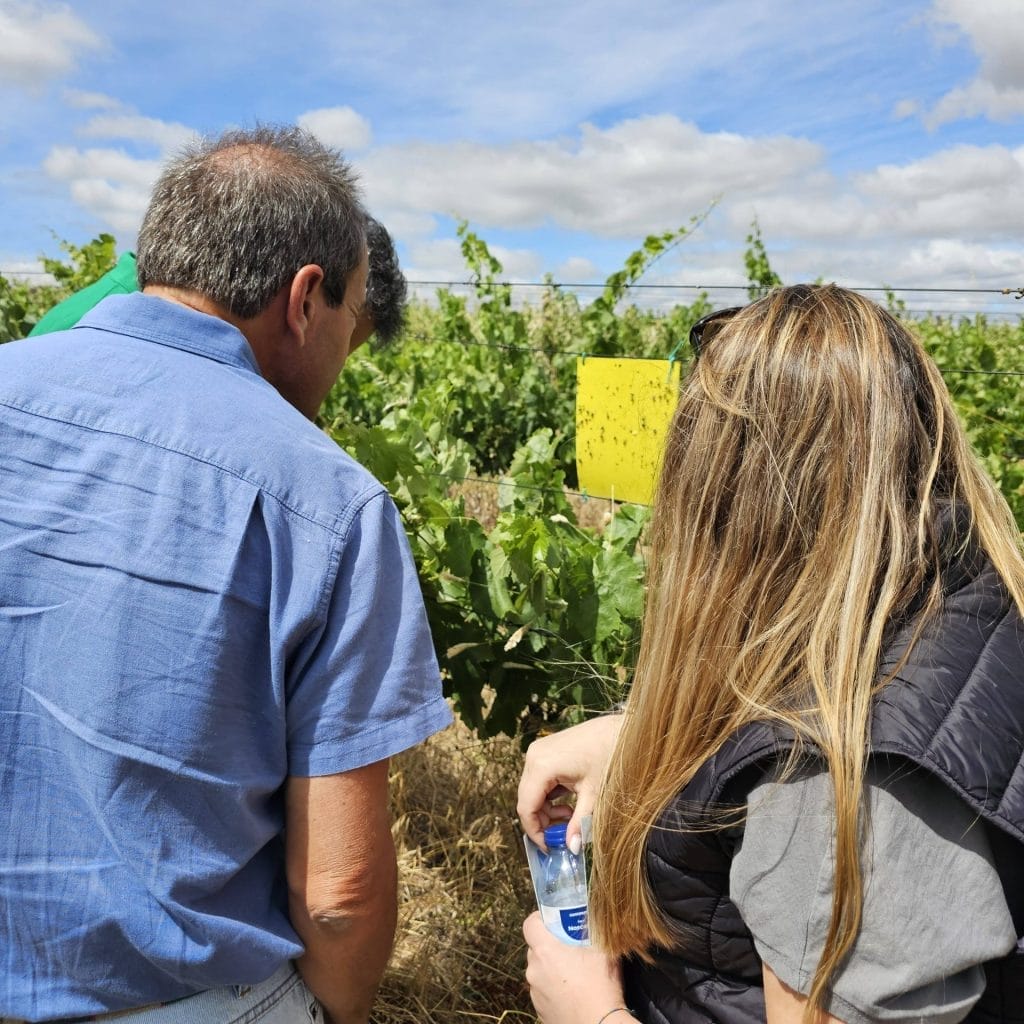
O InnovPlantProtect realizou, no passado dia 2 de junho, a ação “iCountPests em Campo: demonstração prática da app de monitorização de pragas agrícolas”, que decorreu na Herdade das Servas, em Estremoz.

A iniciativa contou com a participação de 23 produtores, técnicos agrícolas e outros profissionais do setor interessados em conhecer o potencial da tecnologia digital e da inteligência artificial aplicada à monitorização de pragas. Ao longo da manhã, os participantes tiveram oportunidade de assistir à apresentação da iCountPests e de acompanhar uma demonstração prática da aplicação em contexto real.

A demonstração prática permitiu mostrar o funcionamento da aplicação em contexto real, desde a captura das imagens até à obtenção dos resultados, evidenciando o potencial da tecnologia para simplificar processos de monitorização, reduzir o tempo dedicado às contagens manuais e apoiar a tomada de decisão no campo.

O momento de demonstração em vinha proporcionou ainda uma oportunidade de interação entre os participantes e a equipa de desenvolvimento, promovendo a troca de experiências e a discussão sobre os desafios atuais da monitorização de pragas e da digitalização da agricultura.

O que disseram os participantes

“A app é simples de utilizar e permite poupar tempo na monitorização.”, destacou Nuno Chegadinho, ATEVA – Associação Técnica dos Viticultores do Alentejo. Uma das funcionalidades da app que Nuno considera mais interessante é “conseguir manter um histórico das observações e acompanhar a evolução das populações ao longo do tempo.”

“É uma ferramenta com potencial para apoiar o trabalho diário dos técnicos no terreno.”, sublinhou Ricardo X, Herdade das Servas.

O InnovPlantProtect agradece a todos os participantes pela presença e interesse demonstrado nesta iniciativa.

Agradecemos igualmente à ATEVA – Associação Técnica dos Viticultores do Alentejo, pelo apoio na divulgação da ação junto dos seus associados e da comunidade vitivinícola, e à Herdade das Servas, pela disponibilidade e colaboração na realização da demonstração em contexto real.

A ação foi realizada no âmbito do projeto BioLivingLABS: Bioeconomy at the service of the sustainability of inland territories, cofinanciado pelo COMPETE 2030, que visa aproximar a ciência das empresas e dos produtores, transformando os resultados da investigação em soluções práticas e sustentáveis que tragam valor económico e ambiental aos territórios de baixa densidade das regiões Norte, Centro e Alentejo.

O consórcio integra cinco instituições de investigação e inovação – o Instituto Politécnico de Bragança, o Instituto Politécnico de Castelo Branco, o Laboratório Colaborativo Montanhas de Investigação (MORE), o Laboratório Colaborativo InnovPlantProtect e o Centro de Valorização e Transferência de Tecnologia da Água (AquaValor).
Saiba mais sobre a iCountPests here.

Tree Talkers: sensores IoT que permitem compreender a fisiologia das árvores

Como podemos compreender melhor o estado de saúde das árvores e antecipar situações de stress hídrico ou ambiental?

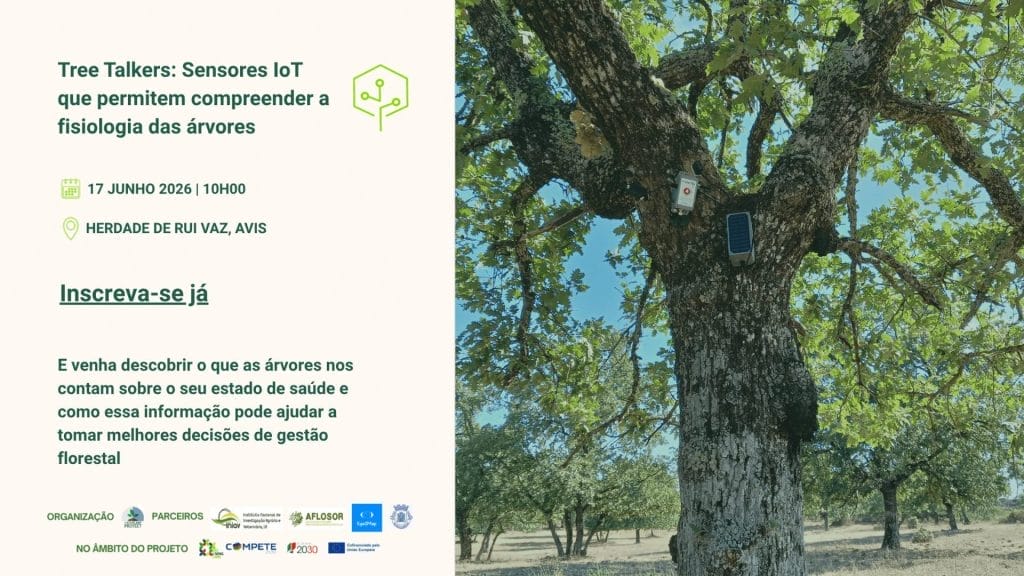
No próximo dia 17 de junho, o InnovPlantProtect promove a sessão prática “Tree Talkers: Sensores IoT que permitem compreender a fisiologia das árvores”, uma iniciativa que permitirá conhecer uma tecnologia inovadora para monitorização florestal em tempo real.

Os Tree Talkers são um sistema avançado de sensores IoT capaz de recolher continuamente diversos dados sobre a fisiologia das árvores, como crescimento radial, velocidade do fluxo da seiva, densidade da copa, estabilidade das árvores, bem como informação sobre as condições ambientais envolventes.

Esta tecnologia permite acompanhar o estado de saúde das árvores e compreender melhor o funcionamento dos ecossistemas florestais, apoiando uma gestão mais informada e sustentável.

Durante a sessão, os participantes terão oportunidade de

  • Conhecer a tecnologia TreeTalkers e as suas aplicações;
  • Visualizar exemplos de resultados obtidos através da monitorização contínua das árvores;
  • Compreender como os dados recolhidos podem apoiar a gestão florestal;
  • Assistir a uma demonstração prática em campo, numa floresta de sobreiros.

AcaoTreeTalkers BannerDivulgacao ReduceSize

Receção dos participantes| 09H30

Presentations | 10H00

Conter a desertificação com a gestão e conservação do montado e da floresta mediterrânica caducifólia

TreeTalker Cyber: o sensor IoT que ouve as mudanças nas árvores

No interior da árvore. Compreender o stress através dos dados

O que as árvores nos dizem: dos dados à informação

Beberete e momento de networking | 11H30

Demonstração em campo | 11H45

A participação é gratuita, mas sujeita a inscrição prévia. Para se inscrever basta preencher o formulário disponível here.

Marque na sua agenda e junte-se a nós! Teremos todo o gosto em recebê-lo/a!

📅 Data: 17 de junho de 2026
🕙 Hora: 10h00
📍 Local: Herdade de Rui Vaz, Avis

Esta ação realiza-se no âmbito do projeto BioLivingLABS: Bioeconomy at the service of the sustainability of inland territories, cofinanciado pelo COMPETE 2030, que visa aproximar a ciência das empresas e dos produtores, transformando os resultados da investigação em soluções práticas e sustentáveis que tragam valor económico e ambiental aos territórios de baixa densidade das regiões Norte, Centro e Alentejo.

O consórcio integra cinco instituições de investigação e inovação – o Instituto Politécnico de Bragança (IPB), the Polytechnic Institute of Castelo Branco (IPCB), o Laboratório Colaborativo Montanhas de Investigação (MORE CoLAB), o InnovPlantProtect e o Centro de Valorização e Transferência de Tecnologia da Água (AquaValor).

EVENTS

ValorCannBio project featured in Público

“By developing biobased biopesticides from by-products of the [cannabis production] industry that is booming at a national level, particularly in the Alentejo, the ValorCannBio project will contribute to the goals set by the European Commission in the Farm to Fork and Biodiversity Strategy of reducing the use of chemically synthesized pesticides by 50% by 2030,” Cristina Azevedo, director of the New Biopesticides Department at InnovPlantProtect (InPP), told Público newspaper.

O ValorCannBio - Valorization of medicinal cannabis by-products as a biopesticide for olive groves“ project”, led by InPP and presented on September 25 to mark National Sustainability Day, The article “Scientists in Portugal want to use cannabis waste to make environmentally friendly pesticides” is featured in Público today.

ValorCannBio is one of the winning projects in the 6th edition of the la Caixa Foundation's Promove Program and aims to transform waste from the production of medicinal cannabis into biological, sustainable pesticides capable of controlling the main olive tree diseases.

The initiative also has the partnership of the Associated Laboratory for Green Chemistry (LAQV) of the Faculty of Science and Technology of the New University of Lisbon NOVA FCT and the companies GreenBePharma and AGR by De Prado.

Find out more in the article featured in Público, available at here.

InPP leads consortium to develop sustainable biopesticides from cannabis extracts

On National Sustainability Day, the project “ValorCannBio - Valorization of medicinal cannabis by-products as a biopesticide for olive groves” was announced, led by InnovPlantProtect (InPP) in partnership with the Associated Laboratory for Green Chemistry (LAQV) of the Faculty of Science and Technology of the New University of Lisbon |
NOVA FCT and the companies GreenBePharma (GBP) - production of medicinal cannabis and AGR Global - cultivation and production of olive groves (De Prado Group), one of the winners of the 6th edition of the ”la Caixa” Foundation's Promove Program, in collaboration with BPI and the Foundation for Science and Technology (FCT), in the category of innovative pilot projects. The project will make it possible to exploit the by-products of medicinal cannabis production as sustainable and effective biopesticides to control the main diseases of the olive grove.

InPP is marking National Sustainability Day with the public presentation of the ValorCannBio project, which seeks to contribute to sustainability by developing sustainable biopesticides to control two of the most important diseases of the olive grove, a crop of extreme economic and social importance in the Alentejo: Gafa and Tuberculosis. Gafa is considered a priority because it causes production losses of up to 100 percent, corresponding to more than 50 million euros, a reduction in olive oil quality and is leading to the disappearance of the genetic heritage of traditional olive varieties such as the Galician, which is highly susceptible to the disease. Tuberculosis is an olive disease that spreads to almost all olive groves and reduces the quality of the oil.

In order to help control the two diseases that affect olive groves, the team of researchers involved in the project will develop a biopesticide from the leaves of the cannabis plant, which are considered surplus from the medical cannabis production process in Portugal and legally have to be destroyed. This process will make it possible to meet the needs of olive growers, but also to open up a new value chain associated with the use of a by-product of the plant's production industry for medicinal purposes.

“The existing solutions on the market to combat Gafa and Tuberculosis are ineffective and fall into groups of chemically synthesized pesticides, which have negative impacts on the environment and are being discontinued, so it is urgent to find alternatives. On the other hand, cannabis companies could sell the surplus biomass to a future biopesticide industry, avoiding the high costs of destruction and investing in a circular economy. This project aims to integrate the concepts of sustainable agriculture, combined with green chemistry, to obtain more environmentally friendly products,” explains Ana Rita Duarte, a researcher at the LAQV of the Faculty of Science and Technology of Universidade Nova de Lisboa |NOVA FCT.

For Cristina Azevedo, director of the New Biopesticides department at the collaborative laboratory InPP, based in Elvas, “by developing biobased biopesticides from by-products of an industry that is booming at national level, particularly in the Alentejo, ValorCannBio will contribute to the goals set by the European Commission in the Farm to Fork and Biodiversity Strategy, of reducing the use of chemically synthesized pesticides by 50 percent by 2050.”.

The director of the InPP department also assures us that “all the impacts of ValorCannBio will initially be felt in the municipality of Elvas, where the project will take place. However, it is expected that these will extend to the entire olive-growing region, from Trás-os-Montes to the Algarve, where production losses due to Gafa and Tuberculosis are on the increase.”.

The project presented today has been awarded to a team that has already won several national and international awards.

The Promove program wants entities to use their non-repayable grants to move from theory to practice: to understand the viability of scientific concepts under development, as well as to explore business opportunities or prepare patent applications. In this specific case, the team wants to assess the commercial potential of this new solution in the market.

For more information on ValorCannBio, visit the project's website here.

InnovPlantProtect promotes “Plant Biotech talks”

InnovPlantProtect (InPP) is promoting the “Plant Biotech talks”, at which internationally renowned experts in the fields of applied plant biotechnology and cereal crop biotechnology will share developments in these areas, as well as the new genomic techniques that have been applied to rice production and crop protection. The event will take place next Tuesday, September 24th, in the INIAV auditorium in Elvas.

The “Plant Biotech talks” kick off at 10 a.m. with the session entitled “Plant biotechnology, 1980-2024".. From Round-up Ready soy to Genome Editing and beyond” which will feature Paul Christou, Professor and director of the Applied Plant Biotechnology Laboratory at the Catalan Institution for Research and Advanced Studies (ICREA) at the University of Lleida, in Catalonia, Spain, who will reveal the path and evolution of the field of Plant Biotechnology. The starting point will be the first commercial crop sold by the Multinational Company Monsanto, Roundup Ready Soybean, developed by the researcher through genetic transformation technology.

The second session entitled “Communicating science through art and archaeology” will take place at 11 a.m. with speaker Teresa Capell, Professor and Director of the Department of Plant Production and Forestry Sciences at ICREA, who will explore how science can be communicated through art, since the combination of art and science can be beneficial not only for science itself but for society as a whole. This practice has become a favorite for conveying science to the public.

Now Xin Huang, a researcher in the Department of Agriculture and Forestry Engineering at ICREA, will be the speaker at the third session entitled “Knocking our rice blast susceptibility genes through Genome Editing”, which will take place from 12h00. In this session, the guest speaker will talk about the genes responsible for plant susceptibility to pests and pathogens, in particular the fungus Magnaporthe oryzae, This is the first time that we've heard of a pathogen that causes an important disease affecting the rice plant, pyriculariosis. Genome editing technologies that allow, in a very specific and controlled way, to alter genes in the plant, making it more tolerant to pathogens will be other topics covered in this session.

Participation in the event is free and not subject to registration.