No dia 26 de março, o InPP participou numa sessão promovida pela Agência Nacional de Inovação (ANI), em Lisboa, que contou com a presença de uma comitiva da República Checa ligada ao setor das biotecnologias.
Em representação do InPP estiveram Cristina Azevedo, Diretora de Biosoluções, e Paulo Madeira, Gestor de Inovação, que apresentou a instituição e as suas principais áreas de atuação e competências.
A iniciativa teve como principal objetivo identificar oportunidades de cooperação entre entidades portuguesas e checas, nomeadamente nas áreas de transferência de tecnologia, codesenvolvimento, ensaios pré-clínicos e diagnósticos, coinvestimento e internacionalização da inovação.
A sessão contou com a participação de representantes de entidades relevantes da República Checa, incluindo Petra Kinzlova, CEO da Prague.bio, Katarina Psenakova, Head of Biology da PharmTheon, bem como representantes da Embaixada da República Checa e da Academia das Ciências da República Checa.
Este encontro contribuiu para reforçar o posicionamento do InPP na promoção de parcerias internacionais e no desenvolvimento de soluções inovadoras, evidenciando o compromisso contínuo da instituição em fortalecer redes de colaboração científica e tecnológica e em contribuir para o crescimento e internacionalização da inovação.
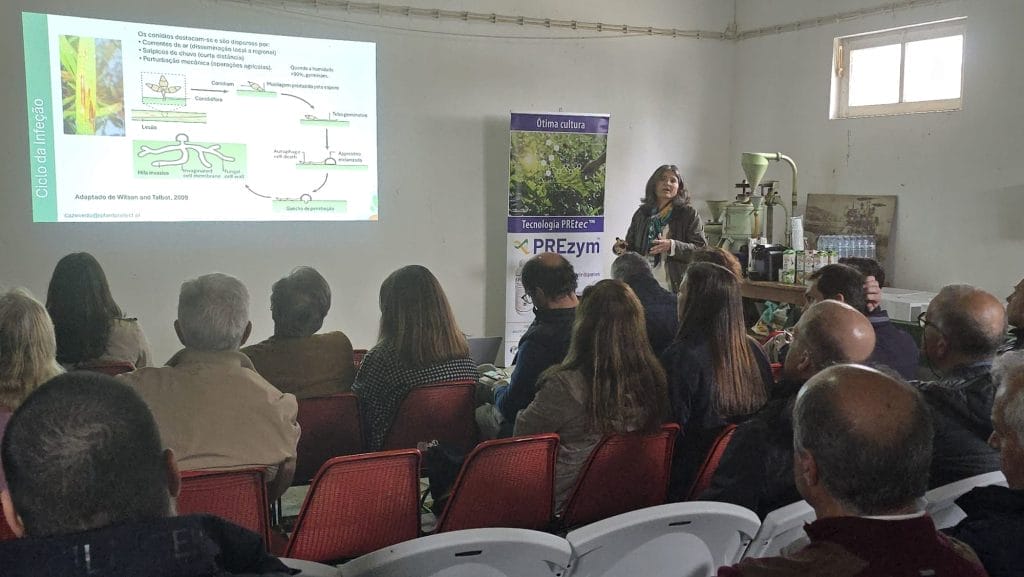
O InPP marcou presença no Encontro com orizicultores e técnicos(as) em Portugal, promovido pela EDAF, que decorreu no dia 5 de março, no Pólo de Inovação de Salvaterra de Magos, em Santarém.
A Diretora de Biosoluções do InPP, Cristina Azevedo, integrou o painel de oradores convidados, tendo apresentado a comunicação intitulada “A problemática da Pyricularia na cultura do arroz”. A apresentação incidiu sobre os principais desafios fitossanitários associados a esta doença, que continua a constituir uma das maiores ameaças à produção de arroz a nível mundial e também em Portugal.
O encontro reuniu produtores, técnicos e especialistas da fileira do arroz, proporcionando um espaço de partilha de conhecimento e debate sobre soluções atuais e em desenvolvimento para o controlo da piriculariose. Foram igualmente abordados outros temas relevantes para a sustentabilidade e produtividade da cultura, nomeadamente a gestão da fertilização.
A participação do InPP neste tipo de iniciativas reforça o compromisso da instituição com a inovação, a transferência de conhecimento e o desenvolvimento de soluções sustentáveis para a agricultura nacional.
O InPP agradece à EDAF e ao COTArroz o convite e a organização deste importante encontro, esperando que esta colaboração continue a fortalecer-se no futuro.
The project TomaBioTec started in January with the aim of developing and validating innovative solutions that contribute to a more sustainable and efficient production of tomatoes in the industry, in line with the current challenges of the agri-food sector, by integrating biotechnology and digital technologies.
The initiative aims to evaluate, under real field conditions, the effectiveness and efficiency of a biosolution with bioprotective and/or biostimulant properties, developed by InnovPlantProtect (InPP), This could help improve the quality and productivity of industrial tomato crops.
The rehearsals take place at Alentejo and Spanish Extremadura and combine traditional agronomic methods with advanced technologies, such as drones, multispectral sensors and artificial intelligence models. This approach allows detailed monitoring of the health of the crop, the presence of pests and diseases and the impact of the bioproduct throughout the production cycle.
The project “TomaBioTec: New biological and digital solutions for tomato crop protection and fertilization” is led by the InPP, in collaboration with the Centro Tecnológico Nacional Agroalimentario Extremadura (CTAEX) and Cordeiro Group, and was selected as one of the winners of the 7th edition of the Promove Program, The prize was awarded by the “la Caixa” Foundation, in partnership with Banco BPI and the Foundation for Science and Technology (FCT), in the category of innovative pilot projects.
This project reinforces the commitment to biological and digital solutions as drivers of more sustainable, competitive agriculture based on scientific evidence, with a direct impact on producers and industry.
The International Day of Women and Girls in Science, celebrated annually on February 11, is an initiative created in 2015 by the United Nations General Assembly to recognize the relevant role played by women and girls in the production of scientific and technological knowledge.
“Exploring careers in Science, Technology, Engineering and Mathematics (STEM): her voice in science” was the theme chosen for this year, with the aim of raising awareness among civil society of the importance of breaking down the barriers imposed by inequality between men and women in access to education and careers in science and innovation, as shared in the official information on UNESCO's website.
In recent decades there has been an increase in the participation of women in science research activities, opening up and exploring new paths that have also benefited the younger generations by arousing their interest and greater attendance at higher education.
Portugal is a good example, as Portuguese women scientists represent almost 50% of the total number of researchers in our country, with remarkable work that has been fundamental to the progress that national science and technology have made in recent decades.
Since its creation, the InPP has valued and supported scientific and technological development through multiple projects in a wide variety of areas, where female leadership has had a positive track record, contributing to the expansion of the collaborative laboratory, the creation of valuable partnerships and the transfer of knowledge to the business environment.
This expansion has led to a consequent increase in scientific advances which, together with the latest technologies, improve the competitiveness of the economy and add value to the area of biotechnology and plant health, for preventing and combating pests and diseases in agricultural crops.
To mark this date, we are highlighting the 24 women who are innovating in Portugal in the biotechnology and crop protection sector, and who represent the science and innovation being developed at InPP. These are some of the women who embody the words commitment, demand, resilience, overcoming, quality, talent, excellence and creativity. But there are many more and today, as every day, we celebrate them.
InPP's innovation manager, Paulo Madeira, took part in the Meeting with rice farmers and technicians in Portugal, promoted by the Operational and Technological Center for Rice (COTArroz), which took place on February 5 at COTArroz's premises in Salvaterra de Magos.
The aim of this meeting was to provide information on the use of herbicides and solutions, such as biostimulants for rice cultivation, to help mitigate the impact of pyriculariosis, one of the diseases that most affects this cereal worldwide and also in Portugal.
Moments of sharing knowledge and experiences like these not only contribute to the evolution of the sector, but also give us hope for the future of cereal growing!
Special thanks to COTArroz for the invitation to take part in the event. We look forward to your visit to Elvas, to get to know the work of our CoLAB and to explore possibilities for collaboration.
InnovPlantProtect (InPP) celebrated its 6th anniversary this Friday, January 24, 2025, at the Auditorium of the National Institute for Agricultural and Veterinary Research (INIAV) - Elvas Pole, in Elvas, with 120 guests in attendance.
The commemorative session was attended by the Minister of Agriculture and Fisheries, José Manuel Fernandes, who was accompanied by the Secretary of State for Agriculture, João Moura, the vice-president of the Alentejo Regional Coordination and Development Commission (CCDR Alentejo) who holds the agriculture portfolio, Roberto Grilo, and the President of INIAV, IP, Nuno Canada. Also present at the commemoration was the councillor from Elvas Municipal Council (CM), representing José Rondão Almeida, the mayor of Elvas.
The welcome session was led by António Saraiva, InPP's executive director, who began by thanking all the guests present, and especially INIAV, the Municipality of Elvas and the associates for all their support. The executive director, who took up his post in December last year, congratulated the entire InPP team, to a standing ovation from all the guests present at the celebration: “Today is our day. We're six years old!”.
After two months as CEO, António Saraiva considers CoLAB to be a “true case study”, with “training skills, professional experience and a dedicated 100% human resources team that has attracted and retained talent from the north to the south of the country and also from Madeira, but also from abroad”. InPP already has an international team of 46 employees of 10 nationalities.
The InPP “has been a very attractive option for highly qualified work for young people in the region and the Alentejo, (...) working for the benefit of the competitiveness of Agriculture”, he stressed. “We are contributing to the modernization of agriculture so that it can respond to the needs of its professionals and the expectations of society.”.
António Saraiva, executive director of the InPP, during the welcoming session for participants in the 6th Anniversary of the InPP
The InnovPlantProtect brand is already a recognized reference throughout the country, particularly in the agricultural sector and, according to António Saraiva, “the importance of InPP goes far beyond the Alentejo region”, recalling the concept behind its creation: to develop an R&D laboratory capable of responding to the lack of phytosanitary solutions that agricultural producers have been experiencing, with a focus on crops from the Mediterranean region.
For six years, CoLAB has been developing bioinspired products, such as bioprotectants and biostimulants, as well as laboratory and digital services “provided to all those who come to us. We are helping to meet the needs of the countryside and companies in the agricultural sector,” he emphasized. InPP currently has more than a hundred partners and clients, in projects and collaborations, and in the provision of technical and scientific assistance services.
The seven national and international patent applications already produced by CoLAB to protect crops against various diseases that affect them at regional and national level were also highlighted in the executive director's speech. “We hope to have three more patent applications by the end of this year. It's a lengthy and very intense process, but we're going to do it,” he said.
Another of the points addressed by the CoLAB leader was the visit by the president of the National Innovation Agency (ANI), António Grilo, on January 20th. The president of ANI “left a positive note of InPP's excellent work, materialized mainly in the results obtained with the registration of patents, but was unable to say anything about the funding model after 2025”.
The executive director ended his speech by alerting the minister to the need for CoLABs to be informed “in good time” about the funding available after 2025 “so that we can project our future activity, and so that the team can focus on what is essential and not lose its focus”.
After the welcome session, there was a session entitled “What innovation is produced at InPP?”, in which two department directors, Cristina Azevedo and Ricardo Ramiro, introduced their teams and gave examples of biopesticides that are effective against the diseases fire blight and pyriculariosis in rice, a broad-spectrum biofungicide against gray rot in tomatoes, as well as the use of drones and artificial intelligence to monitor pests in the main agricultural crops.
One of the latest innovations is the iCountPests app, which not only reduces the time invested in monitoring and creating a pest history, but also contributes to better management of the pests present in the farmer's field, democratizing access to technology.
From left to right: Cristina Azevedo, director of the New Biopesticides Department; Ricardo Ramiro, director of the Data Management and Risk Analysis Department; João Moura, Secretary of State for Agriculture; and José Manuel Fernandes, Minister for Agriculture and Fisheries, during the session “What innovation is produced at the InPP?”
The Minister of Agriculture and Fisheries, José Manuel Fernandes, was in charge of the closing session. To the words heard during the speech by the executive director of InPP, “entrepreneurship and passion”, the Minister of Agriculture and Fisheries chose the word “ambition” to kick off the closing session. “We have to have the ambition to make things happen, to take risks, to not be afraid, to move forward,” he added.
The minister highlighted the word ambition when referring to the seven patents that are currently underway and also stressed the “absolutely essential” role of applied research in creating real impact in the agricultural sector and local communities, giving the example of the fire blight disease that affects pear and apple trees, “a challenge that we have to overcome” and for which the InPP team has already filed the first international patent application.
During his speech, José Manuel Fernandes not only didn't forget the “other pests and diseases”, he also said that “climate change, as we all know, is here and we have to make a collaborative effort, seeking to share what is being done in European terms.”
The Minister of Agriculture and Fisheries congratulated the InPP team “not only for all their work, but for allowing me to be here with you” and was pleased that it was made up largely of young people, when in the agricultural sector at national level the average age is one of the highest in the European Union, at 64, and “what we are trying to do is generational renewal. I'm very pleased when I only see young people, and young people whose faces show joy, which means that this glow you see is a sign of hope, of confidence, and with a multicultural team, that can only add to it.”
“You can count on us, on our support, but we are also counting on you to change what is an urgent need, which is to change the perception of agriculture: an agriculture that is increasingly modern, an agriculture that needs to be rejuvenated, where the farmer's income needs to be improved and an agriculture that is essential for our food security, and for our strategic autonomy,” he concluded.
José Manuel Fernandes, Minister of Agriculture and Fisheries, during the closing session of the 6th Anniversary of the InPP
The InnovPlantProtect team with the Minister for Agriculture and Fisheries, José Manuel Fernandes, during the session commemorating the 6th anniversary of the InPP.
The session continued with a drink for the guests, during which InPP was congratulated with a birthday cake.
The balance of the commemorative event was positive, having been able to attract the Elven community, representatives of various companies and agricultural producers, and the academic community.
After six years, InPP promotes the transfer of knowledge, reinforces its position as a CoLAB capable of fostering the development of new technologies, products and services with a strong technological and innovation component, and strengthens its commitment to promoting solutions that make a difference in tackling the various challenges of agricultural crop protection.






 Português
  English