InnovPlantProtect (InPP) recently received approval for an application submitted to COMPETE2030-2024-6 - Collective Actions - Transfer of scientific and technological knowledge - BioLivingLABS - Bioeconomy at the service of the sustainability of inland territories, led by MORE CoLAB - Laboratório Colaborativo Montanhas de Investigação, Associação, in partnership with the Polytechnic Institute of Bragança (IPB), the Polytechnic Institute of Castelo Branco (IPCB) and AQUAVALOR.
BioLivingLABS aims to promote the economic valorization of research and development (R&D) results obtained by various institutions in the North, Center and Alentejo. To this end, it will create an experimental demonstration network, the so-called Living Labs, The project will be held in the innovation hubs of Mirandela, Douro, Covilhã and Elvas. In addition, demonstration actions, workshops, an inland innovation catalog and training on intellectual property protection will be developed with the aim of encouraging the incorporation of innovative solutions in the business sectors of these regions.
Scheduled to begin in October and lasting 24 months, the project has a total eligible investment of over 740,000 euros, financed by COMPETE2030 - Thematic Program for Innovation and Digital Transition. For InPP, this project is a strategic opportunity to strengthen its mission as a center for technology development and transfer, boosting the practical application of scientific knowledge to promote sustainable development.
This initiative confirms InPP's commitment to open and sustainable innovation, integrating science, technology and regional development to respond to the challenges and potential of the interior of the country.
On September 18, the executive director of InnovPlantProtect (InPP), António Saraiva, the director of the New Biopesticides Department, Cristina Azevedo, and researcher Luís Grilo attended the Open Day “The Cereals of Baixo Mondego”, promoted by the Centro Regional Coordination and Development Commission (CCDR Centro), at the Bico da Barca Experimental Unit in Montemor-o-Velho.
The event highlighted the latest innovations from the Coimbra Innovation Hub, from new technologies applied to maize and rice, to fertilization strategies, protection and the use of biostimulants on these key crops in the Baixo Mondego region.
Our team also monitored trials with biofungicides, including the product I21, developed with our collaborative laboratory to combat pyriculariosis in two rice varieties, which is being patented.
In an interview with Voice of the Countryside, Cristina Azevedo shared the work we have been doing in the area of biosolutions.
Maize continues to be the Portugal's most important arable crop, The sector has a significant impact on food safety and the national agri-food industry. Involving thousands of producers and generating tens of millions of euros a year, the sector is currently facing increasingly complex phytosanitary challenges.
Among already known pests and emerging diseases, there are risks ranging from cartridge caterpillar until Maize Rugose Dwarfism Virus (MRDV), The presence of this virus is increasing in Portugal. This virus, transmitted by the corn leafhopper, can seriously compromise production and is found in the climate change increasingly favorable conditions for its spread.
However, it's not just MRDV that's worrying. There are new threats that require vigilance, such as the coleopter Diabrotica virgifera or the MDMV virus (Maize Dwarf Mosaic Virus), already detected in neighboring countries, and also toxic weeds, such as the winter fig (Datura stramonium), which in addition to impacting productivity pose public health risks.
Faced with this reality, the answer is integrated and sustainable strategies, matching:
crop rotation and good agricultural practices;
careful use of insecticides to avoid resistance and environmental impacts;
resistant or tolerant varieties, where available;
research and technological innovation, including new digital tools for early detection.
As the InnovPlantProtect researcher points out, Nuno Faria, in the article entitled “The main emerging pests and diseases of the maize crop in Portugal”, available in the August edition of Voz do Campo magazine: “The phytosanitary panorama of maize in Portugal requires continuous vigilance, investment in research and the application of integrated and sustainable strategies capable of responding to an increasingly dynamic and unpredictable reality.”
To find out more about the main current risks and mitigation measures, read the full article published in the August issue of Voz do Campo magazine (pages 88-89), available on newsstands and online.
Professor Pedro Fevereiro, CEO of InnovPlantProtect
InnovPlantProtect was present at the Science 2020 Meeting, which took place on November 3 and 4 at the Lisbon Congress Center in a hybrid format (face-to-face and online). Pedro Fevereiro, CEO of InPP, spoke about the activity of this Collaborative Laboratory in Elvas and its objectives for protecting Mediterranean crops from pests and diseases.
After 18 of the 26 Collaborative Laboratories (CoLAB) recognized in Portugal were presented on the first day of the Ciência2020 Meeting, the event continued yesterday with the presentation of eight more CoLAB, including InnovPlantProtect (InPP).
In the session dedicated to Biodiversity and Forestry and Agri-food (session 3), moderated by ANI-National Innovation Agency, InPP's CEO, Pedro Fevereiro, gave a short seven-minute presentation in which he spoke about the importance of InPP's activity in the current context of major challenges for food production.
This Collaborative Laboratory based in Elvas is trying to develop innovative biological solutions to protect agricultural crops from the effects of emerging pests and diseases for which there are no solutions on the market. These pests and diseases, due to the increase in global average temperature, are moving and settling in territories where they didn't exist before, including Portugal.
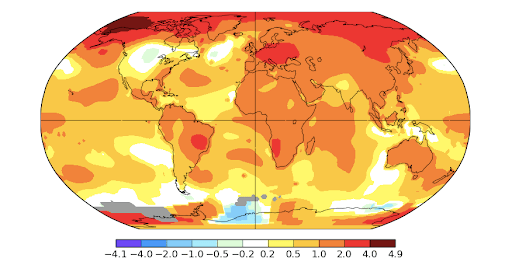
If the current situation is serious - “around 40% of the world's crop production is lost to pests and diseases every year”, as Pedro Fevereiro pointed out - imagine what it will be like when the average global temperature rises by the much-feared 2 degrees Celsius. “Climate change is increasing the risk of new pests and diseases emerging and expanding the areas affected. This problem, coupled with the EC's decision to discontinue traditional active molecules [synthetic agrochemicals] in Europe, imposes the need to develop alternative solutions,” warned the researcher who leads InnovPlantProtect, stressing that this is precisely the focus of the activity of the CoLAB he leads.
NASA map shows global temperature variation in 2019
In this sense, sustainability is the concept that best characterizes the products that InPP is developing. “New solutions for protecting Mediterranean crops must be more sustainable. In addition to new biopesticides based on oligopeptides and small RNAs, and formulated with biocompatible micro or nanoparticles, InPP will develop new plant varieties through genome editing and molecular selection assisted by molecular markers,” he explained.
With regard to the most interesting crops for the application of these solutions, Pedro Fevereiro gave a list of fruits and cereals whose production is of great importance to the national economy: olive trees, pears, grapes, cherries, blackberries, raspberries, strawberries, citrus fruits, tomatoes, almonds, corn, wheat, barley, oats and rice.
In addition to products, InPP will also provide services for the identification and molecular diagnosis of pests and diseases, as well as the “characterization of matrices using Fourier Transform Infrared (FTIR) spectra analysis, the molecular certification of plant varieties, the monitoring and diagnosis of pests and diseases, the creation of models for the spread of agricultural pests and diseases, forecasting models based on remote sensing data and risk models for emerging pests and diseases.
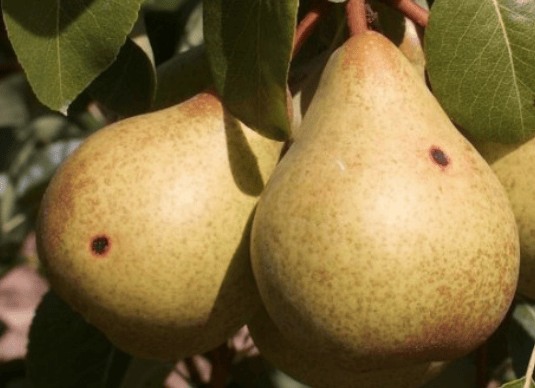
Rocha pear stenosis
Image credit: Voz do Campo
Pedro Fevereiro concluded his presentation at the Ciência2020 meeting with a summary of InPP's agenda for the coming months. In this regard, he revealed that InnovPlantProtect, the only one in Portugal working in this area of innovation, intends to develop a biopesticide to control the Xylella fastidiosa, a molecular strategy to control stenphyliosis in Rocha pears, tools based on geographic information systems to assist public and private decision-making in pest and disease control, an Artificial Intelligence-based early detection system for the early detection of the decline of cork oak forests produced by Phytophthora, Finally, to identify bread wheat alleles resistant to the new “Warrior” race of yellow rust and mobilize them in the desired varieties.
InnovPlantProtect will be present today at the Science 2020 Meeting, which is taking place at the Lisbon Congress Center in a hybrid format (in person and online). Pedro Fevereiro, CEO of InPP, will talk about the activity of this Collaborative Laboratory and its objectives in protecting agricultural crops from pests and diseases.
After 18 of the 26 Collaborative Laboratories (CoLAB) recognized in Portugal were presented in two sessions yesterday, the Science 2020 Meeting continues today with the presentation of eight more CoLAB, including InnovPlantProtect, a private non-profit association based in Elvas that is trying to develop innovative biological solutions for crop protection.
In today's session, dedicated to Biodiversity and Forestry and Agri-food (session 3), InPP's CEO, Pedro Fevereiro, will give a seven-minute presentation in which he will talk about the importance of InPP's activity, the products and services that its team of researchers is trying to develop to protect agricultural crops from biotic and abiotic factors, including climate change and new emerging pests and diseases that, due to the increase in global average temperature, are moving and settling in regions where they didn't exist before.
Session 3, moderated by the National Innovation Agency, will take place between 11.30 and 12.30.



 Português
  English