News & Events

white plant

NEWS

In the March issue of Fruits, vegetables and flowers you will find the opinion article entitled “The role of InnovPlantProtect in Organic Farming: Paths to sustainable and efficient solutions”, in which the executive director of InnovPlantProtect (InPP), António Saraiva, reveals how our CoLAB is contributing to the success of organic farming.

“By boosting research, collaboration and knowledge sharing, InPP is helping to solve the central challenges of this practice [organic farming], allowing it to expand and enhancing the supply of agricultural products to consumers. The solutions developed by InPP make organic farming a more viable option for producers,” says the executive director.

Read the full article and find out how we are shaping the future of agriculture.

We thank Frutas, legumes e flores magazine for its recognition and reiterate our commitment to the agriculture of the future.
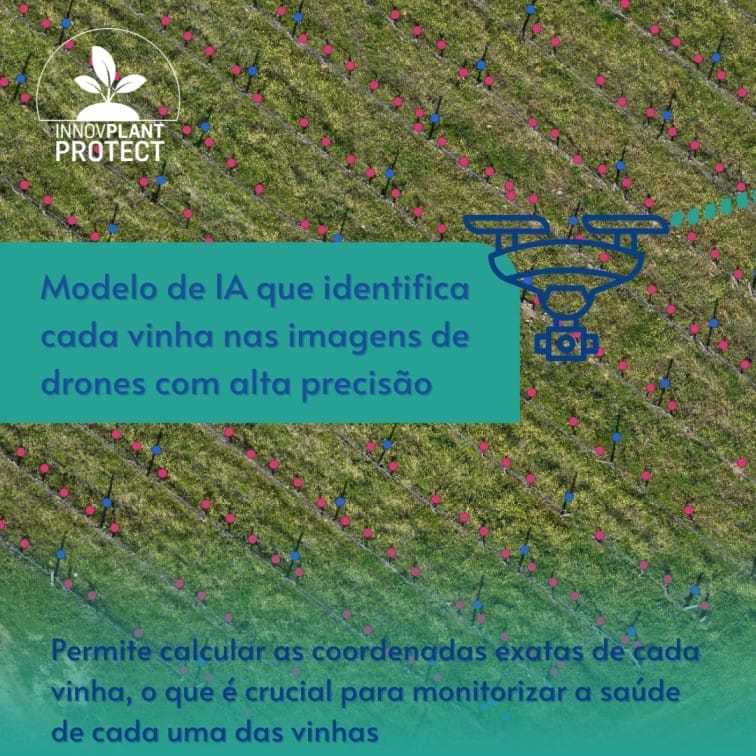
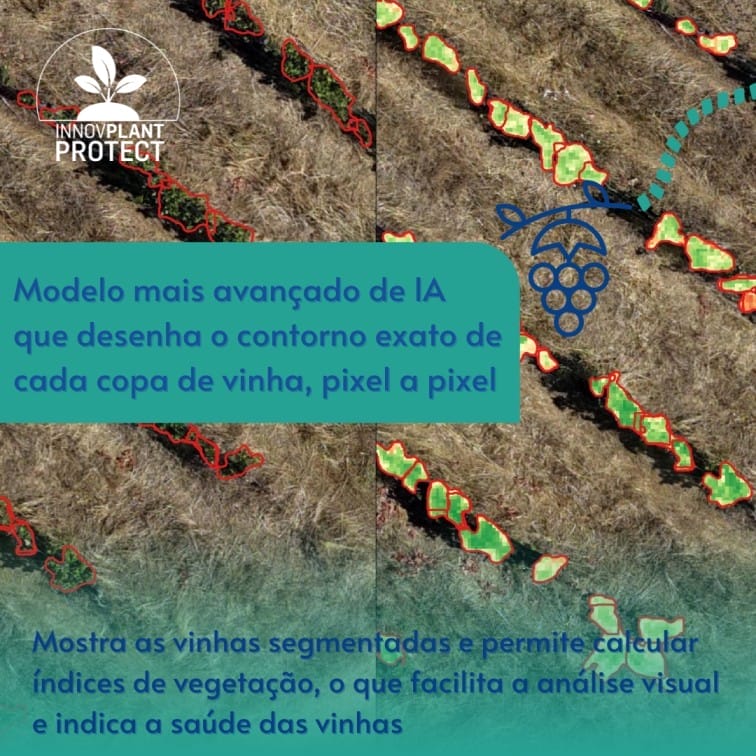
Imagine a future where drones and artificial intelligence work together to protect your vineyards. That's what the AI4Leafhopper project is making a reality!

Manisha Sirsat, a researcher on the AI4Leafhopper team, has developed two artificial intelligence models that analyze the aerial images captured by our latest generation drone... and these models make it possible:

  • geolocation of each vine
  • to know if there are vine failures
  • quickly identify “sick” vines”
  • optimize the application of treatments

The result? Growers can have a detailed view of the health of their vineyards, detect problems early and make more informed decisions.

Find out all about it here.

AI4Leafhopper is a project led by InPP and funded by the ICAERUS Horizon Europe program, which began in April 2024 and ended on April 30 with a final meeting involving the six European projects approved in the 1st edition of the ICAERUS program's PULL applications. The project team presented the AI-based models for detecting and monitoring the impact of the green leafhopper on vineyards.

The AI4Leafhopper project, InnovPlantProtect used a state-of-the-art drone to monitor the impact of the green leafhopper in the vineyards of our partners Reynolds Wine Growers and João Portugal Ramos. Although the results show that this advanced technology is more effective at detecting attacks at advanced stages, we are excited about the potential of this tool to provide valuable data for the management of this harmful insect.

We believe that with more research, we can refine our solution to detect early attacks and prevent significant damage to vineyards. Transforming the monitoring of this pest is where we want to go, always with the aim of protecting vineyards and guaranteeing the quality of production for winegrowers.

Over the next few days we'll be revealing everything that the AI4Leafhopper project is making a reality and how drones and artificial intelligence are working together to create a more sustainable future for viticulture. Stay tuned!

Find out all about it here.

AI4Leafhopper, funded by the ICAERUS Horizon Europe program, which began in April 2024, is now in its final stages. The development phase of the project, which took place in the field, is now over and the final stage is to present the solutions developed by our team on Portuguese soil to the market.

EVENTS

1st InPP field trip - Fertiprado
First InPP / Fertiprado field trip, by the Guadiana River, southwest of Elvas

CoLab InPP and Fertiprado collected the first samples of Persian clover and the pathogen that attacks this plant, which is used in the Alentejo and Elvas to produce pasture to feed free-range cattle.

The InnovPlantProtect (InPP) collaborative laboratory will develop a technological solution, based on existing products on the market, to protect Persian clover meadows (Trifolium resupinatum) against root rot. The initiative is the result of a partnership signed on December 2, 2020 with Fertiprado, an InPP member company.

This forage legume is particularly adapted - especially Fertiprado's varieties - to pasture production in Portugal and countries with winters similar to the Portuguese one. In the Alentejo and Elvas, Persian clover is mainly used as feed for free-range cattle, “due to its high protein content and its ability to retain atmospheric nitrogen,” says Pedro Fevereiro, InPP's executive director.

The action aims to isolate and identify the causative agent of root rot. The need was recognized by Fertiprado, which over the years has seen an increase in the incidence of this disease in its meadows, particularly those used for seed production. In the second week of January, InPP phytopathologists carried out their first field trip, accompanied by Ana Barradas, Fertiprado's Director of Research and Development, to collect samples of Persian clover and the pathogen that attacks it.

The work is in its initial phase and the identification of the causal species/strain of the disease is expected between March and April 2021, says Pedro Fevereiro. In a second phase, the “sequencing of its genome and the molecular identification of the strain” will be carried out. The third phase will consist of “testing and identifying the best solution based on coating the seeds with a biopesticide”.

INIAV-National Institute for Agricultural and Veterinary Research is one of the founding members of InnovPlantProtec. In this interview with Oeiras Valley, Nuno Canadas lists the differentiating elements of the institution he chairs and emphasizes its position within the national scientific and technological system. See Part I and Part II of the interview.

The new era in genomics began 20 years ago with the publication of the first draft of the human genome. And now, which way forward? This is the question that two genomics experts will try to answer in a live online chat this Monday at 19:00.

Since the new era in genomics began 20 years ago, a lot has changed: DNA sequencing costs have fallen, gene therapy is back, ethical boundaries are being pushed to the limit by gene editing, new technologies such as single cell and transcriptomics are leading researchers towards genomic breakthroughs.

How far the field of genomics has advanced in the last 20 years is not in question. What is under discussion now is what will happen next. With the progress that has been made, what is the way forward? What path should be taken?

On the 14th, at 7pm, in an online meeting organized by the US publication Genetic Engineering & Biotechnology News, two genomics experts from The National Human Genome Research Institute (NHGRI) and the authors of the recently concluded 2020 strategic plan will look back at the past of genomics, analyzing its highs and lows, and try to figure out its future. For the authors of the 2020 strategic plan, “the vision of genomics has never been clearer” and the future, they say, lies in “responsible stewardship” and increasing diversity.

To take part, register here.

