News & Events

white plant

NEWS

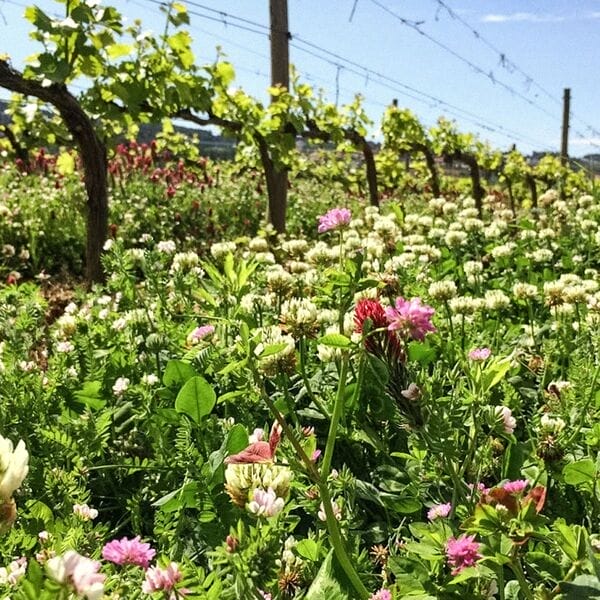
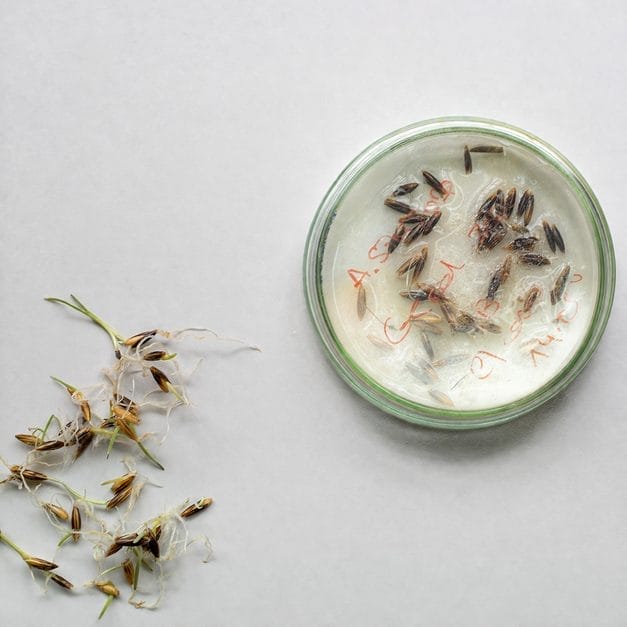
Uma nova tecnologia de revestimento biológico de sementes desenvolvida pelo InnovPlantProtect (InPP), em colaboração com a Fertiprado, poderá vir a transformar o desempenho de pastagens e forragens, contribuindo para sistemas agrícolas mais eficientes e sustentáveis.

Baseada em compostos derivados de algas, esta solução inovadora apresenta efeito bioestimulante e foi concebida para atuar desde as fases iniciais do desenvolvimento das plantas. Os ensaios realizados demonstraram resultados promissores ao nível da estimulação da nodulação em leguminosas, do crescimento vegetativo e da resistência das plantas a condições adversas, com impacto positivo no valor nutricional do pasto.

Este desenvolvimento resulta de um percurso de investigação conjunta que decorreu ao longo de cinco anos, refletindo o compromisso contínuo do InPP em transformar conhecimento científico em soluções com aplicação prática no setor agrícola. A tecnologia encontra-se atualmente em processo de patenteamento e representa um marco relevante no pipeline de inovação do laboratório.

Para a Fertiprado, parceiro estratégico neste projeto, esta tecnologia constitui uma alternativa aos revestimentos tradicionais baseados em compostos sintéticos, reforçando a aposta em soluções mais sustentáveis e alinhadas com as necessidades futuras da agricultura.

O desenvolvimento desta solução insere-se na Agenda Mobilizadora Pacto da Bioeconomia Azul, financiada pelo Plano de Recuperação e Resiliência (PRR), iniciativa que promove a valorização de recursos marinhos através da criação de novos produtos e tecnologias. Como parte do processo de valorização da tecnologia, foi assinado um memorando de entendimento com vista à sua futura exploração comercial.

Num contexto em que a procura por biosoluções agrícolas continua a crescer, iniciativas colaborativas como esta demonstram o papel fundamental da investigação aplicada na resposta aos desafios da sustentabilidade e da produtividade agrícola.

Investigação com impacto no setor agrícola

O trabalho desenvolvido pelo InPP evidencia o valor da colaboração entre ciência e indústria, permitindo acelerar processos de inovação e criar soluções ajustadas às necessidades reais do setor agrícola.

A parceria com empresas constitui um dos pilares estratégicos do InPP, promovendo a transferência de conhecimento científico e o desenvolvimento de tecnologias que contribuem para sistemas agrícolas mais resilientes e sustentáveis.
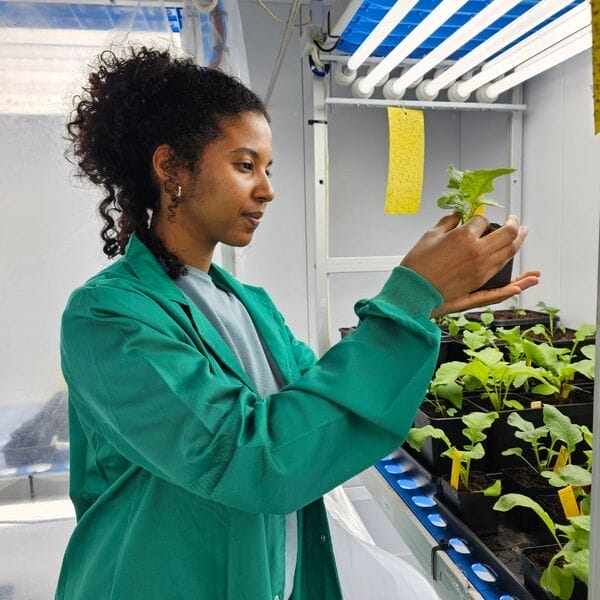
O InPP participou no Fórum Nacional de Clubes Ciência Viva na Escola, que teve lugar no dia 27 de março, integrando a Mostra de Ciência e Tecnologia com um stand dedicado à proteção das plantas.

Neste espaço, foram apresentados diversos materiais demonstrativos, incluindo placas de Petri com fungos e bactérias, plantas, algas e exemplos de produtos formulados, com o objetivo de despertar o interesse e a curiosidade dos visitantes para a importância da saúde das plantas e da investigação científica nesta área.

Ao longo do dia, a Gestora de Comunicação, Inês Ferreira, e o Gestor de Inovação, Paulo Madeira, dinamizaram o contacto com o público visitante, explicando de que forma a investigação em proteção das plantas contribui para melhorar a proteção das culturas e promover uma agricultura mais resiliente e sustentável.

O Fórum Nacional de Clubes Ciência Viva na Escola decorreu no CNEMA, em Santarém, reunindo escolas, centros Ciência Viva, universidades, centros de investigação e diversas outras entidades, num encontro dedicado à ciência, tecnologia e inovação.

O InPP agradece a todos os visitantes que passaram pelo seu stand, destacando a importância destes momentos de partilha para promover o conhecimento científico junto da comunidade.

No dia 26 de março, o InPP participou numa sessão promovida pela Agência Nacional de Inovação (ANI), em Lisboa, que contou com a presença de uma comitiva da República Checa ligada ao setor das biotecnologias.

Em representação do InPP estiveram Cristina Azevedo, Diretora de Biosoluções, e Paulo Madeira, Gestor de Inovação, que apresentou a instituição e as suas principais áreas de atuação e competências.

A iniciativa teve como principal objetivo identificar oportunidades de cooperação entre entidades portuguesas e checas, nomeadamente nas áreas de transferência de tecnologia, codesenvolvimento, ensaios pré-clínicos e diagnósticos, coinvestimento e internacionalização da inovação.

A sessão contou com a participação de representantes de entidades relevantes da República Checa, incluindo Petra Kinzlova, CEO da Prague.bio, Katarina Psenakova, Head of Biology da PharmTheon, bem como representantes da Embaixada da República Checa e da Academia das Ciências da República Checa.

Este encontro contribuiu para reforçar o posicionamento do InPP na promoção de parcerias internacionais e no desenvolvimento de soluções inovadoras, evidenciando o compromisso contínuo da instituição em fortalecer redes de colaboração científica e tecnológica e em contribuir para o crescimento e internacionalização da inovação.

EVENTS

Is it possible to detect yellow rust diseases in wheat and gafa in olive groves early, before the symptoms are visible in the field?

Ricardo Ramiro, director of the Data Management and Risk Analysis department at InnovPlantProtect (InPP), tells us more in the new episode of the radio program 90 Segundos de Ciência (90 Seconds of Science), broadcast today, Tuesday, June 11, at 5 p.m. on Antena 1 radio.

In today's broadcast, Ricardo will present the AlViGen project that the InPP team is working on, which aims to identify variants of the fungi 𝘗𝘶𝘤𝘤𝘪𝘯𝘪𝘢 𝘴𝘵𝘳𝘪𝘪𝘧𝘰𝘳𝘮𝘪𝘴 and 𝘊𝘰𝘭𝘭𝘦𝘵𝘰𝘵𝘳𝘪𝘤𝘩𝘶𝘮 and some important characteristics of these pathogens, such as virulence and resistance to fungicides or pesticides.

Listen to the new episode today at 5pm, with a repeat on Wednesday 12th at 11am on Antena1. The full episode is also available on RTP Play here.

Don't miss out!

The AlViGen project is led by InPP, in partnership with the University of Évora, and co-financed by the “la Caixa” foundation, in collaboration with Banco BPI and the Foundation for Science and Technology (FCT), under the Promove Program.

The 90 Seconds of Science program, a spinoff of the Master's Degree in Science Communication, coordinated by ITQB NOVA and the Faculty of Social Sciences and Humanities - NOVA FCSH, shows the science being done in Portugal in just 90 seconds.

The project “AI4Leafhopper: Automatic Infestation Alert for Leafhopper using Drone Imagery”, led by InnovPlantProtect (InPP), is one of the six winners of the 1st edition of the PULL applications of the Horizon Europe ICAERUS program, in the “Agriculture, Forestry and Rural Challenges” category, focused on end users who can use drones and their services to address commercial and/or rural community challenges. The project will use advanced technologies such as drones to control infestations caused by the green leafhopper in the vineyards of the Alentejo, providing the
spatial and temporal indications of the start of the infestation.

The green leafhopper (or cicada) is an emerging pest of great concern, affecting the yield and quality of wine production. However, the solutions for controlling this pest are very limited and inconsistently effective between different years, especially in organic production. In the current context of climate change in the Alentejo region, the green leafhopper represents one of the biggest challenges facing wine producers in terms of pests, with a moderate to high impact on production.

Green leafhopper, scientific name Jacobiasca lybica, one of the main pests of vineyards in the Alentejo, an insect species targeted by the AI4Leafhopper project. (Photo by Christophe Quintin | Flickr)

“AI4Leafhopper aims to develop an innovative system that uses data collected at air and ground level, combining images captured by drones with leafhopper population data collected by conventional traps,” explains iLaria Marengo, the InPP researcher responsible for the project. “The system will be designed to inform the grower about when, where and with what intensity the leafhopper is attacking their vines, predicting the risk of the critical level of symptoms up to two weeks in advance and detecting symptomatic plants in advance,” adds Manisha Sirsat, an InPP researcher also involved in AI4Leafhopper.

Drone flight in the vineyard at the Reynolds Wine Growers estate in Arronches (Photo by InnovPlantProtect)

The digital solutions proposed by AI4Leafhopper will allow wine producers to minimize the costs and environmental impact of pesticide application, reducing phytochemical applications and CO2 emissions thanks to the precise (spatial and temporal) application of these products, as well as reducing the costs of improving wine quality post-harvest. In addition, these solutions will also allow winegrowers to make better use of their working hours and resources, by reducing the time dedicated to monitoring pests and allowing faster decisions on pest control.

In addition to InPP, the AI4Leafhopper project includes the companies Reynolds Wine Growers and João Portugal Ramos, with whom the collaborative laboratory has been working since 2021 and 2023.

To find out more about AI4Leafhopper, visit the project website here.

The AI4Leafhopper project was one of six sub-projects awarded by the ICAERUS Horizon Europe program, as part of the first application focused on end users who can use drones and their services to address commercial and/or rural community challenges. The first edition of the PULL program awarded nearly 50,000 euros to a total of 6 innovative pilot projects.

InnovPlantProtect (InPP) is once again taking part in the 60th National Agriculture Fair (2024 edition - FNA 24), under the central theme “Extensive livestock farming”, the form of farming that occupies the largest area of Portuguese territory and the majority of farmers, which will be held from June 8 to 16 at the National Exhibition and Agricultural Markets Center (CNEMA) in Santarém.

InPP will be at its stand in Nave B to show visitors the innovative bio-based and digital solutions it has been developing for crop protection.

The collaborative laboratory (CoLAB) will be welcoming visitors to stand no. 6, located in Nave B, between 10 a.m. and 8 p.m., to showcase its activities, the various projects underway, the patents already submitted, the apps for agricultural management and the bio-based and digital products and services it has to offer the agricultural sector and the market. Throughout the nine days of the fair, some of InPP's researchers will be at the stand to show visitors the various features of the Elvas CoLAB, which has developed innovation that it hopes will contribute to the sustainability of agricultural systems.

“InnovPlantProtect's presence at the National Agriculture Fair is intended to be a space for communication and sharing with farmers and their families, as well as with companies and institutions in the sector, to publicize our activity and our products and to explain the importance of developing a set of bio-inspired and digital technologies in Portugal that are more efficient for crop protection, more environmentally friendly and safer for people,” says Pedro Fevereiro, InPP's executive director.

Biopesticides for the control of fire blight and pyriculariosis and for the control of various fungi and oomycetes and the biostimulant developed by CoLAB for the growth and productivity of horticultural plants, as well as the services available to agricultural producers will be highlighted. Some examples will be microbiome analysis, the development of strategies for obtaining plants that are more resistant to pests and diseases and risk models, molecular identification and diagnosis services, in vitro plant establishment and maintenance services, plant variety genotyping services, the application of artificial intelligence and drones to control infestations caused by the green leafhopper in Alentejo vineyards, as well as the Xyllela fastidiosa bacterium, or GIS-based decision support systems, among many others.

The National Agriculture Fair is one of the largest agricultural fairs in the country, held every year, and where all the players in the agricultural sector are represented. This event aims to be a space for debate, not only on the central theme of this edition of the fair, but also on the main agricultural issues of the moment. Providing interaction and contact between the players and boosting business is another of the aims of this event.