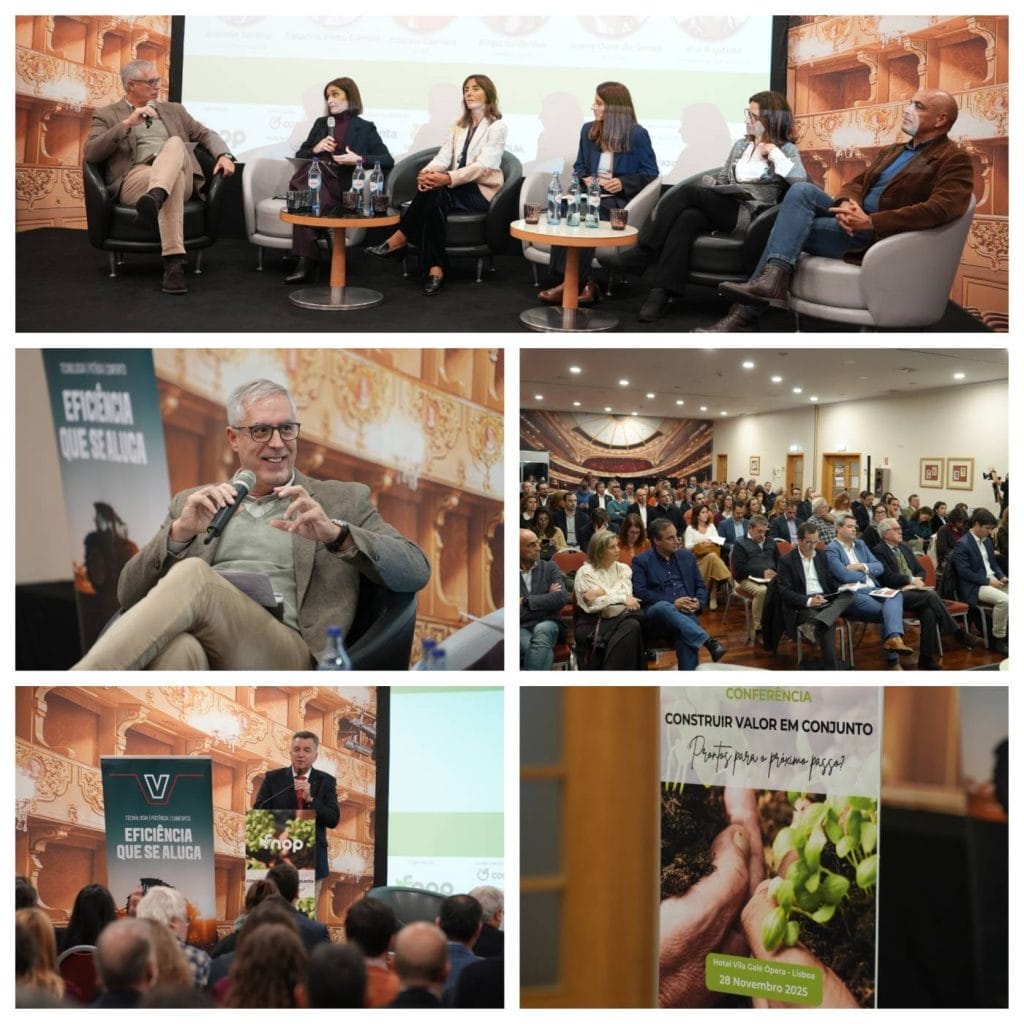
InnovPlantProtect (InPP) was present at the conference “Building value together”, organized by our associate FNOP - National Association of Fruit and Vegetable Producers' Organizations.
InPP's executive director, António Saraiva, moderated the panel “Sustainability that generates value: The role of ESG in the future of the sector”, which included interventions from Catarina Pinto Correia (VdA), Cristina Câmara (APED), Filipa Saldanha (Crédito Agrícola), Joana Oom de Sousa (Sovena) and Rui Veríssimo Baptista (Companhia das Lezírias).
The opening session was given by Domingos dos Santos, president of FNOP and a member of CoLAB's Board of Directors of our CoLAB.
The meeting brought together producer organizations, farmers, companies, experts and political decision-makers to discuss the current challenges and look to the future of the national fruit and vegetable sector.
With the participation of national and international experts, the conference was a privileged space for sharing experiences and strategic reflection, focusing on the organization of production and the role of public policies in promoting sustainable growth.
Congratulations to FNOP for the initiative and the ability to bring together a panel of excellent speakers, making this conference a relevant and topical milestone for the sector.
In viticulture, every little decision has an impact: on the soil, on the health of the plants and on the quality of the grapes that form the basis of the wine that reaches our table. The future of viticulture may depend on a single biosolution. Or a hundred. In VINNY, an ambitious European project of which InPP is a part, researchers from ten countries are looking for bioactives capable of curbing vine diseases - and, at the same time, reducing dependence on synthetic agrochemicals. What's at stake is not just science: it's the sustainability of this industry.
The aim of the VINNY project is simple but transformative: develop and implement effective, sustainable solutions and adaptable to the needs of winegrowers in various European countries, creating environmentally friendly biopesticides and biofertilizers, and advanced nano-encapsulation technologies, to reduce dependence on conventional chemicals and promote a healthier ecosystem and a better environment and a circular viticulture.
And at the heart of this mission is an essential cog in the wheel: the daily work of the researchers who search for answers invisible to the human eye - as is the case with Tiago Amaro, a researcher at InPP.
Image credits: VINNY Project
Searching for the Guardians of the Vine
The road to these new biosolutions begins in the field, with the vine. The initial work of Tiago Amaro, started in September 2024 and focuses on identifying and isolating microorganisms naturally present in the vines themselves, in samples received from partners in Portugal, Spain, Austria and Denmark.
From grapes, sticks or woody fragments, small microscopic worlds arrive in the laboratory that may contain the natural weapons needed to fighting three major threats to the vineyard, with a direct impact on farm profitability: - A gray mold (Botrytis cinerea) and blue mold (Penicillium expansum): Fungi that cause post-harvest diseases, In the case of wine grapes, this affects the quality of the wine and makes it completely impossible to sell table grapes. - The vine tumors: Caused by bacteria Allorhizobium vitis, This disease affects the plant in the field, causing leaf fall and reduced grape production.
Tiago Amaro, InnovPlantProtect researcher, identifying and isolating bacteria as part of the VINNY project. Image credits: InnovPlantProtect - Inês Ferreira
After isolating the microorganisms, Tiago dedicated himself to creating libraries of bacteria. What is a ‘Bacteria Library’? In the context of the investigation, a bacteria library is an organized and catalogued collection of bacteria isolated from different sources. It allows scientists to test each strain of bacteria against specific pathogens, constituting a vast catalog of potential biological ‘superheroes’ for plant protection.
This rigorous screening, which has already led to the analysis of more than 190 bacteria of this library is the first line of defense. The team selects the best candidates with the potential to be used as biological control agents against the diseases under study.
The Power of European Collaboration
What if the solution to protecting Portuguese vineyards is hidden in a Danish grape? Or in a bacterium isolated in Spain? One of the most exciting aspects of the project is its truly collaborative dimension, where researchers from ten countries are working in parallel, sharing answers, challenges and microorganisms in search of effective biosolutions for the whole of Europe.
“All the solutions found will be shared, all the solutions will be tested by all the partners and it will be possible to build a ‘library of solutions’ against the various vine diseases“ emphasizes researcher Tiago Amaro.
The sharing of bacteria and extracts from different ecosystems (Portugal, Spain, Denmark and Austria) is crucial. An effective bacterium in Denmark could be the key to protecting Portuguese vineyards, and vice versa. This exchange of biological solutions, one of the innovative pillars of the project, makes it possible to exploit the microbial biodiversity beyond national borders. InPP has the fundamental role of testing, in grapes, the solutions discovered by our team as well as by other national and European partners.
This diversity of tests is a bet on the future: microorganisms that don't prove effective against vine diseases could be the solution for pathologies in other crops.
Left photo: Tiago Amaro, InPP researcher, observing a grapevine leaf, the target crop of the VINNY project, Right photo: Potted grapevine plants in the InPP greenhouse, ready to test the solutions found by the various VINNY partners. Image credits: InnovPlantProtect - Inês Ferreira
The Real Test: From the Lab to the Field
After selection in the laboratory, the next step - the formulation of the most promising bacteria - will be carried out in Portugal and Spain, at the University of Minho and the Polytechnic University of Catalonia. But it is in the field-testing phase that the greatest challenge of plant protection science lies, because even brilliant results in the laboratory can fail in the field. Formulation is the process that turns a bacterium into a product - stable, applicable and compatible with the farmer's needs.
Tiago Amaro emphasizes necessary resilience:
Field Uncertainty: Often, promising solutions in the laboratory or greenhouse are not as effective when applied in the field, due to environmental variables (climate, soil, etc.).
The Time Factor: Diseases such as Allorhizobium vitis may take a long time to develop, or the infection may not be relevant in certain years, which makes it difficult to obtain robust conclusions.
The Agricultural Cycle: It is necessary to test the formulation in the field during three to five consecutive years, and recording all the variations observed. With only one harvest a year, this process requires patience and persistence.
In total, from the discovery of a promising bacterium to the creation of a formulated product, proven to be effective and ready for the market, it can take around 10 years - a real test of any scientist's resilience.
Customized solutions: the new requirement of modern agriculture
The final challenge is to ensure that the tests are relevant to the producer's reality. The current trend in the agricultural sector is the search for customized solutions, adapted to the specific conditions of the farms: “There has to be a solution for every field and every farmer”, says the researcher.
This personalized approach requires more science, more rigor and more local knowledge - exactly what VINNY seeks to build.
A Europe united by science and the vine
InPP is part of this consortium, made up of 19 partners from ten countries, The project is led by the University of Minho and funded by the Horizon Europe program.
Together, they seek to answer a question that could shape the future of European viticulture: Will it be possible to find effective biosolutions for all partner countries?
The answer is still being written - in laboratories, in experimental vineyards, in fields in different climates and geographies. And it's made up of small discoveries, many frustrations and a huge commitment to science.
Because protecting the vineyard of the future is not just a technical ambition. It is a cultural, economic and environmental commitment. And VINNY is helping to design that future - one microorganism at a time.
The final workshop highlighted three years of research dedicated to the early detection of pathogens in crops such as wheat and olive groves.
The project AlViGen has reached its final stretch, concluding three years of research focused on the genomic surveillance of agricultural diseases. The results now presented promise to strengthen the Alentejo agricultural sector's ability to respond to emerging phytosanitary threats.
On the day October 23rd, The final project workshop, The event brought together researchers, producers and technicians to share results and reflect on the future of genomic surveillance in Portuguese agriculture.
A pioneering genomic surveillance center
During AlViGen, the Alentejo's first genomic surveillance center, an infrastructure with capacity for early detection of diseases in strategic crops such as wheat and olive grove. This breakthrough marks a decisive step towards a more precise, sustainable and science-based agriculture.
Results and scientific contributions
Using innovative molecular tools, the project team succeeded:
Identify pathogenic fungi before visible symptoms appear on the plants;
Characterizing yellow rust strains, genetically linking them to others known at a global level;
Detecting resistance genes in wheat to the strains currently present in Portugal;
Developing diagnostic methods able to distinguish the different species of the fungus that causes gafa in olive groves.
During the workshop, the potential of the analysis of the airborne fungi community as a tool for early warning for multiple pathogens, allowing for more effective and preventive management of crop diseases.
From research to practical application
The event ended with a debate on how transform AlViGen results in a detection and warning service accessible to the agricultural sector. The initiative reflects the joint commitment between science, innovation and production, with a view to protecting national agriculture from the challenges of the future.
Partnerships and thanks
InnovPlantProtect would like to thank all the partners and funders of the project: University of Évora, John Innes Centre, INIAV, De Prado, CERSUL, Eugénio de Almeida Foundation, Torre das Figueiras Estate, Almojanda, Malheiro Estate, Directorate-General for Food and Veterinary (DGAV), la Caixa“ Foundation”, BPI Bank e Foundation for Science and Technology (FCT).
O laboratório colaborativo (CoLAB) InnovPlantProtect (InPP) esteve presente na AgroGlobal 2023, no stand 70, no Centro Nacional de Exposições e Mercados Agrícolas (CNEMA), em Santarém, entre os dias 5 e 7 de setembro de 2023.
No stand, foi possível conhecer melhor a atividade do InPP no âmbito do desenvolvimento de soluções inovadoras de base biológica e digital para a proteção de culturas contra pragas e doenças, incluindo serviços e produtos concretos que o CoLAB já está preparado para oferecer ao setor agrícola e ao mercado.
Alguns dos 44 investigadores esteve no local ao longo dos três dias da feira, para demonstrar ao visitante as várias valências do InPP.
The Department of New Biopesticides, por exemplo, levou agentes de controlo biológico (BCA, na sigla inglesa) – fungos e bactérias em placas de Petri, nomeadamente o fungo Colletotrichum spp., causador da gafa no olival e o fungo Magnaporthe oryzae, which causes pyriculariosis of rice, as well as some BCA that inhibit the M. oryzae. Para além disso, a equipa levou ainda várias espécies de algas em pó, com diferentes cores, como azuis, verdes e vermelhas, que têm estado a ser exploradas para perceber qual a capacidade destas para serem biopesticidas contra fungos e bactérias causadores de doença em várias culturas agrícolas importantes para a agricultura nacional e não só.
The Department of Formulations and Process Development took small alginate capsules with dyes, which encapsulate biological control agents, to exemplify the process of encapsulating active biocontrol agents that the department is working on.
Researchers from the Department of Data Management and Risk Analysis falaram sobre análise de microbioma e desenvolvimento de modelos de risco, e deram a conhecer a AgMeteoStats, a nova aplicação desenvolvida pelo InPP, em colaboração com o Centro Operativo e de Tecnologia de Regadio (COTR), que permite estimar vários parâmetros relevantes para a agricultura, de uma forma que pode ser totalmente controlada pelo utilizador.
In terms of Protection of Specific Crops, foi possível conhecer melhor os serviços laboratoriais que oferecemos, nomeadamente de identificação e diagnóstico molecular, bem como observar plantas de trigo, de tomateiro, de azevém, de trevo-da-pérsia e de choupo em cultura in vitro.
The Department of Pest and Disease Monitoring and Diagnosis presented the projects “ABC - AgriBioCircular”, “MoniTREEng” and “Artificial Intelligence applied to a prediction and early detection system for Phytophthora cinnamomi in dehesa ecosystems”. Also featured were decision support systems based on GIS, spatial databases and web/mobile applications.
Para além de ter stand próprio, o InPP teve também uma presença ativa noutras iniciativas que decorram ao longo dos três dias de feira. No dia 5 de setembro, o diretor executivo do CoLAB, Pedro Fevereiro, e a diretora do departamento de proteção de culturas específicas do InPP, Sandra Correia, participaram no painel “Ferramentas para sistemas de produção mais sustentáveis”, que teve lugar pelas 10h15, e que se integrou no seminário “Tecnologia e Informação na Agricultura – Smart Farm Virtual”, promovido pela Associação Nacional da Indústria para a Proteção das Plantas (Anipla). Pedro Fevereiro e Sandra Correia foram ainda oradores na mesa-redonda “Tecnologia e Informação na Agricultura”, que decorreu pelas 11h30. O evento, organizado ao abrigo do Projeto Smart Farm Hub, do qual o InPP é parceiro, debateu a importância da Biotecnologia para a adaptação das plantas aos desafios inerentes às alterações climáticas, a necessidade de tornar acessível a Agricultura Digital e de Precisão, bem como a relevância da investigação e desenvolvimento de Biopesticidas para o estabelecimento de sistema de produção mais sustentáveis.
O evento teve transmissão via streaming. Pode (re)ver o seminário na íntegra here.
A diretora do departamento de proteção de culturas específicas do InPP participou ainda na mesa-redonda do painel “Desafios do melhoramento genético”, enquadrado no seminário “O Pacto Ecológico Europeu e os Desafios da Agricultura”, organizado pela CONSULAI, e que teve lugar no dia 6 de setembro, a partir das 14h30. Já o diretor executivo do CoLAB esteve presente na mesa-redonda do painel “Desafios para o agricultor”, que teve lugar no mesmo dia, pelas 16h00. As iniciativas decorreram no Auditório Armando Sevinate Pinto do CNEMA.
O evento teve transmissão via streaming. Pode (re)ver o seminário na íntegra here.
Ainda no dia 6 de setembro, Ricardo Ramiro fez a apresentação intitulada “WP InFrass – uma nova vida no solo”, integrada no seminário “Fertilizante orgânico de inseto – um fertilizante de ação global”, organizado pela Agenda Mobilizadora InsectERA, e que decorreu a partir das 15h30, no Auditório Vida Rural. O seminário foi dedicada ao eixo InFrass – uma nova era para os solos, um dos 9 eixos da Insectera, e que visou utilizar os insetos como ferramenta para a criação de novos fertilizantes orgânicos, sustentáveis e de elevada qualidade, adaptados aos desafios agrícolas do futuro.
Videos, photos and presentations were always available on a television, so that visitors could virtually “enter” our house, laboratories, fieldwork, events and other initiatives, as well as chat with the team present to welcome them.
O balanço da participação do CoLAB na AgroGlobal 23 foi positivo, tendo sido capaz de atrair diversos visitantes, sejam profissionais do setor, agricultores e estudantes.
Um ano após a inauguração das suas instalações, o InnovPlantProtect (InPP) promove o primeiro Dia Aberto dedicado às empresas e produtores agrícolas com o objetivo de dar a conhecer a instituição por dentro, o trabalho desenvolvido pelos investigadores, os serviços inovadores já disponibilizadospeloCoLAB, bem como identificar oportunidades de colaboração nas diversas vertentes de intervenção do laboratório colaborativo localizado em Elvas. A iniciativa decorrerá no dia 13 de setembro, entre as 9h30 e as 12h00, na sede na Estação Nacional de Melhoramento de Plantas, pólo do INIAV de Elvas.
O InPP, alinhado com a estratégia definida pela Agência Nacional de Inovação (ANI) para os laboratórios colaborativos (CoLABs), está orientado para a inovação, de modo a contribuir para o aumento da competitividade do tecido produtivo e social, e das empresas em particular. Assim, o InPP prioriza a ligação e cooperação com as empresas e produtores agrícolas. Nesse sentido, o InPP pretende organizar ações de divulgação que promovam uma colaboração mais próxima com as empresas e com as associações de produtores agrícolas.
Os principais objetivos do Dia Aberto são: 1) Dar a conhecer o InPP, a sua equipa de especialistas e as atividades que estão atualmente em curso;
2) Dar a conhecer os produtos que estão a ser desenvolvidos pela equipa e os serviços disponibilizados pelo InPP, desenvolvidos à medida das necessidades dos clientes, sendo ajustados em função da situação específica;
3) Identificar oportunidades de colaboração, a curto, médio e longo prazo, nas diversas vertentes de intervenção do CoLAB (investigação, prestação de serviços, projetos em co-promoção).
A programação incluí uma sessão de abertura e de apresentação geral do InPP, uma visita aos nossos laboratórios, às câmaras de crescimento e estufa recuperada recentemente e um almoço volante.
Em relação aos produtos que desenvolvemos, os biopesticidas são um dos exemplos que vai poder descobrir. Neste contexto, o InPP tem já um pedido de patente definitiva e patentes provisórias para dois produtos, um contra o fogo bacteriano e outro contra a piriculariose do arroz.
No âmbito das suas capacidades, o InPP desenvolve um conjunto de serviços que disponibiliza às empresas, que vão desde a identificação de pragas e doenças à identificação genética de variedades e a caracterização do microbioma de solos e de organismos. Estamos ainda em condições de oferecer serviços de análise química dos solos e o desenvolvimento de plataformas digitais para diversas finalidades agrícolas, incluindo-se a visualização e análise de dados de imagem.
O InPP desenvolve também plataformas digitais de vários tipos, propondo-se criar um hub agro-digital para a gestão, análise e utilização de dados agronómicos, e desenvolve ainda modelos de previsão e progressão de pragas e doenças, recorrendo entre outras tecnologias à inteligência artificial.
O InPP é um laboratório colaborativo que visa desenvolver, até ao nível de prontidão tecnológico (TRL 6), soluções bio inspiradas e digitais inovadoras para proteger as culturas e produtos pós-colheita contra pragas e doenças e promover modos de produção agrícola mais seguros, inteligentes e produtivos, ajustáveis às variações introduzidas pelas mudanças climáticas e mais ambientalmente sustentáveis.
As inscrições já estão abertas e podem ser efetuadas através do preenchimento do formulário disponível here, até ao dia 11 de setembro.
Não perca esta oportunidade única de ficar a conhecer-nos, trocar experiências e de juntos identificarmos oportunidades de colaboração e de estabelecermos parcerias para o futuro. Marque na sua agenda e junte-se a nós no Dia Aberto Para Empresas e Produtores Agrícolas! Teremos todo o gosto em recebê-lo/a!
No passado dia 25 de agosto, o diretor executivo do InnovPlantProtect (InPP), Pedro Fevereiro, e a diretora do departamento de Novos Biopesticidas, Cristina Azevedo, estiveram no Dia Aberto dedicado ao tema “Os cereais no Baixo Mondego”, organizado pelo Pólo de Inovação de Coimbra da Direção Regional de Agricultura e Pescas do Centro (DRAPCentro), e que teve lugar no Campo do Bico da Barca, em Montemor-o-Velho. A iniciativa pretendeu dar a conhecer o que de mais inovador se tem feito ao nível da cultura deste cereal.
Durante o Dia Aberto, que contou com a colaboração de várias entidades e empresas ligadas aos vários setores das culturas cerealíferas, os participantes visitaram vários campos de arroz, onde estão a decorrer diversos ensaios para selecionar novas variedades deste cereal, entre elas a Guadiagran, Caravela e Lusitano, e tiveram ainda a oportunidade de ficar a conhecer os campos de divulgação nos quais estão a ser testados bioestimulantes de absorção das folhas no arroz, variedades de arroz tolerantes aos herbicidas para o controle do arroz bravo e alternância e sequência de cereais e leguminosas, bem como a ser aplicados bioestimulantes no milho.
Os visitantes poderam constatar o trabalho que tem sido realizado pelo Instituto Nacional de Investigação Agrária e Veterinária (INIAV) no programa de melhoramento do arroz, em colaboração com o COTArroz, a DRAPCentro, a Lusosem and BASF, bem como os ensaios que a instituição tem realizado para avaliar o comportamento agronómico das cultivares e determinar o seu rendimento industrial.
A importância das parcerias e colaborações, não só com as empresas mas com instituições como o InPP, foi também reforçada, tendo sido destacado o ensaio de testagem do novo produto que o laboratório colaborativo está a desenvolver contra o fungo causador da doença da piriculariose do arroz, e que iniciou no passado mês de julho e terminou a 1 de setembro.



 Português
  English