News & Events

white plant

NEWS

There are days when science begins long before you enter the laboratory or the field. It starts at dawn, when the alarm clock goes off too early. When you mentally review the day's list: an experiment that can't be missed, a trip to the field that depends on the weather, an unfinished report, a meeting scheduled at the wrong time. In between, someone to wake up, someone to drop off, someone to call. And yet science moves forward.

At InnovPlantProtect, there are now 15 women who give a face to the science and innovation developed here. Women who represent commitment, demand, resilience, overcoming, quality, talent, excellence and creativity. But they are only part of a greater whole. There are many more - and each one brings with it a story that doesn't fit into a CV, a patent application or an article.

Today, February 11th, marks the International Day of Women and Girls in Science, a UNESCO initiative that underlines the importance of the female role in the production of scientific and technological knowledge and the need to continue promoting equal access to careers in science and innovation. Portugal has encouraging figures: women represent almost 50% researchers in the country. It's a relevant figure, reflecting decades of progress. But the figures don't show what happens between them.

Because science, for many women, is made up of fragile balances.

There are women with intense family lives, others with more solitary journeys, still others who build support networks outside traditional models, with effort and creativity. There are difficult choices and decisions, unexpected circumstances, forced breaks, changes of pace, different phases of life. All legitimate. Many are invisible when you only look at the end result of a project, an article or a biosolution developed. - but they all influence the paths of science.

One day, one of our researchers - let's just call her that - told us that she had finished a field trial close to sunset. The phone rang while she was putting away her materials. It was the school. A delay. Nothing extraordinary. It was business as usual. She came home exhausted, with dirt still on her boots, opened her computer after dinner and went back to her data, because the experiment couldn't wait.
“It wasn't a heroic day,” she said. “It was just a normal day.”

And perhaps that is what is most remarkable.

In the field of crop protection, the work is demanding, technical and often unpredictable. It takes place in the laboratory and in the field, between strict protocols and decisions made under real conditions. It requires persistence, adaptability, attention to detail and an integrated view of problems. Characteristics that so many women bring with them - not by nature, but by experience, by path, by everything they have learned to manage at the same time.

Each personal story profoundly shapes the way we do science. The doubts, the challenges, the forced breaks, the changes of pace, the new beginnings. None of this is left at the laboratory door. It all silently enters into the way we observe, question and build knowledge.

To celebrate the International Day of Women and Girls in Science is to recognise this reality as a whole. It is to honour the women who continue to do science despite the challenges — and often because of them. And it is to remember that innovation is also born from lives fully lived, shaped by imperfection, effort and courage.

Today we celebrate them. Not just for what they produce, but for all that they are. In science, in the field, in the laboratory - and in the life that happens in between.

O InnovPlantProtect (InPP), Collaborative Laboratory specializing in biological and digital solutions for crop protection, aligned with the emerging challenges of agriculture, will launch its new institutional website on January 24th, on a symbolic date marking 7 years working in the agricultural sector.

This launch is part of a phase of institutional evolution and consolidation InPP, reinforcing its strategy of proximity to the sector, clarity in the communication of its competencies and affirmation as a strategic partner for companies, producers, associations and public bodies.

An even clearer, more up-to-date and sector-oriented platform

With a renewed structure and a more intuitive browsing experience, the new website features:

  • an area of Services and Products completely reorganized, which facilitates access to specialized services, laboratory capabilities and biological and digital solutions developed by InPP, as well as to a updated catalog of services and biosolutions;
  • more complete institutional content that reinforces transparency, scientific rigor and CoLAB's mission;
  • a clearer presentation of scientific skills and research areas, highlighting the impact of the work carried out by InPP's multidisciplinary teams.

New image, same mission - but reinforced

The launch of the website is accompanied by the implementation of InnovPlantProtect's new visual identity, This reflects the maturity of CoLAB and its future ambitions.

The new image - accompanied by the slogan “Innovate together. Protect better.” - reflects InPP's ongoing commitment to:

  • Developing new generation biological and digital solutions;
  • Promoting safer, more innovative and more productive agriculture;
  • Strengthen collaboration and partnership with the agricultural sector and the innovation ecosystem.

A new phase for InPP

The digital and visual renovation is part of a broader strategy of maturity and consolidation, Through this initiative, InPP aims to strengthen its role as a scientific and technological partner for the agricultural sector in applied research and the development of crop protection solutions.

According to António Saraiva, InPP's executive director: “This new website isn't just a digital revamp - it's a reflection of the ambition we have for our future and how we want to communicate with the sector. We want every visitor to understand the purpose that drives us: to create innovative solutions that protect crops, boost productivity and contribute to more sustainable agricultural systems. InPP is entering a new phase, with a clearer, more accessible identity aligned with the real needs of agriculture and a renewed commitment to real impact on the ground.”

Available from January 24th

The new InnovPlantProtect website will be available from January 24th at: https://iplantprotect.pt/

The start of a new year also marks a new cycle for InnovPlantProtect. In 2026, InPP enters a phase of evolution and consolidation, with several new features that reinforce its position as a strategic partner for the intelligent transformation of agriculture.

Over the next few months, initiatives, content and tools will be presented that reflect the work carried out by our teams in the areas of applied research, biological solutions, specialized services and digital innovation.

The first step in this new phase will be presented in the next January 24th, InnovPlantProtect is celebrating the date 7 years in business at the service of the agricultural sector.

Until then, we continue to prepare a range of new products that reflect our mission to promote safer, more innovative and more productive agriculture.

Stay tuned. What's coming is just the beginning.

EVENTS

Sandra Correia, director of the department, took part in the International Horticultural Congress, the world's largest scientific forum for horticultural sciences.

The 31st edition of the International Horticultural Congress (IHC 2022), organized by the International Society of Horticultural Sciences (International Society for Horticultural Science - ISHS), took place between September 14 and 20 in Angers, France.

The InPP was represented by the director of the Specific Crops Protection department, Sandra Correia, who was an organizer at the Symposium 4 entitled “In vitro technology and micropropagated plants”, The event took place on August 15th and 16th.

Sandra Correia, as well as Stefaan Werbrouck (right), the other organizer of Symposium 4, receive an award for their work in organizing the symposia, recognized by the International Society of Horticultural Sciences.

The Congress brings together international scientists, academics, students and industry to present and discuss the latest and most relevant advances in the scientific field of Plant Biotechnology, share experiences and knowledge and network.

Find out more at event page.

On August 3, 2022, InnovPlantProtect (InPP) was featured on RTP 1“s nationwide television program, ”Portugal em Direto".

RTP 1 broadcast a special report by journalist Teresa Marques, in which she revealed the solution our team has developed to inhibit the growth of the bacteria Erwinia amylovora which causes fire blight, a disease that affects rock pear and apple orchards in Portugal and has compromised the production of these crops.

“Due to climate change, the levels of infection [by Erwinia amylovora] are getting bigger every year and, as soon as you have a crop with fire blight, you have to cut down the apple or pear tree, and this has very serious consequences for farmers, because there are reductions of 40 to 60% in production,” he explains Cristina Azevedo, Director of the New Biopesticides of the InPP.

The work carried out by our researchers and their strong commitment have produced promising results, as shown in this report and in the statements made by Cristina Azevedo, Margarida Basaloco e João Carréu, InPP researchers.

For Pedro Fevereiro, InPP's executive director, “these new products are more sustainable and make it possible to protect crops from new pests and diseases that are appearing due to climate change” and the aim is for the various partners that make up CoLAB (companies, research institutes, state laboratories, municipalities and producers“ associations) ”to collaborate to develop products that can be taken to a level that can then be put on the market with the help of companies".

In this report you will learn more about the first provisional patent application submitted by the InPP team, on July 21, 2022.

The report is available at RTP Play, from minute 22:53.

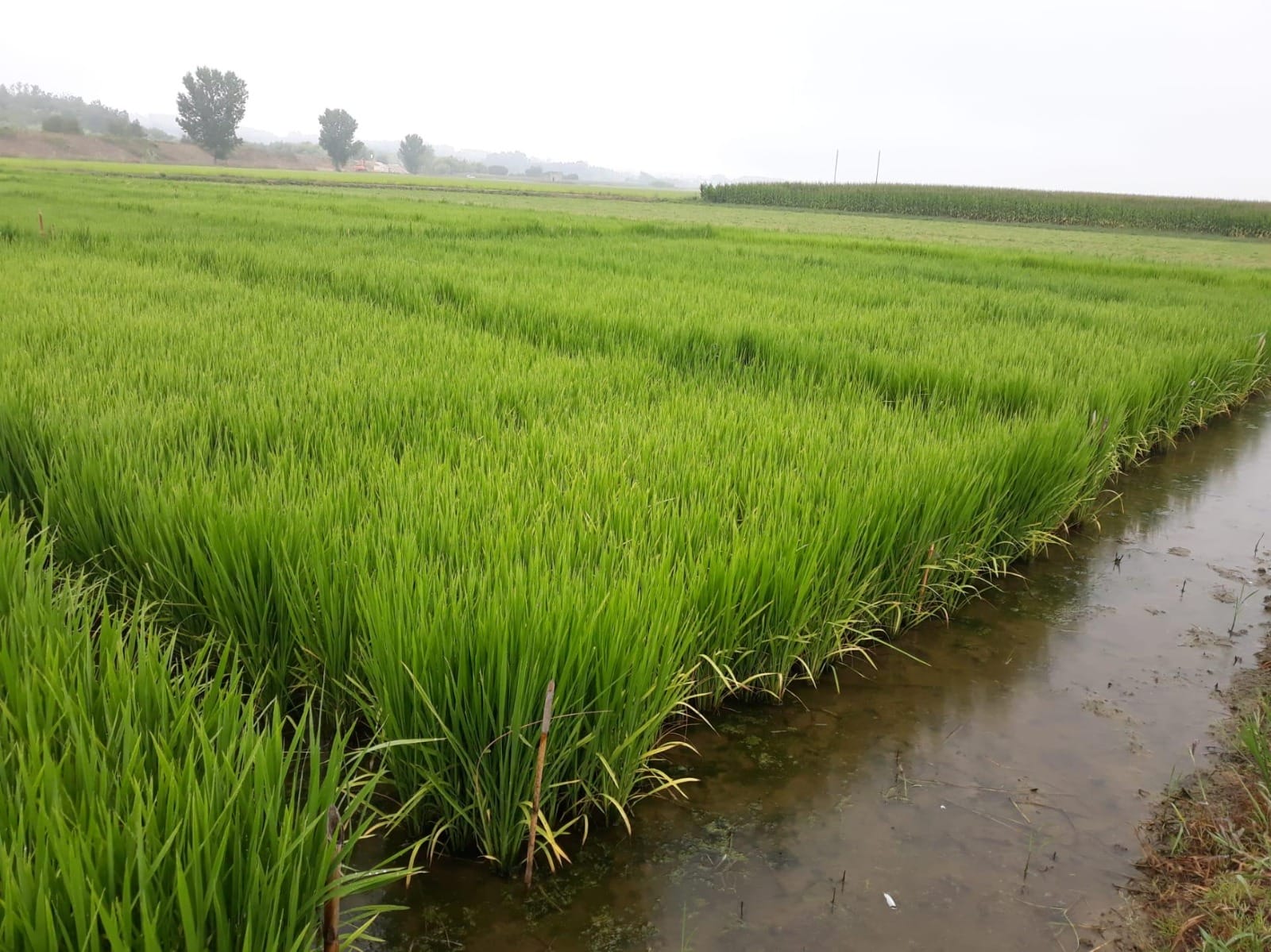
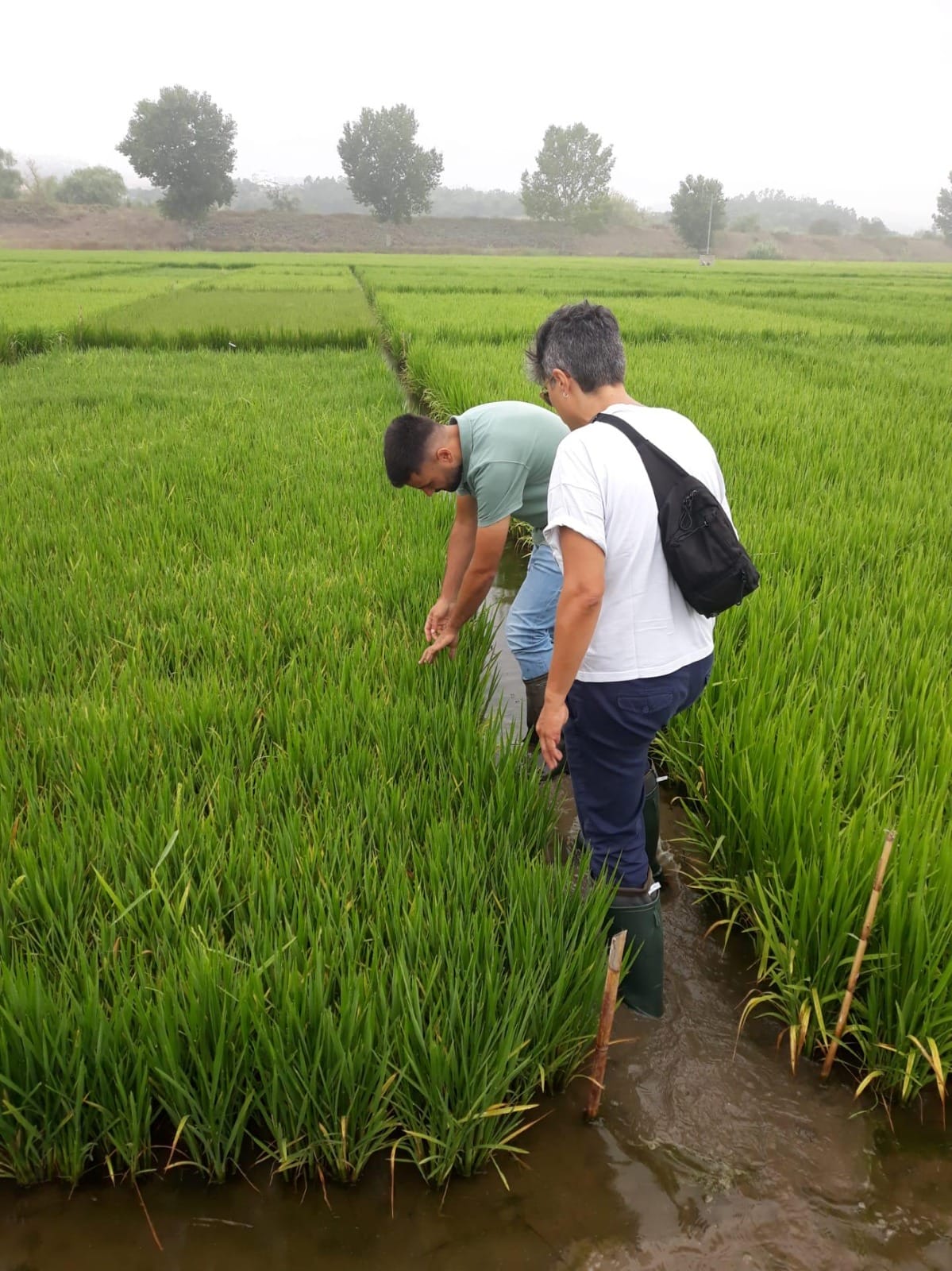
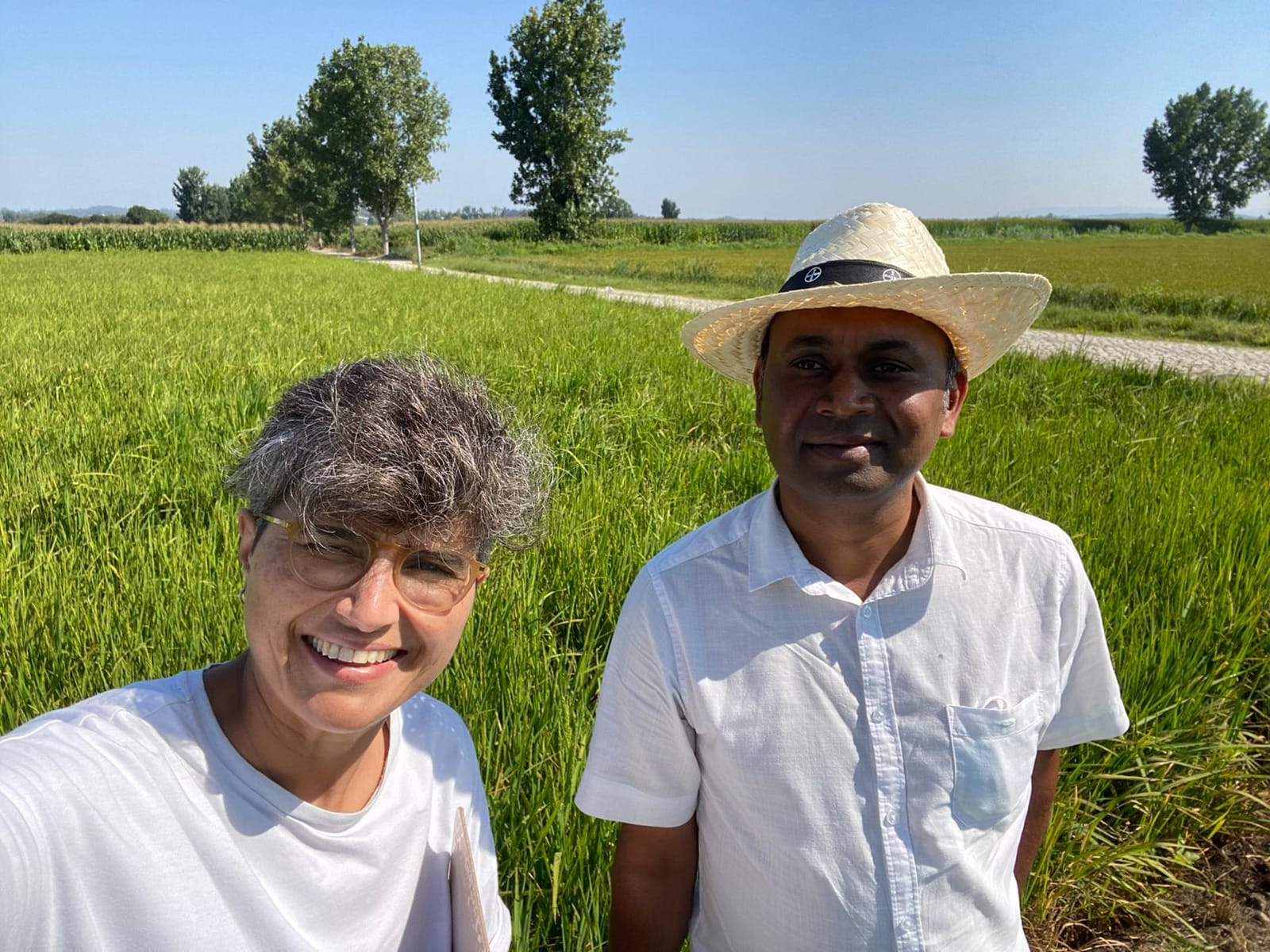
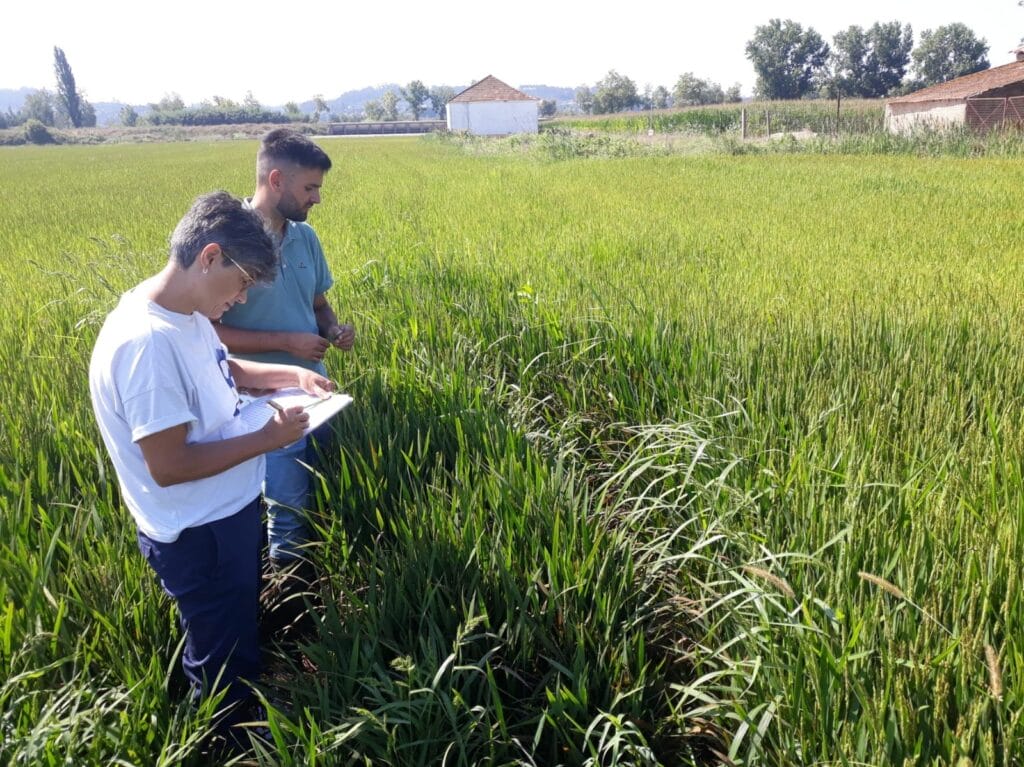
On August 1st, researchers from InnovPlantProtect (InPP).., Cristina Azevedo e Rupesh Singh, traveled to the Mondego area, in Montemor-o-Velho, to collect samples of rice infected with the fungus Magnaporthe oryzae, This is the cause of pyriculariosis, one of the most common diseases of this cereal all over the world and also in Portugal. The crops were harvested as part of the BlaSTOP project - Developing integrated solutions to combat rice pyriculariosis.

The InPP team, which has been working on the development of biopesticides against rice pyriculariosis, will now analyze the collected rice samples in the laboratory, with the aim of isolating and genetically characterizing the isolates (the cultures of microorganisms) currently present in the Mondego basin, in order to know the current genetic diversity of Magnaporthe oryzae in Portugal.

In the future, these collections will allow researchers to carry out a genetic analysis that compares the cultures of microorganisms from Magnaporthe oryzae currently present in this area of the Mondego and those isolated in the 1990s by the team from the INIAV in the national rice breeding program, in order to study the evolution of virulence, i.e. the degree or capacity of this fungus to cause the disease.

The fieldwork was carried out with the collaboration of António Jordão, a technician from Regional Directorate of Agriculture and Fisheries of the Center (DRAP Centro), and Danny Carvalheiro, a Master's student at the Higher Institute of Agronomy (ISA).

The BlaSTOP project aims to develop a sustainable and effective solution for controlling rice pyriculariosis caused by this fungus. The project has the support of COTArroz - Operational and Technological Center for Rice and Casa do Arroz, in the Tagus basin, and the Aparroz - Agrupamento de Produtores de Arroz do Vale do Sado Lda, in the Sado basin, where the team hopes to collect in the near future.

Sampling in the Mondego area, in Montemor-o-Velho