News & Events

white plant

NEWS

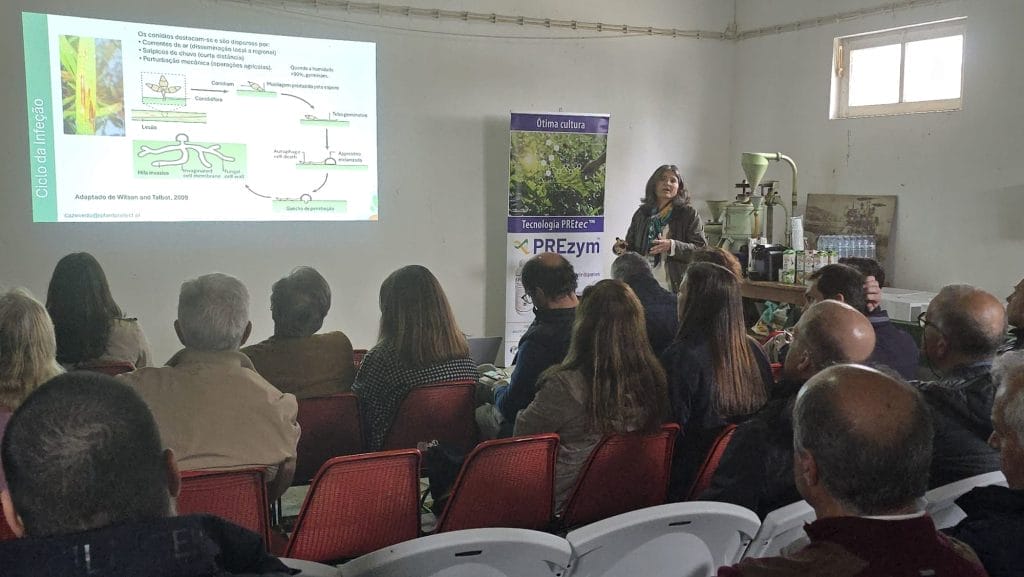
O InPP marcou presença no Encontro com orizicultores e técnicos(as) em Portugal, promovido pela EDAF, que decorreu no dia 5 de março, no Pólo de Inovação de Salvaterra de Magos, em Santarém.

A Diretora de Biosoluções do InPP, Cristina Azevedo, integrou o painel de oradores convidados, tendo apresentado a comunicação intitulada “A problemática da Pyricularia na cultura do arroz”. A apresentação incidiu sobre os principais desafios fitossanitários associados a esta doença, que continua a constituir uma das maiores ameaças à produção de arroz a nível mundial e também em Portugal.
WhatsApp Image 2026 03 06 at 14.28.18

O encontro reuniu produtores, técnicos e especialistas da fileira do arroz, proporcionando um espaço de partilha de conhecimento e debate sobre soluções atuais e em desenvolvimento para o controlo da piriculariose. Foram igualmente abordados outros temas relevantes para a sustentabilidade e produtividade da cultura, nomeadamente a gestão da fertilização.

A participação do InPP neste tipo de iniciativas reforça o compromisso da instituição com a inovação, a transferência de conhecimento e o desenvolvimento de soluções sustentáveis para a agricultura nacional.

O InPP agradece à EDAF e ao COTArroz o convite e a organização deste importante encontro, esperando que esta colaboração continue a fortalecer-se no futuro.

The project TomaBioTec started in January with the aim of developing and validating innovative solutions that contribute to a more sustainable and efficient production of tomatoes in the industry, in line with the current challenges of the agri-food sector, by integrating biotechnology and digital technologies.

TomaBioTec Logo

The initiative aims to evaluate, under real field conditions, the effectiveness and efficiency of a biosolution with bioprotective and/or biostimulant properties, developed by InnovPlantProtect (InPP), This could help improve the quality and productivity of industrial tomato crops.

The rehearsals take place at Alentejo and Spanish Extremadura and combine traditional agronomic methods with advanced technologies, such as drones, multispectral sensors and artificial intelligence models. This approach allows detailed monitoring of the health of the crop, the presence of pests and diseases and the impact of the bioproduct throughout the production cycle.

The project “TomaBioTec: New biological and digital solutions for tomato crop protection and fertilization” is led by the InPP, in collaboration with the Centro Tecnológico Nacional Agroalimentario Extremadura (CTAEX) and Cordeiro Group, and was selected as one of the winners of the 7th edition of the Promove Program, The prize was awarded by the “la Caixa” Foundation, in partnership with Banco BPI and the Foundation for Science and Technology (FCT), in the category of innovative pilot projects.

This project reinforces the commitment to biological and digital solutions as drivers of more sustainable, competitive agriculture based on scientific evidence, with a direct impact on producers and industry.

More information about the project here.

InnovPlantProtect (InPP) was present at the XVI National Maize Congress, which also included the 2nd Meeting of Cereal Crops, organized by ANPROMIS, in collaboration with ANPOC and AOP. The event took place on February 11 and 12 at CNEMA in Santarém, bringing together national and international experts to discuss the sector's main challenges.

António Saraiva, Executive Director of InPP, took part in the panel “Cereal Production: What technical challenges are we facing?”, where he highlighted the decisive role of research in responding to the emerging challenges of cereal production, in a context of growing demographic, environmental and economic pressure.

“I'm proud that today, after seven years, we have 28 researchers working full-time on this topic, 12 of whom have PhDs, with experience in crops such as rice, which has been central to our work,” he said, emphasizing the multifunctional and international nature of InPP's teams.

He also pointed out that the work being done extends beyond rice to include maize, through ongoing projects and new operational groups focused on emerging crop problems. Among the initiatives in the spotlight is an application to Horizon Europe focused on developing improved and more resilient varieties.

For António Saraiva, anticipation is the key to success: “These challenges can't wait too long to be discussed or resolved. The sooner we anticipate the issues, the easier, more effective and more economical the solutions will be.”

In a debate that also marked the 40th anniversary of Portugal's integration into Europe and the role of the Common Agricultural Policy in the cohesion of the European Union, one message was clear across the board: “Climate change is the biggest threat we have.”

InPP thus reaffirms its commitment to innovation, science and the development of sustainable solutions for the future of cereal crops.

EVENTS

On February 27 and 28 and March 1 and 3, the “AlViGen: Creation of a hub in ALentejo for the GENomic Surveillance of diseases in agriculture” project team began its fieldwork by installing spore traps, known as capta-esporos, in wheat fields in Portalegre, Beja, Évora and Mérida. The traps make it possible to capture spores and identify the species of fungus circulating in the air and, in particular, variants of the fungus Puccinia striiformis f.sp. tritici, causing yellow rust on wheat, as well as its virulence characteristics and resistance to fungicides.

In total, the spore traps were installed in eight wheat fields in the Alentejo (Alto, Central and Baixo) and Spanish Extremadura, two of the poorest regions in Europe, whose economy is largely dependent on agriculture, and in which the fungus Puccinia striiformis f.sp. tritici has had a particular impact.

The aim of setting up these wheat fields is to implement a cross-border network of traps that capture spores from the air and enable early detection of fungi circulating in the air.

The team will collect samples on a weekly/fortnightly basis, for 3 months a year, during the wheat production cycle. Regular monitoring of the diversity of fungal species circulating on wheat fields will also make it possible to detect the appearance of new pathogenic fungi.

Manuel Patanita, a lecturer at the Polytechnic Institute of Beja (IPBeja), by Benvindo Maçãs and José Coutinho, director and researcher at the INIAV of Elvas, respectively, and Paulo Velez, production manager at the CERSUL - Southern Cereal Producers Group.

AlViGen, coordinated by InnovPlantProtect (InPP) in partnership with the University of Évora (WOW), was one of the innovative pilot projects selected last October and funded by the La Caixa Foundation, BPI Bank and the Foundation for Science and Technology (FCT), as part of the 4th edition of the Promove Program. This project will enable InPP to create the capacity for early detection of multiple crop diseases, using molecular methods that allow the identification of important characteristics of pathogens, such as virulence, susceptible varieties and resistance to phytopharmaceuticals, benefiting producers and government authorities.

Find out more about the AlViGen project at webpage of the project here.

FINANCING

O InnovPlantProtect (InPP) e a Direção-Geral de Alimentação e Veterinária (DGAV) assinaram, no passado dia 16 de fevereiro, um protocolo de cooperação com o objetivo de continuar a colaborar no desenvolvimento de novos serviços e projetos que permitam monitorizar a presença da bactéria Xylella fastidiosa nas culturas agrícolas, através de sistemas de informação geográfica (SIG), bem como fazer a gestão de dados que daqui resultem. 

O protocolo de cooperação foi assinado pela Diretora Geral da DGAV, Susana Guedes Pombo, e pelo Diretor Executivo do InPP, Pedro Fevereiro. 

Esperamos que esta parceria possa crescer cada vez mais e possa evidenciar a excelência do trabalho colaborativo!

O Encontro dos Produtores de Frutas e Legumes do Clube de Produtores Continente decorreu na passada quarta-feira, dia 15 de fevereiro, entre as 10h00 e as 13h30, no pólo do INIAV, em Elvas, e pretendeu apresentar os desafios e oportunidades nos setores da horticultura e fruticultura em Portugal, bem como os projetos que estão a ser implementados pelo Clube com o objetivo de atingir uma produção hortofrutícola mais competitiva, inovadora e sustentável.

No encontro o diretor executivo do InnovPlantProtect, Pedro Fevereiro, deu a conhecer ao Clube de Produtores o trabalho que tem sido desenvolvido pela equipa para encontrar soluções para combater pragas e doenças nas culturas agrícolas e apresentou os serviços laboratoriais e digitais que temos disponíveis para agricultores e empresas, reforçando a possibillidade de desenvolver um serviço personalizado e à medida de cada cliente.

Os diretores de departamento Ilaria Marengo e Ricardo Ramiro falaram sobre a gestão e apresentação de dados na Agricultura, bem como sobre os métodos de monitorização de pragas e doenças que os seus departamentos têm utilizado.

A iniciativa reuniu mais de uma centena de participantes e contou com as intervenções de David Monteiro, Diretor Comercial de Frutas e Legumes do Continente, Ondina Afonso, Presidente do Clube de Produtores Continente, e Marta Barradas, Técnica de Mercado do Clube de Produtores Continente.

No final da manhã, os produtores tiveram a oportunidade de visitar as instalações do laboratório colaborativo.

Este foi mais um passo importante para nos darmos a conhecer ao setor agroalimentar.

No futuro, o InPP pretende continuar a conversar com produtores locais e discutir quais são as principais problemáticas com que se deparam diariamente em relação às pragas e doenças das suas culturas agrícolas, bem como tornar as aplicações e tecnologia que temos desenvolvido mais acessível aos produtores.