The executive director of InnovPlantProtect (InPP), António Saraiva, took part in the conference “What are the challenges facing the national agroforestry sector over the next decade?”, which took place at the Escola Superior Agrária de Coimbra (ESAC) of the Polytechnic Institute of Coimbra last Tuesday, April 22.
The event, which brought together more than 150 participants and was organized by 17 national Competence Centres, discussed topics such as innovation, sustainability, soil conservation, monitoring cork oak forests and efficient agricultural management.
António Saraiva was part of the panel of commentators, whose speaker was Pedro Santos, Director General of CONSULAI, and moderated by Maria Custódia Correia, Coordinator of the AKIS Portugal Network. The opening session was attended by the Minister for Agriculture and Fisheries, José Manuel Fernandes, who announced the publication of the Ordinance of April 21 to open the Grant for Initiatives for the creation of Operational Groups (OG).
This initiative provides a total of 11 million euros for new GOs, with a maximum of 350,000 euros per project and eligible funding of 100%.
The GOs are considered crucial structures for transferring knowledge and strengthening the AKIS (Agricultural Knowledge and Innovation System).
Special thanks to the 17 Competence Centers for the opportunity to participate in this productive meeting!
Beyond strategy: The secret ingredient of innovation
On the path to success, organizations define strategies, plan each step, and invest in crucial resources such as the sale of services and products, project applications, the development of solid business plans, and the protection of intellectual property. However, there is an often-neglected element that is fundamental to the flourishing of innovation: serendipity. But what exactly is this mysterious force, and why is it so vital to advancing agriculture and so many other areas?
When chance opens doors: The power of unplanned discovery
Serendipity lies in the art of finding something valuable when looking for something else. It's the unintentional discoveries that arise from unexpected situations. Throughout history, some of the most transformative innovations have not been the result of a rigorous plan, but rather of a fortuitous encounter with the unknown. Although deliberate research and methodical experimentation are pillars of scientific and technological progress, openness to the unexpected proves to be a powerful catalyst. When researchers cultivate this openness, they often come across revelations that have the potential to revolutionize entire industries, transform technologies, and expand our understanding of the world around us.
A close look at the “error”: The genesis of an innovative biofungicide
Today, we unveil the surprising and inspiring story of Maria Miguel, a talented researcher from the InPP's New Biopesticides Department, whose insight transformed a fortuitous event into a discovery of inestimable value: a broad-spectrum biofungicide capable of combating Botrytis cinerea, the relentless fungus responsible for the devastating gray mold disease in tomato plants. This pathology represents one of the greatest phytosanitary challenges in tomato cultivation, especially when grown in greenhouses, causing significant losses to producers if not controlled in a timely manner.
From discard to discovery: An investigator's insight
The journey of this discovery began in a scenario familiar to any researcher: the observation of Petri dishes, used to grow cell or microorganism cultures. In Maria Miguel's Petri dishes, colonies of the fungus Botrytis cinerea were growing, intentionally introduced there for study. However, something else caught her attention: one of the plates was contaminated by mold, and curiously, a clear zone surrounded this intruder. Instead of discarding the plate and ignoring it as mere contamination, Maria Miguel decided to investigate the reason behind that clear area. Her curiosity revealed that the mold had a surprising ability to inhibit the growth of Botrytis cinerea in its vicinity.
“Sometimes we look at something and think it's a mistake. The truth is that within a failure, there can be something good,” shares the researcher. The emotion and enthusiasm of a researcher when realizing that what at first seemed like an obstacle, a negative result, can actually be an opportunity, is contagious. For Maria Miguel, this “error” transformed into a serendipitous discovery with enormous potential.
Maria Miguel, a researcher at the InPP's Department of New Biopesticides, transformed an unexpected event into a groundbreaking discovery: a broad-spectrum biofungicide to combat gray mold in tomato plants.
Beyond chance: The active ingredients of scientific discovery
As the story of this biofungicide demonstrates, the world of science is full of examples of discoveries that arose from the unexpected. One of the most famous cases is the discovery of penicillin by Alexander Fleming in 1928. While observing Petri dishes, Fleming noticed that a mold was producing a substance that eliminated Staphylococcus aureus bacteria around it. He identified the mold as Penicillium notatum and named his revolutionary antibiotic penicillin. Penicillin ended up becoming an extremely important drug for fighting infections.
However, chance is not the only protagonist of these important revelations. “Sometimes we have to follow our intuition and be able to prove that we are right or wrong,” explains Maria Miguel. In addition to intuition, a generous dose of curiosity, an open mind to accept unexpected results, a solid scientific knowledge, and the ability to see and advance to further investigations on surprising results play a crucial role in the alchemy of discovery.
The ecosystem of discovery: Fostering an environment conducive to innovation
There are other ingredients that contribute to the recipe for scientific success:
Creativity: The ability to generate new perspectives, concepts, questions, or solutions, and the willingness to explore existing ideas under a new light.
Flexibility: The courage to venture into unknown territories without fear of failure, thus increasing the odds of serendipitous encounters.
But no discovery flourishes in isolation. At InPP, the strong team spirit and culture of collaboration transcend departmental boundaries. Maria Miguel's discovery is a testament to this synergy, as she herself acknowledges: “My colleagues opened doors so that I could do my research.”
To foster innovation, organizations need to cultivate an environment that stimulates open discussions and connects people from diverse areas of knowledge and life experiences, without judgment; that encourages curiosity and receptiveness to new experiences; and that promotes a relentless pursuit of improving scientific knowledge, the fertile ground where serendipity can germinate.
Sowing the future: The impact of a discovery and the path of research
Although Maria Miguel is about to embark on a new journey, driven by a prestigious Marie Skłodowska-Curie doctoral fellowship - a program that supports the career of researchers and promotes excellence and innovation in research - her legacy at InPP is already flourishing. Her innovative discovery is opening new and promising doors for future research in the area of crop protection, demonstrating how, at times, it is in the unexpected that the potential to transform our world lies.
Beyond strategy: The secret ingredient of innovation
On the road to success, organizations define strategies, plan every step and invest in crucial resources such as selling services and products, applying for projects, drawing up solid business plans and protecting intellectual property. However, there is an element that is often overlooked, but which is fundamental to the flourishing of innovation: serendipity. But what exactly is this mysterious force and why is it so vital to the advancement of agriculture and so many other areas?
When chance opens doors: The power of unplanned discovery
Serendipity is the art of finding something valuable when you're looking for something else. It's the unintentional discoveries that arise from unexpected situations. Throughout history, some of the most transformative innovations have not been the result of a rigorous plan, but rather a chance encounter with the unknown. While deliberate research and methodical experimentation are pillars of scientific and technological progress, openness to the unexpected proves to be a powerful catalyst. When researchers cultivate this openness, they often stumble upon revelations that have the potential to revolutionize entire industries, transform technologies and expand our understanding of the world around us.
A close look at “error”: The genesis of an innovative biofungicide
Today, we unveil the surprising and inspiring story of Maria Miguel, a talented researcher from InPP's New Biopesticides Department, whose acumen turned a chance event into a priceless discovery: a broad-spectrum biofungicide capable of combating the Botrytis cinerea, the relentless fungus responsible for the devastating gray rot disease in tomato plants. This pathology represents one of the biggest phytosanitary challenges in tomato cultivation, especially when grown in greenhouses, causing significant losses to producers if it is not controlled in good time.
From discard to discovery: The insight of a researcher
The journey of this discovery began in a setting familiar to any researcher: the observation of Petri dishes, used to grow cultures of cells or microorganisms. On Maria Miguel's plates, colonies of the fungus Botrytis cinerea were growing, intentionally introduced there for study. However, something else caught her eye: one of the plates was contaminated by mold, and curiously, a clear area surrounded this intruder. Instead of discarding the plate and dismissing it as mere contamination, Maria Miguel decided to investigate the reason behind the clear area. Her curiosity revealed that the mold had a surprising ability to prevent the growth of Botrytis cinerea in its vicinity.
“Sometimes we look at something and think it's a mistake. The truth is that in a failure there can be something good,” the researcher shares. The excitement and enthusiasm of a researcher realizing that what at first glance seemed like an obstacle, a negative result, could actually be an opportunity, is contagious. For Maria Miguel, this “mistake” turned into a serendipitous discovery with enormous potential.
Maria Miguel, a researcher at InPP's New Biopesticides Department, who turned an unexpected event into a discovery that changed the course of her work: a broad-spectrum biofungicide to combat gray rot in tomato plants.
Beyond chance: The active ingredients of scientific discovery
As the history of this biofungicide shows, the world of science is full of examples of discoveries that came out of the blue. One of the most famous cases is Alexander Fleming's discovery of penicillin in 1928. While observing Petri dishes, Fleming noticed that a mold was producing a substance that eliminated bacteria Staphylococcus aureus around him. He identified the mold as Penicillium notatum and named his revolutionary antibiotic penicillin. Penicillin ended up becoming an extremely important medicine for fighting infections.
However, chance is not the only protagonist of these important revelations. “Sometimes we have to follow our intuition and be able to prove ourselves right or wrong,” explains Maria Miguel. In addition to intuition, a generous dose of curiosity, an open mind to accept unexpected results, solid scientific knowledge and the ability to see and move on to further research into surprising results play a crucial role in the alchemy of discovery.
The discovery ecosystem: Fostering an environment conducive to innovation
There are other ingredients that contribute to the recipe for scientific success:
Creativity: The ability to generate new perspectives, concepts, questions or solutions, and the willingness to explore existing ideas in a new light.
Flexibility: The courage to venture into unknown territory without the fear of failure, thus increasing the chances of serendipitous encounters.
But no discovery flourishes in isolation. At InPP, the strong team spirit and culture of collaboration transcend departmental boundaries. The case of Maria Miguel's discovery is testimony to this synergy, as she herself acknowledges: “My colleagues opened doors so that I could do my research”.
To foster innovation, organizations need to cultivate an environment that encourages open discussions and connects people from different areas of knowledge and life experiences, without judgment; that encourages curiosity and receptiveness to new experiences; and that promotes an incessant quest to improve scientific knowledge, the fertile ground where serendipity can germinate.
Sowing the future: The impact of a discovery and the path of research
Although Maria Miguel is about to embark on a new journey, boosted by a prestigious Marie Skłodowska-Curie PhD scholarship - a program that supports the careers of researchers and promotes excellence and innovation in research - her legacy at InPP is already flourishing. Her groundbreaking discovery is opening promising new doors for future research in the field of crop protection, demonstrating how sometimes it is in the unexpected that the potential to transform our world lies.
On November 16, we had the pleasure of attending the Annual Meeting of the Bioresources for Sustainability Unit. GREEN-IT, which he brought together at the Institute of Chemical and Biological Technology (ITQB NOVA), in Oeiras, the members of the Scientific Advisory Board and researchers from the various institutions that make up this Unit, such as InnovPlantProtect (InPP).
The director of the New Biopesticides department, Cristina Azevedo, was one of the guest speakers at the first talk and presented InPP, the work carried out by the five departments of the Collaborative Laboratory (CoLAB), as well as the projects in which we are involved.
The aim of the meeting was to take stock of the Research Unit's situation in the areas of soil health, plant protection and production, as well as the plans for the Unit's new structure.
Special thanks to GREEN-IT for the invitation. It was a great networking moment!
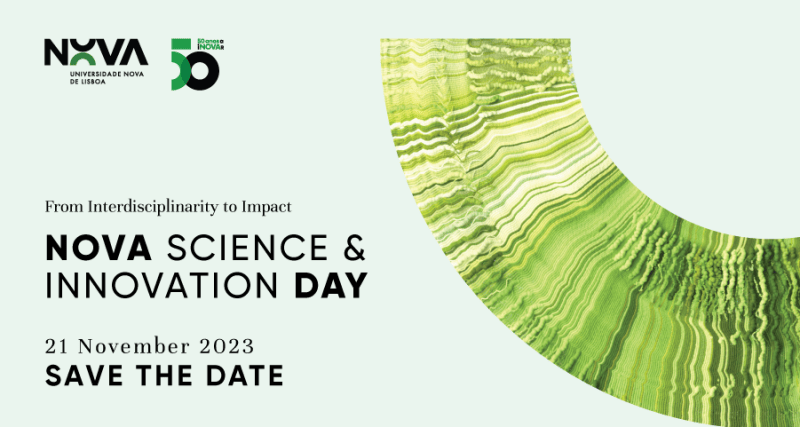
InnovPlantProtect (InPP) will be present at NOVA Science & Innovation Day, promoted by NOVA University Lisbon, The event will take place next Tuesday, November 21, at the Rectory's facilities on the Campolide Campus.
NOVA Science & Innovation Day is an event that aims to showcase excellent science, research and innovation at the University and is a unique opportunity for the academic community, as well as the general public, to get a closer look at the scientific work carried out at NOVA University Lisbon and how it translates into innovation and the creation of value for society.
We'll be at the Innovation Fair, taking place all day in the Rectory atrium, to show you everything that our Elven collaborative laboratory (CoLAB) is already doing for crop protection and pest and disease prevention, with a highly qualified team and very broad and diverse skills.
Other CoLABs, proprietary technologies and specialized services will also be represented at the Innovation Fair, Spin-offs and other companies in the University's ecosystem.
Don't miss the chance to talk to us! We'll be here until 6pm!
InnovPlantProtect (InPP) took part in another seminar on “Technology and Information in Agriculture - Smart Farm Virtual”, promoted by the National Association of the Plant Protection Industry (ANIPLA), which took place this time in the Algarve, at the Algarve Regional Directorate for Agriculture and Fisheries (DRAP Algarve), on the afternoon of November 7th. At the seminar it was possible to discuss some of the biggest challenges currently facing the agricultural sector, as well as explore some of the most advanced tools that allow professionals to adopt more sustainable and planet-friendly practices.
Pedro Fevereiro, InPP's executive director, took part in the panel “Tools for more sustainable production systems”, in which he demonstrated some of the solutions that already exist, such as new formulations, new biopesticides and new genomic techniques, and which are being created in response to the sector's production needs and the constraints imposed by the requirements of the European Green Deal.
InPP's CEO was also a speaker at the “Technology and Information in Agriculture” round table, which focused on the current requirements of the European Green Deal and the challenges it poses for the day-to-day work of professionals, as well as the revision of the Sustainable Use Regulation, and in which Gabriela Cruz, President of the Portuguese Association for Soil Conservation Mobilization (APOSOLO), Sandra Germano, a technician from DRAP Algarve, and João Bento Inácio, from the company JBI Group, He was representing the region's farmers. The round table was moderated by João Cardoso, Executive Director of ANIPLA.
The round table ended with a unanimous conclusion: we need to invest in research and the development of new tools to keep up with the European Union's train, which in turn has to make it possible to approve new solutions, such as new plant protection products and biopesticides, so as not to leave farmers without alternatives to the problems that no longer have a solution. Before banning, the European Union must guarantee alternatives and regulate the approval of these new solutions.
Topics such as the importance of biotechnology in adapting plants to the challenges of climate change, the need to make digital and precision agriculture accessible, and how conservation agriculture protects the soil and promotes biodiversity were also debated at the event, which was organized as part of the Smart Farm Hub project, in which InPP is a partner.
This is yet another seminar, organized as part of the Smart Farm Virtual Roadshow and promoted by ANIPLA, which is dedicated to raising awareness among professionals in the agricultural sector and the general public of the best practices for the sector that contribute most to the sustainability of the planet and can really make a difference in their day-to-day production. The roadshow will continue to tour various cities across the country to showcase the platform Smart Farm Virtual, This is the digital extension of ANIPLA's Smart Farm, located at Companhia das Lezírias, which you can visit to learn more about sustainable agricultural practices.
Special thanks to ANIPLA for the initiative! It was an excellent opportunity to talk and share with curious, aspiring and professional farmers about the main challenges facing the sector, as well as the tools available for an (even more) sustainable agricultural practice.




 Português
  English