O InnovPlantProtect (InPP) acaba de lançar o seu novo vídeo institucional, uma peça que reflete a identidade do CoLAB, a sua missão e a visão que orienta o desenvolvimento de soluções biológicas e digitais para uma agricultura mais sustentável, resiliente e preparada para responder aos desafios atuais e do futuro.
Mais do que uma apresentação institucional, o vídeo destaca as pessoas que fazem parte do InPP, a cultura de colaboração que caracteriza a organização e o compromisso diário com a inovação, a transferência de conhecimento e a criação de valor para o setor agroalimentar.
Enquanto CoLAB, o InPP promove a aproximação entre ciência e indústria, reunindo empresas, instituições científicas e outros parceiros em torno do desenvolvimento de soluções inovadoras que respondam às necessidades reais da agricultura. O novo vídeo traduz esse posicionamento e evidencia a forma como o conhecimento científico é transformado em soluções com impacto para a competitividade, a sustentabilidade e a digitalização do setor.
Este lançamento integra a estratégia de reforço da comunicação institucional do InPP, iniciada no início deste ano com a renovação do website. O novo vídeo representa mais um passo na afirmação da identidade da organização e na forma como comunica com empresas, parceiros, clientes, investidores e instituições, e toda a comunidade ligada ao setor agrícola e agroalimentar.
Assista ao vídeo já disponível no canal de YouTube do InnovPlantProtect here e descobra a história, os valores e a visão que impulsionam o trabalho desenvolvido pelo InPP.
O InnovPlantProtect (InPP), representado por Ricardo Ramiro, Diretor de Ciência de Dados e Bioinformática, participou na reunião de arranque (Kick-Off Meeting) do projeto europeu SENTRY – Precision Agriculture Solution for Plant Pathogen Surveillance and Risk Assessment, que decorreu entre os dias 23 e 25 de junho de 2026, em Limassol, Chipre.
Financiado pelo Horizon Europe Program, o SENTRY arrancou oficialmente a 1 de junho de 2026 e reúne 21 parceiros de sete países europeus, entre os quais seis entidades portuguesas, refletindo o forte contributo nacional para o desenvolvimento de soluções inovadoras na área da saúde vegetal.
Durante três dias de trabalho, representantes das entidades parceiras reuniram-se para alinhar os objetivos científicos e técnicos do projeto, definir a metodologia de implementação e estabelecer o plano de atividades para os próximos 48 meses. A reunião permitiu ainda promover a colaboração entre os diferentes parceiros e preparar as primeiras ações de investigação, desenvolvimento e demonstração.
O SENTRY pretende desenvolver uma nova geração de soluções para a vigilância, deteção precoce, prevenção e gestão sustentável de doenças das plantas. Para tal, o projeto combinará tecnologias avançadas de deteção molecular, sensores ambientais, inteligência artificial, modelos preditivos e ferramentas de apoio à decisão, permitindo identificar precocemente o risco de ocorrência de doenças e apoiar intervenções mais eficazes.
Para além da monitorização e avaliação do risco, o projeto irá desenvolver e validar soluções inovadoras para o controlo de agentes fitopatogénicos ao longo de toda a cadeia de valor agroalimentar, desde a produção agrícola até ao armazenamento e distribuição dos produtos, contribuindo para reduzir perdas, diminuir a utilização de produtos fitofarmacêuticos e reforçar a segurança alimentar.
O InPP integra este consórcio multidisciplinar, contribuindo com a sua experiência em proteção das plantas, inovação agrícola e transferência de conhecimento para o setor agroalimentar. A participação do InPP reforça o compromisso da instituição com o desenvolvimento de soluções científicas e tecnológicas que promovam uma agricultura mais sustentável, resiliente e preparada para responder aos desafios das alterações climáticas.
Ao longo dos próximos quatro anos, o SENTRY irá gerar conhecimento, desenvolver tecnologias inovadoras e demonstrar novas abordagens para a gestão integrada de doenças das plantas, contribuindo para reforçar a competitividade e a sustentabilidade da agricultura europeia.
O InnovPlantProtect (InPP) marcou presença na Assembleia Geral dos 24 meses do projeto europeu VINNY, que decorreu nos dias 23 e 24 de junho em Viena e Klosterneuburg, na Áustria. A instituição foi representada por Cristina Azevedo, diretora da Área de Biosoluções, e por Tiago Amaro, investigador da subárea de Proteção de Plantas.
A reunião reuniu os parceiros do consórcio com o objetivo de avaliar o progresso alcançado ao longo dos primeiros dois anos do projeto, analisar os resultados obtidos e definir as próximas etapas para o desenvolvimento de soluções inovadoras que promovam uma viticultura mais sustentável, resiliente e competitiva.
Durante os primeiros 2 anos de implementação do VINNY, foram alcançados importantes marcos científicos e tecnológicos. Entre os principais destaques encontram-se a validação, em condições controladas, de compostos bioativos derivados da videira e de biofertilizantes de origem biológica, o desenvolvimento de novas tecnologias e metodologias de aplicação e o arranque dos ensaios em condições reais de campo, permitindo avaliar o desempenho das soluções em contexto produtivo.
A participação do InPP nesta Assembleia Geral constituiu também uma oportunidade para reforçar a colaboração com os restantes parceiros europeus, promover a partilha de conhecimento e discutir os desafios técnicos e científicos associados ao desenvolvimento de biosoluções inovadoras para o setor vitivinícola.
O segundo dia do encontro incluiu uma visita técnica às instalações da HBLA und BA für Wein- und Obstbau Klosterneuburg, onde os participantes acompanharam os ensaios em vinha e em estufa atualmente em curso. A visita permitiu conhecer de perto as atividades experimentais desenvolvidas pelos parceiros e promover a troca de experiências relativamente às diferentes abordagens de validação das soluções em ambiente real.
A Assembleia Geral terminou com o alinhamento das atividades previstas para a próxima fase do projeto, reforçando o compromisso do consórcio em acelerar a adoção de práticas agrícolas mais sustentáveis e de biosoluções seguras, eficazes e ambientalmente responsáveis para responder aos desafios atuais e futuros da viticultura europeia.
A participação do InPP neste encontro reflete o seu compromisso contínuo com a investigação, a inovação e a transferência de conhecimento, contribuindo ativamente para o desenvolvimento de biosoluções seguras, eficazes e amigas do ambiente que promovam uma agricultura mais sustentável e resiliente.
O projeto VINNY reúne um consórcio internacional de entidades de investigação, universidades, empresas e organizações do setor agrícola, que trabalham em conjunto no desenvolvimento de estratégias inovadoras para reduzir a dependência de produtos convencionais de proteção das culturas e potenciar a utilização de biosoluções na produção vitivinícola.
Insect vector of Xylella is attracted or repelled by different aromatic plants depending on the sex of the adult and its distance from the source of essential oils.
Lavandula angustifolia Photo: JLPC/ Wiki
It was already known that the nefarious Xylella fastidiosa “liked” Lavandula spp.; after all, it was in a lavender plant that the presence of the bacterium in Portugal was confirmed for the first time in January 2019. A team of scientists has since concluded that the males of the insect vector of the Xylella in Europe are attracted to the essential oils of lavender over long distances.
“Sustainable vector control is an essential part of pest management strategies.”, remember those responsible for the European XF-ACTORS project. The results of this study could contribute to the development of innovative approaches and tools to control the insect, as alternatives to the use of synthetic pesticides Philaenus spumarius, vector of Xylella fastidiosa in Europe - essential to control the spread of the bacteria.
Lavandula angustifolia Photo: Norbert Nagel/ Wiki
The team found that the peripheral olfactory system of the P. spumarius captures the volatile organic compounds present in the essential oils of pelargonium (also known as geranium or sardinia). Pelargonium graveolens, from Cymbopogon nardus (a relative of lemongrass), which produces citronella, and the Lavandula angustifolia (before officinalis), lavender. But the effect of this detection depends on the “dose” and the distance.
At any distance, both lavender and pelargonium repelled the females. Males, on the other hand, were attracted to geranium and repelled by citronella. At close range, both lavender and citronella were repellent to both females and males.
You can consult the original scientific article here.
In celebration of the International Day of Women and Girls in Science, some of InnovPlantProtect's women researchers share the reasons they became scientists.
“I became a scientist for the thrill of being able to discover something new every day and a plant scientist in particular with the dream of producing plants resistant to pathogens, avoiding the need for chemical pesticides. A win-win solution to reduce the environmental impacts of agriculture and the production costs to small farmers.”
Cristina Azevedo, PhD researcher, Head of the New Biopesticides Department
Cristina Azevedo
Cláudia Rato da Silva
Manisha Sirsat
“Ever since I was a child, I always felt drawn to nature, particularly at the beach, where I would explore sea life, but also at my grandparents’ vegetable garden, where I loved to play. The fact that my mother is really passionate about nature, particularly about plants and birds, also played a role when I decided to apply for Biology. On top of that, there's my desire to understand the world around me; being a scientist allows me to ask questions and work towards an answer, and that moment when you discover something new in the lab is still beyond thrilling.”
Cláudia Rato da Silva, PhD researcher, Protection of Specific Crops Department
“I have had a passion for technology and science since childhood, so I decided to pursue my career in a computer science discipline in which Artificial Intelligence is one of the great research fields, which could help to solve complex problems of nearly every field. ‘The human brain cannot deal with terabytes but Machine Learning can!’ Hence I was inspired to do research in this field.”
Manisha Sirsat, PhD researcher, Department of Data Management and Risk Analysis
Cláudia Almeida Silva
Cátia Patrício
Ana Cláudia Silva
“When I was younger, I used to ask my parents ‘Why this happens?’ or ‘Why this works the way it does?’ Most of the questions were ‘Why?’ and my parents didn't know how to answer, so they encouraged me to go look for it. From then on, I didn't ask my parents anymore. I would search for the answer. That feeling did not disappear as I grew up. So, during my school years, I always searched for the answer to the question ‘Why?’. When I was in 12th grade, I had to choose my college degree and it was very difficult to choose between all the available courses, but I knew that it would be related to science, because 99% of the questions that you ask, Science can answer it. And that was the moment that I decided to become a scientist - to search for the answers to my questions. Science is a part of our life, Science is in everything, with Science you can change the world.”
Cláudia Almeida Silva, MSc researcher, Department of New Formulations and Matrices for the Application of Biopesticides
“I decided to become a scientist when my father got sick, and I knew that I should contribute to science to help answer the questions that still had no answers. This profession showed me that there are many things that we already know but, on the other hand, there is much more that we need to discover and learn. The idea that small discoveries that you can make can lead to the solution of big problems is gratifying to me.”
Cátia Patrício, MSc Researcher, Department of New Biopesticides
“As an undergraduate, I started collaborating in a Nematology laboratory at the University where I was studying. There began my passion for science, and particularly for phytopathology. Since then, I have been gaining more knowledge and working in this topic, and it is a great pleasure for me to be able to keep on following this career at the InnovPlantProtect CoLab, with such a prodigious team of women and men scientists.”
Ana Cláudia Silva, MSc Researcher, Department of New Biopesticides
Maria Miguel Pires
Diana Pimentel
Jordana Branco
“I didn't always want to become a scientist. One thing I did know was that I had been forever fascinated with my surroundings, nature at its finest. And there was this random driving force that made me question things, as although I felt an overwhelming need to pursue all the answers. Why is everything the way it is? Why is that leaf falling from the tree? Questioning, and an overall endless curiosity, that's what made me become ‘sort-of-a-scientist’”.
Maria Miguel Pires, MSc Researcher, Department of New Biopesticides
“Since childhood, I have always been fascinated with nature, how plants survive on rainy days, how the dough rises, how the grape juice that I could drink turns into something that I was not allowed to... at the end of the day, how life makes sense! So, I wanted to know more and more, and that curiosity made me pursue life sciences.”
Diana Pimentel, PhD researcher/ Biostatistics Technician, Department of Data Management and Risk Analysis
“Isn't it fascinating how the tiniest organisms can affect a whole ecosystem? And, even more so, to understand how they work and how we can fight or improve them? This feeling was what made me pursue a scientific career. Science is non-stop challenges but is also non-stop knowledge and progress.”
Jordana Branco, MSc researcher, Department of New Biopesticides
Diana Sousa
“I have always loved nature and helping people, in order to always contribute to a more sustainable world and better health for all people. I confess that I was also fascinated by the investigation, due to CSI. Ahahah And that's why I became a scientific researcher, always ready to promote a better world.”
Diana Sousa, MSc researcher, Department Protection of Specific Crops
XfSTOP aims to develop a solution to protect olive groves against the bacterium Xylella fastidiosa. The project is led by InnovPlantProtect's New Biopesticides Department - Department 1, headed by researcher Cristina Azevedo.
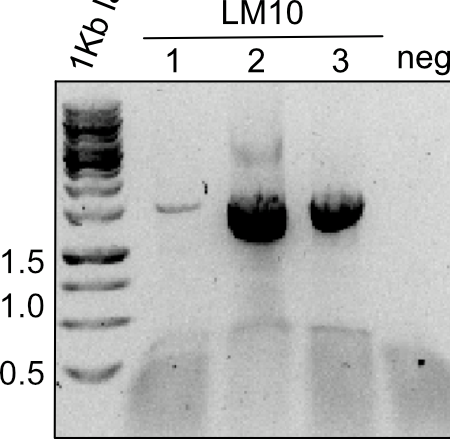
The team is now starting laboratory work, with the aim of trying to isolate peptides (small amino acids) that inhibit the growth of the bacterial pathogen Xylella fastidiosa. “We have established collaboration with researchers in different countries, through which we have obtained genomic DNA from different isolates [strains] of Xylella, and we are in the process of isolating the genes that code for the virulence proteins against which we want to select the peptides,” explains Cristina Azevedo.
Isolation of Xylella fastidiosa (strain LM10)
The director of Dep. 1 said that the team is also “starting to isolate bacterial endophytes [organisms that live inside a host] present in the xylem of olive varieties grown in the Alentejo region (Cobrançosa and Arbequina) and of an Italian variety that is resistant to Xylella (Leccino), from the Herdade de Reguengo, belonging to INIAV, Elvas center”.
The project's acronym, XfSTOP, stands for “Integrated approach to disease management for the biocontrol of Xylella fastidiosa in olive trees”. The olive tree is of enormous economic importance in Portugal, particularly in the Alentejo. The biopesticide to be developed will use a microorganism capable of coexisting in the same environment as the olive tree. Xylella, The plant will then produce a biological compound capable of eliminating the bacteria. This mechanism will be sustainable, environmentally friendly and non-toxic.


 Português
  English