News & Events

white plant

NEWS

AlViGen project strengthens genomic surveillance of agricultural diseases in Alentejo

The final workshop highlighted three years of research dedicated to the early detection of pathogens in crops such as wheat and olive groves.

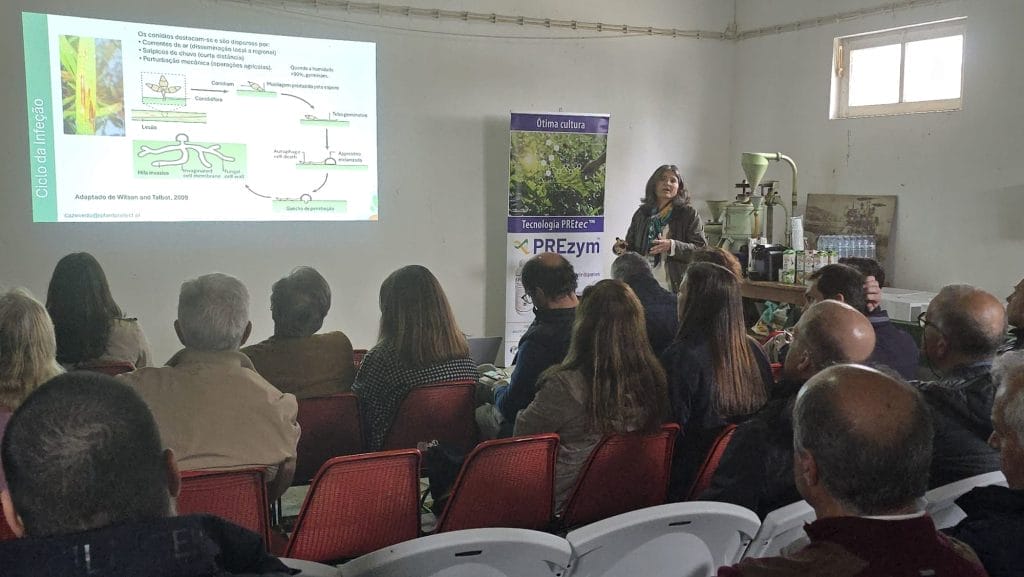
The project AlViGen has reached its final stretch, concluding three years of research focused on the genomic surveillance of agricultural diseases. The results now presented promise to strengthen the Alentejo agricultural sector's ability to respond to emerging phytosanitary threats.

On the day October 23rd, The final project workshop, The event brought together researchers, producers and technicians to share results and reflect on the future of genomic surveillance in Portuguese agriculture.

A pioneering genomic surveillance center

During AlViGen, the Alentejo's first genomic surveillance center, an infrastructure with capacity for early detection of diseases in strategic crops such as wheat and olive grove. This breakthrough marks a decisive step towards a more precise, sustainable and science-based agriculture.

Results and scientific contributions

Using innovative molecular tools, the project team succeeded:

  • Identify pathogenic fungi before visible symptoms appear on the plants;
  • Characterizing yellow rust strains, genetically linking them to others known at a global level;
  • Detecting resistance genes in wheat to the strains currently present in Portugal;
  • Developing diagnostic methods able to distinguish the different species of the fungus that causes gafa in olive groves.

During the workshop, the potential of the analysis of the airborne fungi community as a tool for early warning for multiple pathogens, allowing for more effective and preventive management of crop diseases.

From research to practical application

The event ended with a debate on how transform AlViGen results in a detection and warning service accessible to the agricultural sector. The initiative reflects the joint commitment between science, innovation and production, with a view to protecting national agriculture from the challenges of the future.

Partnerships and thanks

InnovPlantProtect would like to thank all the partners and funders of the project:
University of Évora, John Innes Centre, INIAV, De Prado, CERSUL, Eugénio de Almeida Foundation, Torre das Figueiras Estate, Almojanda, Malheiro Estate, Directorate-General for Food and Veterinary (DGAV), la Caixa“ Foundation”, BPI Bank e Foundation for Science and Technology (FCT).

Image credits: InnovPlantProtect - Inês Ferreira

InPP was in Italy for the kick-off meeting of the European PROSPER project

InPP took part in the kick-off meeting for the European PROSPER project, held on October 2 and 3 in Pavia, Italy. In attendance were the director of the Monitoring and Diagnostics Department, Ilaria Marengo, and the project manager, Bruno Orrico.

PROSPER's main objective is to transform European agriculture by valorizing highly resilient “orphan” legumes - forgotten crops, but full of potential to face the climate and food challenges of the future.

The project promotes sustainable, innovative practices adapted to different agricultural realities.

Over the two days, 27 partners from 13 countries met for presentations, in-depth discussions and strategic talks about the project's next steps.

We are excited about what comes next, certain that this journey will be more than a collaboration - it will be a true cooperation within an exceptional team.

Join us and keep up to date with all the news from the PROSPER Project!

InPP is part of the BioLivingLABS project, dedicated to the sustainability of inland territories

InnovPlantProtect (InPP) was present at the project launch meeting BioLivingLABS - Bioeconomia ao Serviço da Sustentabilidade dos Territórios do Interior (Bioeconomy at the Service of the Sustainability of Inland Territories), which took place on October 1st at the School of Agriculture of the Polytechnic Institute of Castelo Branco (IPCB).

Funded by COMPETE 2023, the BioLivingLABS project, led by MORE CoLAB - Laboratório Colaborativo Montanhas de Investigação, in partnership with the InPP, the IPCB, from AQUAVALOR and the Polytechnic Institute of Bragança (IPB).

This project's mission is to add value to the low-density territories in the north, center and south of the country by demonstrating and economically boosting the work carried out by the partners - through the creation, demonstration and application of products, processes and services resulting from joint research.

Four living laboratories will be created (Living Labs) in the innovation hubs of Mirandela, Douro, Covilhã and Elvas, which they intend to promote:

  • the transfer of knowledge;
  • technology demonstration;
  • strategic roadmapping and
  • the protection of intellectual property.

BioLivingLABS strengthens the link between academia, business and society, driving innovation and sustainability.

Expected impact:
Over the course of 24 months, and with Living Labs dedicated to sectors such as olive groves and olive oil, vineyards and wine, fruit and cereals, legumes, among others, the project will contribute to:

  • increase regional competitiveness;
  • promote sustainable practices and
  • responding to the environmental, social and economic challenges facing inland territories.

More news about this new project soon.

EVENTS

InPP marcou presença no Dia de Campo do arroz

A equipa do InnovPlantProtect (InPP) esteve presente no Dia de Campo da cultura do arroz, promovido pelo Centro Operativo e Tecnológico do Arroz – COTArroz, e que decorreu no dia 7 de outubro, nas instalações do COTArroz, em Salvaterra de Magos.

Durante este dia de campo foram apresentadas as atividades de investigação e inovação desenvolvidas pelo COTArroz, com destaque para a obtenção de variedades portuguesas de arroz já inscritas no Catálogo Nacional de Variedades. A sessão contou ainda com a apresentação das tendências e novos mercados do setor orizícola nacional.

A Ministra da Agricultura e da Alimentação, Maria do Céu Antunes, participou também neste dia destacando o papel fundamental do COTArroz no desenvolvimento do Programa Nacional de Melhoramento de variedades do arroz, liderado pelo Instituto Nacional de Investigação Agrária e Veterinária – INIAV, IP, que contribui para o reforço da viabilidade do setor deste cereal.

A diretora de departamento Cristina Azevedo e os investigadores Pedro Rosa, Rupesh Singh e Tiago Amaro estiveram presentes no Dia de Campo do Arroz que decorreu no passado dia 7 de outubro

InnovPlantProtect na Noite Europeia dos Investigadores em Évora 

A Noite Europeia dos Investigadores animou a Praça do Giraldo, com 19 pontos e dezenas de investigadores. O InPP como não poderia deixar de ser, marcou presença nesta noite para celebrar a ciência.

A Noite Europeia dos Investigadores (NEI) 2022 teve como tema “Ciência para Todos, Sustentabilidade e Inclusão”. Durante a tarde e noite de 30 de setembro, o evento juntou na Praça do Giraldo dezenas de investigadores da Universidade de Évora e da região do Alentejo em 19 stands de instituições científicas. O objetivo foi dar a conhecer à sociedade a ciência que se faz, através de jogos, debates, demonstrações, workshops, desafios e experiências, numa noite que chamou a cidade à rua.

O stand do InPP foi o ponto de encontro entre os investigadores do InPP e todos aqueles que quiseram descobrir a ciência que é desenvolvida no laboratório colaborativo. Recebemos a visita de miúdos e graúdos, das mais variadas regiões do país, que vieram a esta festa da ciência para conhecer o trabalho desenvolvido pelos nossos investigadores, bem como para ter a oportunidade de conhecê-los de perto.

Desde caixas com cera, farinha, aveia, alimento para as várias fases do ciclo de vida da traça da colmeia, a placas de Petri com fungos e bactérias, das mais diversas cores, formas e feitios, foram várias as atividades nas quais os nossos visitantes puderam participar.

A equipa do InPP teve ainda a oportunidade de conversar com agricultores que partilharam algumas das dúvidas que tinham sobre as pragas e doenças das suas culturas.

Obrigado a todos pela visita e até para o ano!

Saiba mais sobre a participação do InPP na NEI 2022 here.

A Noite Europeia dos Investigadores ocorre todos os anos e tem o objetivo de partilhar o trabalho dos investigadores com o público em geral.

InnovPlantProtect participou no evento final SmartAgriHubs

O InnovPlantProtect (InPP) esteve presente no evento final do SmartAgriHubs que teve lugar em Lisboa, de 26 a 28 de setembro. Este evento promovido pelo SmartAgriHubs, a maior rede de hubs de Inovação Digital na agricultura, foi dedicado ao reforço da colaboração entre os inovadores europeus e ao intercâmbio sobre a digitalização da agricultura europeia.

O evento foi composto por um dia exclusivamente reservado aos membros do projeto Horizon 2020 SmartAgriHubs (26 de Setembro) e de dois dias (27 e 28 de Setembro) abertos ao público com a participação de vários oradores do ecossistema europeu de inovação digital.

Os investigadores do InPP iLaria Marengo, Manisha Sirsat e Ricardo Ramiro representaram o laboratório colaborativo e tiveram a oportunidade de participar em várias atividades do programa composto por 44 workshops sobre agricultura de precisão, agricultura inteligente, dados, robótica e muito mais, 6 sessões plenárias, 19 pitches de projetos europeus financiados pelo Programa Horizon 2020, e várias atividades de networking.

O projeto DIMAP, liderado pelo InPP e o único projeto português aprovado no âmbito da linha PREPARE (uma linha que pretende apoiar a formação de consórcios que possam desenvolver experiências inovadoras relacionadas com a digitalização da agrigultura) do SmartAgriHubs, foi apresentado no primeiro dia do evento.

Saiba mais sobre o evento SmartAgriHubs here.

O SmartAgriHubs é uma rede de organizações que colaboram de modo a promover a digitalização do setor agro-alimentar e a interação entre diferentes atores deste ramo de atividade.

O projecto “DIMAP: A digital ecosystem for integrated disease management in pear orchards” visa reunir um consórcio para conceber uma experiência inovadora que permita detetar precocemente três das doenças mais importantes para a produção de pera: estenfiliose (causada pelo fungo Stemphylium vesicarium), fogo bacteriano (provocada pela bactéria Erwinia amylovora) e podridão branca das raízes (originada pelo fungo Rosellinia necatrix).