News & Events

white plant

NEWS

InPP attends the XVI National Maize Congress

InnovPlantProtect (InPP) was present at the XVI National Maize Congress, which also included the 2nd Meeting of Cereal Crops, organized by ANPROMIS, in collaboration with ANPOC and AOP. The event took place on February 11 and 12 at CNEMA in Santarém, bringing together national and international experts to discuss the sector's main challenges.

António Saraiva, Executive Director of InPP, took part in the panel “Cereal Production: What technical challenges are we facing?”, where he highlighted the decisive role of research in responding to the emerging challenges of cereal production, in a context of growing demographic, environmental and economic pressure.

“I'm proud that today, after seven years, we have 28 researchers working full-time on this topic, 12 of whom have PhDs, with experience in crops such as rice, which has been central to our work,” he said, emphasizing the multifunctional and international nature of InPP's teams.

He also pointed out that the work being done extends beyond rice to include maize, through ongoing projects and new operational groups focused on emerging crop problems. Among the initiatives in the spotlight is an application to Horizon Europe focused on developing improved and more resilient varieties.

For António Saraiva, anticipation is the key to success: “These challenges can't wait too long to be discussed or resolved. The sooner we anticipate the issues, the easier, more effective and more economical the solutions will be.”

In a debate that also marked the 40th anniversary of Portugal's integration into Europe and the role of the Common Agricultural Policy in the cohesion of the European Union, one message was clear across the board: “Climate change is the biggest threat we have.”

InPP thus reaffirms its commitment to innovation, science and the development of sustainable solutions for the future of cereal crops.

February 11: The many lives of women in science

There are days when science begins long before you enter the laboratory or the field. It starts at dawn, when the alarm clock goes off too early. When you mentally review the day's list: an experiment that can't be missed, a trip to the field that depends on the weather, an unfinished report, a meeting scheduled at the wrong time. In between, someone to wake up, someone to drop off, someone to call. And yet science moves forward.

At InnovPlantProtect, there are now 15 women who give a face to the science and innovation developed here. Women who represent commitment, demand, resilience, overcoming, quality, talent, excellence and creativity. But they are only part of a greater whole. There are many more - and each one brings with it a story that doesn't fit into a CV, a patent application or an article.

Today, February 11th, marks the International Day of Women and Girls in Science, a UNESCO initiative that underlines the importance of the female role in the production of scientific and technological knowledge and the need to continue promoting equal access to careers in science and innovation. Portugal has encouraging figures: women represent almost 50% researchers in the country. It's a relevant figure, reflecting decades of progress. But the figures don't show what happens between them.

Because science, for many women, is made up of fragile balances.

There are women with intense family lives, others with more solitary journeys, still others who build support networks outside traditional models, with effort and creativity. There are difficult choices and decisions, unexpected circumstances, forced breaks, changes of pace, different phases of life. All legitimate. Many are invisible when you only look at the end result of a project, an article or a biosolution developed. - but they all influence the paths of science.

One day, one of our researchers - let's just call her that - told us that she had finished a field trial close to sunset. The phone rang while she was putting away her materials. It was the school. A delay. Nothing extraordinary. It was business as usual. She came home exhausted, with dirt still on her boots, opened her computer after dinner and went back to her data, because the experiment couldn't wait.
“It wasn't a heroic day,” she said. “It was just a normal day.”

And perhaps that is what is most remarkable.

In the field of crop protection, the work is demanding, technical and often unpredictable. It takes place in the laboratory and in the field, between strict protocols and decisions made under real conditions. It requires persistence, adaptability, attention to detail and an integrated view of problems. Characteristics that so many women bring with them - not by nature, but by experience, by path, by everything they have learned to manage at the same time.

Each personal story profoundly shapes the way we do science. The doubts, the challenges, the forced breaks, the changes of pace, the new beginnings. None of this is left at the laboratory door. It all silently enters into the way we observe, question and build knowledge.

To celebrate the International Day of Women and Girls in Science is to recognise this reality as a whole. It is to honour the women who continue to do science despite the challenges — and often because of them. And it is to remember that innovation is also born from lives fully lived, shaped by imperfection, effort and courage.

Today we celebrate them. Not just for what they produce, but for all that they are. In science, in the field, in the laboratory - and in the life that happens in between.

InnovPlantProtect launches new website to mark 7 years of activity

O InnovPlantProtect (InPP), Collaborative Laboratory specializing in biological and digital solutions for crop protection, aligned with the emerging challenges of agriculture, will launch its new institutional website on January 24th, on a symbolic date marking 7 years working in the agricultural sector.

This launch is part of a phase of institutional evolution and consolidation InPP, reinforcing its strategy of proximity to the sector, clarity in the communication of its competencies and affirmation as a strategic partner for companies, producers, associations and public bodies.

An even clearer, more up-to-date and sector-oriented platform

With a renewed structure and a more intuitive browsing experience, the new website features:

  • an area of Services and Products completely reorganized, which facilitates access to specialized services, laboratory capabilities and biological and digital solutions developed by InPP, as well as to a updated catalog of services and biosolutions;
  • more complete institutional content that reinforces transparency, scientific rigor and CoLAB's mission;
  • a clearer presentation of scientific skills and research areas, highlighting the impact of the work carried out by InPP's multidisciplinary teams.

New image, same mission - but reinforced

The launch of the website is accompanied by the implementation of InnovPlantProtect's new visual identity, This reflects the maturity of CoLAB and its future ambitions.

The new image - accompanied by the slogan “Innovate together. Protect better.” - reflects InPP's ongoing commitment to:

  • Developing new generation biological and digital solutions;
  • Promoting safer, more innovative and more productive agriculture;
  • Strengthen collaboration and partnership with the agricultural sector and the innovation ecosystem.

A new phase for InPP

The digital and visual renovation is part of a broader strategy of maturity and consolidation, Through this initiative, InPP aims to strengthen its role as a scientific and technological partner for the agricultural sector in applied research and the development of crop protection solutions.

According to António Saraiva, InPP's executive director: “This new website isn't just a digital revamp - it's a reflection of the ambition we have for our future and how we want to communicate with the sector. We want every visitor to understand the purpose that drives us: to create innovative solutions that protect crops, boost productivity and contribute to more sustainable agricultural systems. InPP is entering a new phase, with a clearer, more accessible identity aligned with the real needs of agriculture and a renewed commitment to real impact on the ground.”

Available from January 24th

The new InnovPlantProtect website will be available from January 24th at: https://iplantprotect.pt/

EVENTS

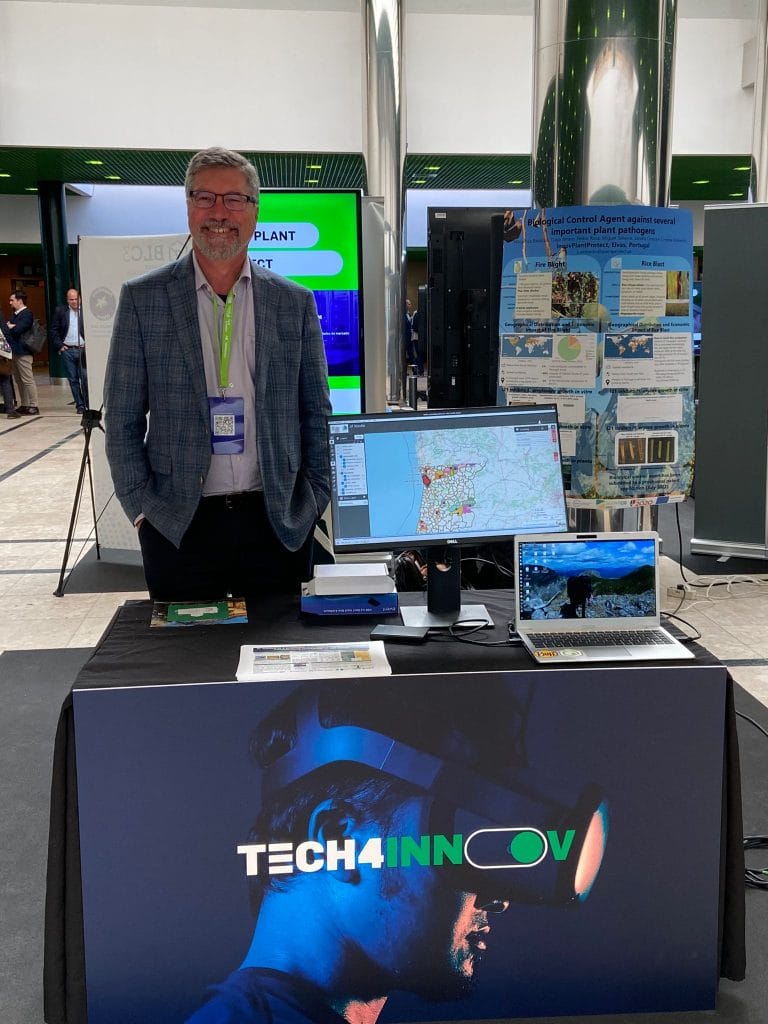
InPP marca presença no TECH4INNOV

Hoje, dia 29 de março, o InnovPlantProtect esteve no Europarque, em Santa Maria da Feira, no Porto, para participar no TECH4INNOV: o Presente e o Futuro da Inovação em Portugal, uma mostra tecnológica que junta várias atores do Sistema Nacional de Inovação (SNI) para darem a conhecer os resultados de projetos de Investigação e Desenvolvimento (I&D) e as tecnologias que têm desenvolvido, mostrando assim o melhor que se tem feito na transformação do conhecimento em inovação.

O evento, organizado pela Agência Nacional de Inovação (ANI), teve como principal objetivo promover as atividades de transferência de tecnologia e do conhecimento, potenciando a sua valorização e comercialização permitindo uma maior e melhor articulação entre as empresas e entidades do Sistema Científico e Tecnológico Nacional.

Durante o dia foram expostas novas tecnologias assim como discutidas novas perspetivas e soluções disruptivas em painéis de debate com convidados nacionais e internacionais e espaços de demonstração, onde estiveram patentes casos de sucesso desenvolvidos por Centros de Tecnologia e Inovação (CTI), Laboratórios Colaborativos (CoLAB), Gabinetes de Transferência de Tecnologia (TTO), Digital Innovation Hubs, entre outras entidades do SNI.

More information about the event here.

Vertical Algae Project presented this Monday in Faro

Yesterday, March 27, saw the launch of the Vertical Algae project, part of the Blue Bioeconomy Pact mobilizing agenda, led by Inovamar, and in which InnovPlantProtect (InPP) is involved, at the University of the Algarve in Faro.

InPP was present to present the agricultural activity it coordinates, in partnership with the collaborative laboratory GreenCoLAB, The aim of the project is to identify, produce and test algae-based biopesticides and biostimulants to make agriculture more sustainable.

The public session included speeches by Miguel Marques, Chairman of Inovamar's Board of Directors, João Navalho, Chairman of Necton's Board of Directors, José Apolinário, President of the Algarve Regional Coordination and Development Commission and Pedro Valadas Monteiro, Algarve Regional Director for Agriculture and Fisheries. The initiative also included a round table, moderated by Necton, with the participation of all the previous speakers.

The Vertical Algae consortium, which involves a total of 38 entities, including companies, universities, CoLABs and Research and Development (R&D) centers, will have funding of 44 million euros, and aims to provide the national algae sector with the necessary capacity and competitive advantages, based on new sustainable products, processes and services, to compete in global markets and raise the national brand in the European blue bioeconomy.

In addition to this consortium, led by Necton, linked to the algae sector, launched this Monday in the Algarve, this mobilizing agenda includes six more secondary consortia, linked to the creation of new industries: biomaterials, bivalves, textiles, food, animal feed and fish.

Vertical Algae is co-financed by the Next Generation EU Funds, through the Recovery and Resilience Plan (RRP), and is the largest initiative in the Blue Bioeconomy Pact agenda.

Financing:

ABC Project carries out first field activity with students

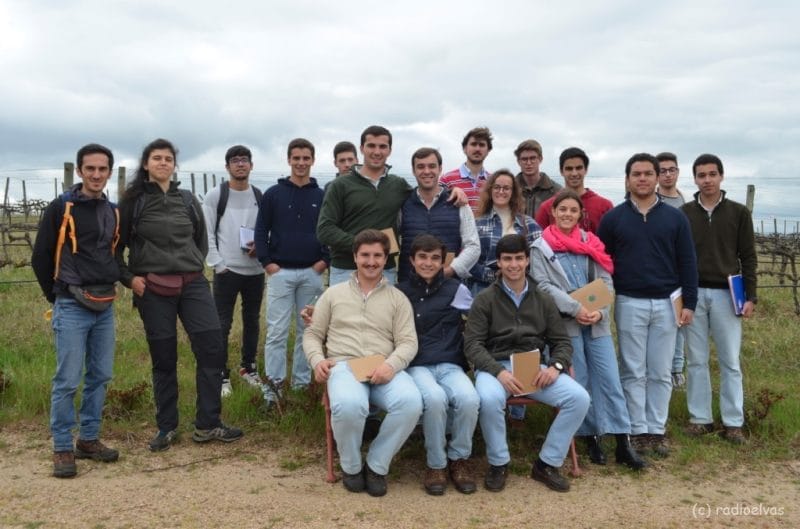
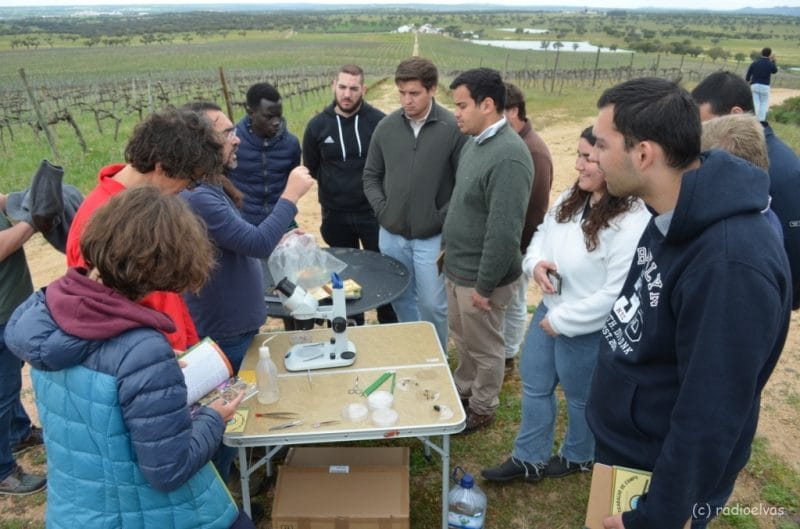
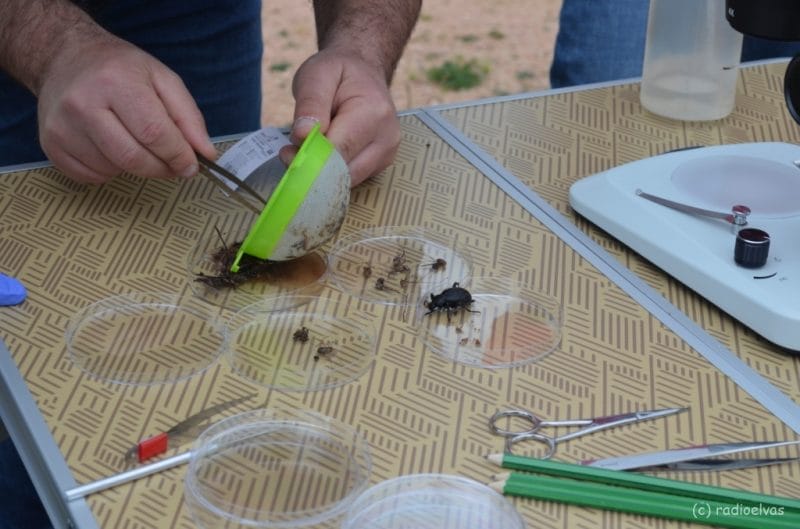
The ABC - AgriBioCircular project team held its first field activity with students from the D. Sancho II Secondary School and the Escola Superior Agrária de Elvas this Friday, March 24, at the Reynolds Wine Growers estate in Arronches.

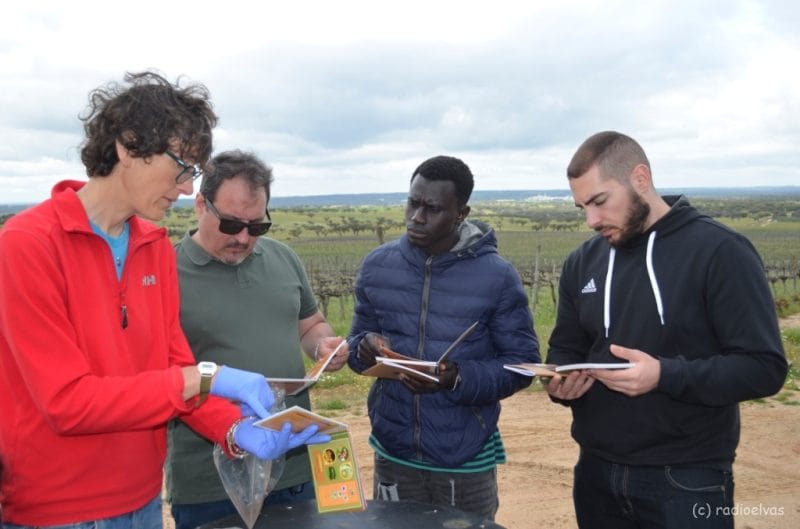
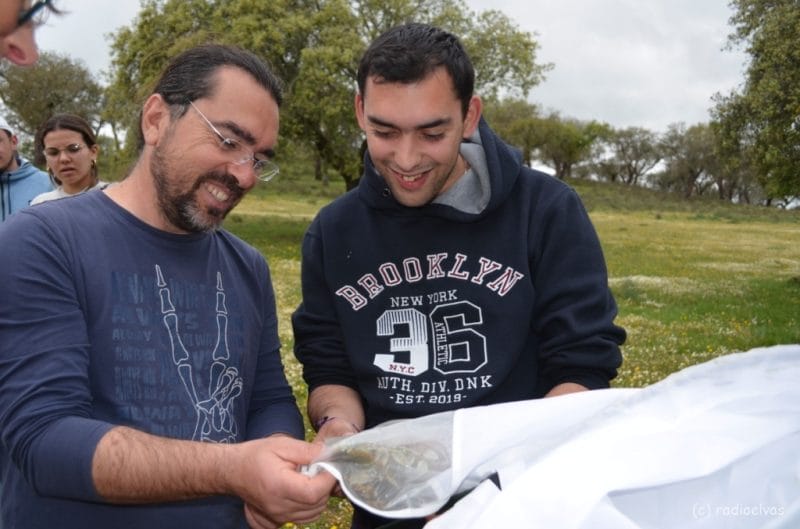
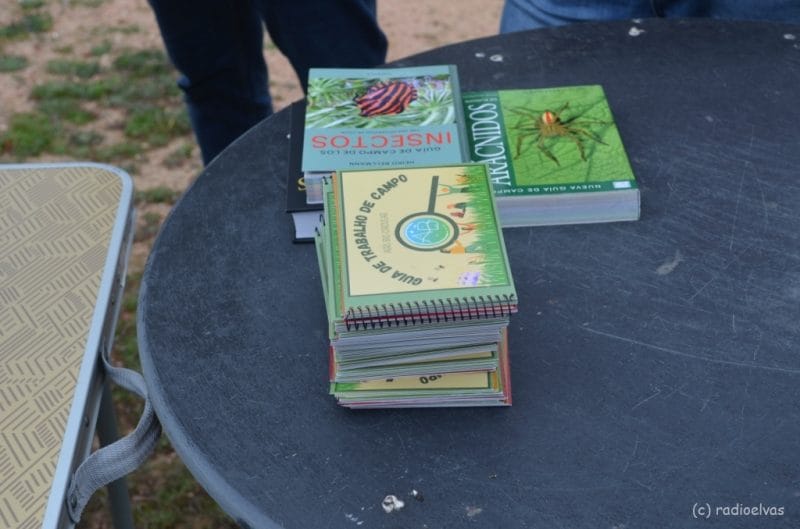
During the field activity, the students had the opportunity to learn how to identify the insects found in each habitat and experiment with different techniques for sampling insects and microorganisms, both using traditional techniques and more technologically advanced ones, using sensors and artificial intelligence.

“The aim is to put into practice, in the olive groves and cork oak forests of this property, what was worked on in the classroom, namely to teach the students how to identify the insects found in each habitat, using traditional (...) sampling techniques, as well as others that are more technologically advanced,” explained Nuno Faria, an IPP researcher.

The aim is for the students “to be able to identify what they see in the field, as well as to learn which insects are useful in ecosystems, but also those that are potentially pests and harmful to crops in the Alentejo,” added the researcher.

The ABC - AgriBioCircular project, led by InPP, is funded by the Environmental Fund program, under the National Environmental Education Strategy (ENEA 2022).

Find out more about the field trip in the Rádio ELVAS news item here.

Image credit: Rádio Elvas