
BACKGROUND
The bacteria Xylella fastidiosa was detected four years ago in Portugal in lavender plants at a zoo in Vila Nova de Gaia, Porto. Associated with diseases that have been devastating for agriculture, this bacterium affects a wide variety of trees, shrubs and herbaceous plants - common in urban and rural spaces or of high economic value - that can be host to this bacterium, such as olive, grapevine, almond, citrus, cork oak, acacia, walnut, plane tree, rosemary or rosemary.
A X. fastidiosa lives inside the plant, more specifically in the xylem vessels that transport water and nutrients from the roots to the stems and leaves.
Its transmission can come from human activity, through the transportation of contaminated plants, but also from an infected plant to a healthy one, through insect vectors that are ‘specialists’ in feeding on the sap in the xylem of plants, such as leafhoppers, which pierce the xylem of the plant to extract water and nutrients.
Given that these insect vectors play a fundamental role in the spread of X. fastidiosa, It is necessary to collect data on the seasonal development and life cycle of vectors to support a quantitative approach to risk assessment, as well as the development of integrated pest management measures to control vectors in the field, both in conventional and organic farming systems.


OBJECTIVES
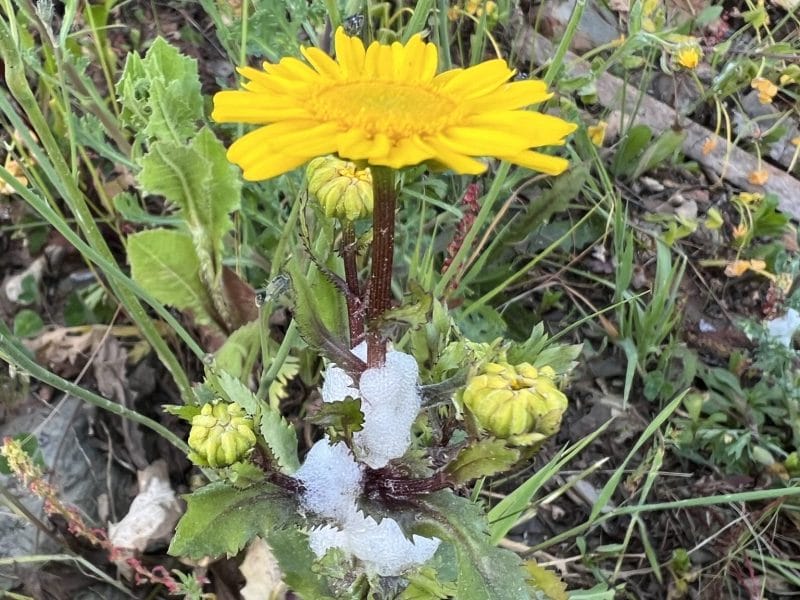
The XVectors.pt project - Biology of insect vectors that feed on xylem sap and potential vectors of Xylella fastidiosa in Portugal aims to study foam leafhoppers, a group of insects with several species present throughout Europe and very common in Portugal (e.g. Philaenus spumarius, Neophilaenus campestris). These insects feed on the xylem of a multitude of host plants, from trees to shrubs or herbaceous plants, and are considered by several experts to be the main vectors of X. fastidiosa in Europe.
In more detail, the specific objectives of this project are:
- Contribute to knowledge of the feeding biology of insect vectors and potential vectors of X. fastidiosa in Portugal;
- Identify the main insect vectors of X. fastidiosa in Portugal, particularly the most abundant species and those with the greatest potential risk;
- The project also aims to relate meteorological variables to the spatial and temporal distribution of the various species of leafhoppers. InPP is involved in the project as a service provider.


ORGANIZATIONS INVOLVED

FINANCING


 Português
 English