
BACKGROUND
In recent years, the green leafhopper (scientific name Jacobiasca lybica) has emerged as a key pest in Mediterranean vineyards. This pest causes early senescence of the leaves, first curling, then turning reddish in red varieties or yellow in white varieties and finally drying out, reducing the photosynthetic activity of the plants, productivity and quality of the grapes. In 2021, InnovPlantProtect (InPP) began monitoring this pest in some of João Portugal Ramos' vineyards in Estremoz.
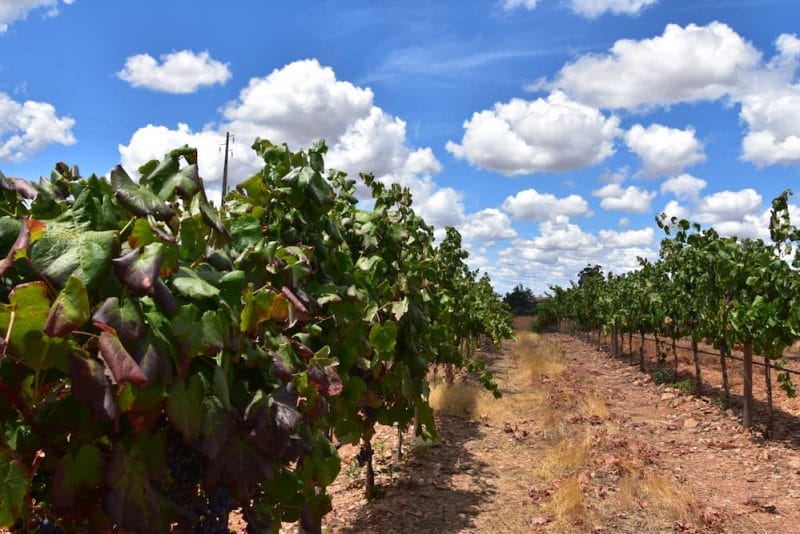
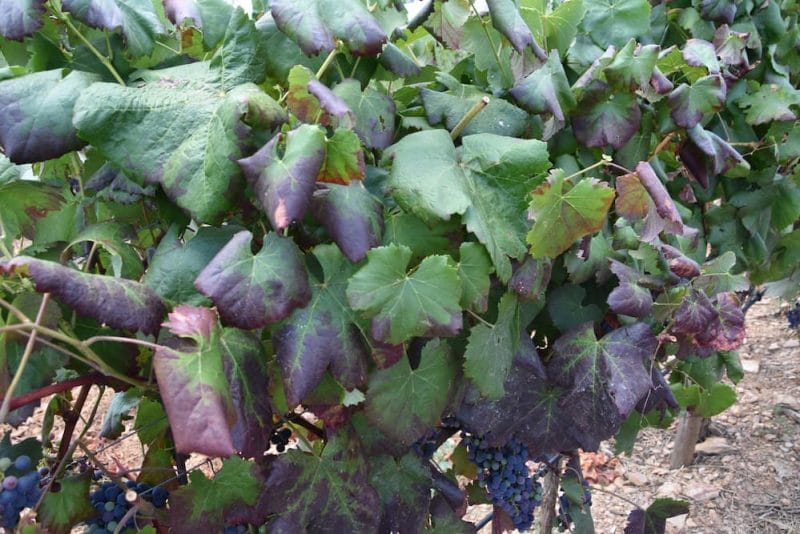

Based on the data collected so far, it has been possible to understand the dynamics of the pest and some spatial patterns of infestation related to weather data and the presence of adults. InPP has developed a risk forecasting model capable of alerting the appearance of symptoms of critical severity 2 weeks in advance.
The next challenge is to find ways of using precision agriculture, such as artificial intelligence (AI) and drones, to support the risk prediction model and increase the accuracy of the spatial and temporal occurrence of leafhopper infestation in the field.
Part of the challenge of using digital technology in the field is to make it accessible and usable for farmers. Increasingly, the monitoring of plant pests and diseases will benefit from AI and automation (computerization), so one of the main challenges for producers is to integrate digital tools such as cell phones, drones, IoT sensors, webGIS applications into conventional monitoring plans.


SYNOPSIS
The AI4Leafhopper project was one of the 5 projects awarded by the ICAERUS project of Horizon Europe within the scope of the first application dedicated to developing innovation. InPP will develop the innovative system that uses data collected at air and ground level, combining RGB and multispectral images from drones with leafhopper population data from conventional chromotropic traps. In addition, data from weather stations and a field spectrometer will be added to complete the database.
The system will be designed to inform the farmer when, where and with what intensity the leafhopper is attacking his vines, predicting the risk of the critical level of symptoms up to two weeks in advance and, hopefully, detecting symptomatic plants in advance.
In this way, the AI4Leafhopper solution will help wine producers control infestations by automatically providing both spatial and temporal indications of where leafhoppers are beginning to damage the vineyard.
The digital solutions proposed by AI4Leafhopper will enable wine producers:
1) minimize the environmental impact of pesticide application (by reducing phytochemical applications and CO2 emissions), due to the precise (spatial and temporal) application of these compounds;
2) reduce the costs of chemical pesticide applications and sugar inputs in the winery (necessary to correct the effect of the leafhopper on the grapes);
3) make better use of their working hours and resources, by reducing the time dedicated to pest surveillance and allowing faster decisions on pest control.
In this way, producers will be able to generate higher revenues, increasing production, yields and grape quality.
OBJECTIVES
1. Develop a pipeline of early detection of leafhopper symptoms, using multispectral data acquired by drones to automatically detect and classify the severity class of each vine's symptoms.
2. Develop a drone flight recommendation model, based on the InPP risk prediction model, to indicate whether drones should be deployed two weeks in advance.
3. Develop a cell phone alert communication system that informs farmers about: predicting the risk of leafhopper symptom severity; recommending drone flight times; first symptoms of leafhopper infestation in vineyards.
ACTIVITIES
2. Monitoring symptom levels due to airborne leafhopper attack.
3. Development of a model for automated processing and analysis of drone images.
4. Improvement of the risk prediction model based on meteorological and leafhopper population data.
5. Development of a warning system based on the integration of risk forecasting models and drone images.
6. Promotion and demonstration of solutions.
ORGANIZATIONS INVOLVED

FINANCING


 Português
  English