Já está disponível a iCountPests, uma nova aplicação desenvolvida pelo InnovPlantProtect para apoiar a monitorização de pragas agrícolas através da análise automática de imagens captadas em campo.
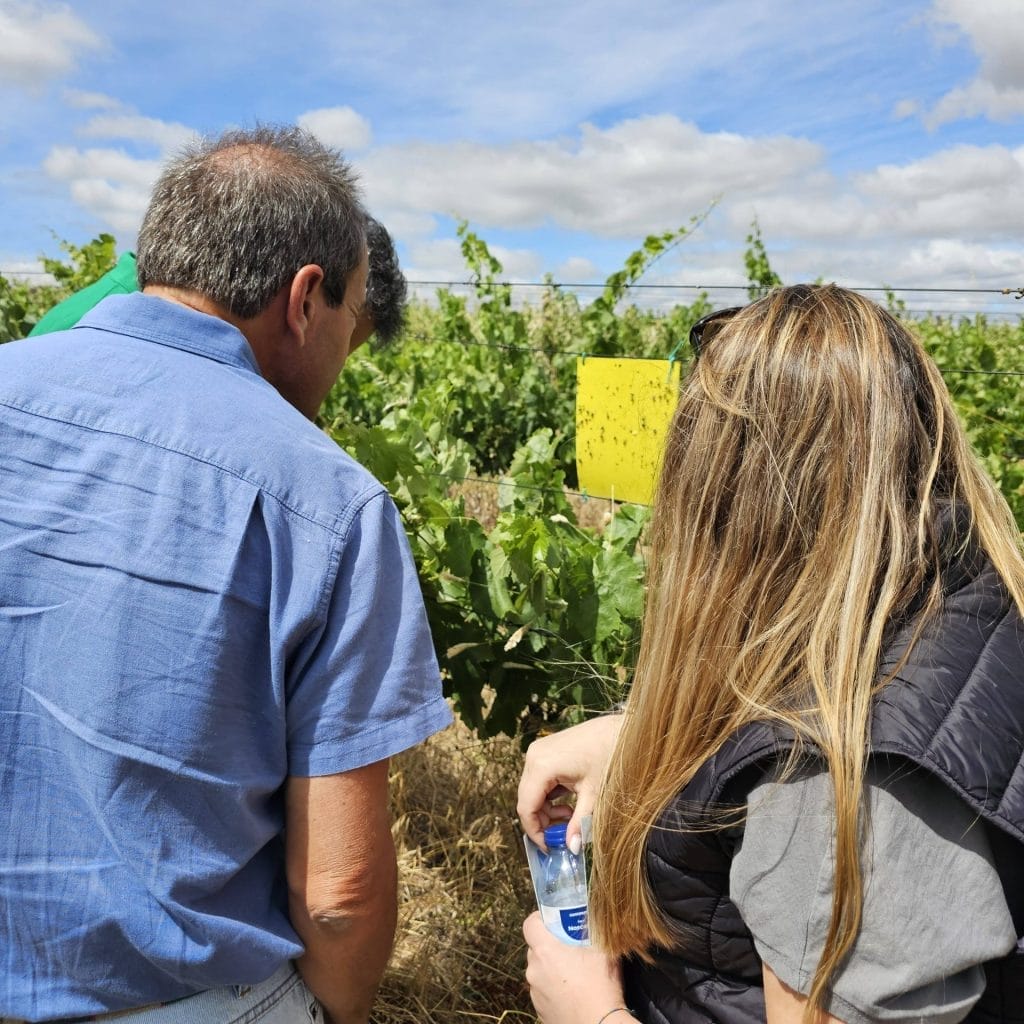
A app utiliza inteligência artificial para contabilizar automaticamente pragas presentes em armadilhas adesivas, permitindo obter resultados rápidos e fiáveis diretamente no telemóvel.
Pensada para produtores e técnicos agrícolas, a iCountPests contribui para uma monitorização mais eficiente e precisa, reduzindo o tempo associado às contagens manuais e apoiando a tomada de decisão na proteção das culturas.
O funcionamento é simples:
Captar uma imagem da armadilha
Analisar automaticamente
Consultar resultados organizados e acessíveis
A app permite ainda acompanhar a evolução das pragas ao longo do tempo, facilitando a gestão e o registo da informação no terreno.
A monitorização de pragas é uma tarefa essencial na gestão agrícola, mas continua a depender, em muitos casos, de processos manuais demorados e sujeitos a erro.
A pensar nesta realidade, o InnovPlantProtect irá lançar brevemente a iCountPests, uma aplicação inovadora que utiliza inteligência artificial para automatizar a contagem de pragas a partir de imagens captadas no campo.
Com a iCountPests, será possível obter resultados rápidos e fiáveis, contribuindo para uma tomada de decisão mais informada e eficiente na proteção das culturas.
A aplicação estará brevemente disponível, sendo direcionada a produtores agrícolas e técnicos que procuram otimizar o tempo dedicado à monitorização e melhorar a precisão dos dados recolhidos.
Uma nova tecnologia de revestimento biológico de sementes desenvolvida pelo InnovPlantProtect (InPP), em colaboração com a Fertiprado, poderá vir a transformar o desempenho de pastagens e forragens, contribuindo para sistemas agrícolas mais eficientes e sustentáveis.
Baseada em compostos derivados de algas, esta solução inovadora apresenta efeito bioestimulante e foi concebida para atuar desde as fases iniciais do desenvolvimento das plantas. Os ensaios realizados demonstraram resultados promissores ao nível da estimulação da nodulação em leguminosas, do crescimento vegetativo e da resistência das plantas a condições adversas, com impacto positivo no valor nutricional do pasto.
Este desenvolvimento resulta de um percurso de investigação conjunta que decorreu ao longo de cinco anos, refletindo o compromisso contínuo do InPP em transformar conhecimento científico em soluções com aplicação prática no setor agrícola. A tecnologia encontra-se atualmente em processo de patenteamento e representa um marco relevante no pipeline de inovação do laboratório.
Para a Fertiprado, parceiro estratégico neste projeto, esta tecnologia constitui uma alternativa aos revestimentos tradicionais baseados em compostos sintéticos, reforçando a aposta em soluções mais sustentáveis e alinhadas com as necessidades futuras da agricultura.
O desenvolvimento desta solução insere-se na Agenda Mobilizadora Pacto da Bioeconomia Azul, financiada pelo Plano de Recuperação e Resiliência (PRR), iniciativa que promove a valorização de recursos marinhos através da criação de novos produtos e tecnologias. Como parte do processo de valorização da tecnologia, foi assinado um memorando de entendimento com vista à sua futura exploração comercial.
Num contexto em que a procura por biosoluções agrícolas continua a crescer, iniciativas colaborativas como esta demonstram o papel fundamental da investigação aplicada na resposta aos desafios da sustentabilidade e da produtividade agrícola.
Investigação com impacto no setor agrícola
O trabalho desenvolvido pelo InPP evidencia o valor da colaboração entre ciência e indústria, permitindo acelerar processos de inovação e criar soluções ajustadas às necessidades reais do setor agrícola.
A parceria com empresas constitui um dos pilares estratégicos do InPP, promovendo a transferência de conhecimento científico e o desenvolvimento de tecnologias que contribuem para sistemas agrícolas mais resilientes e sustentáveis.
Professor Pedro Fevereiro, CEO of InnovPlantProtect
InnovPlantProtect was present at the Science 2020 Meeting, which took place on November 3 and 4 at the Lisbon Congress Center in a hybrid format (face-to-face and online). Pedro Fevereiro, CEO of InPP, spoke about the activity of this Collaborative Laboratory in Elvas and its objectives for protecting Mediterranean crops from pests and diseases.
After 18 of the 26 Collaborative Laboratories (CoLAB) recognized in Portugal were presented on the first day of the Ciência2020 Meeting, the event continued yesterday with the presentation of eight more CoLAB, including InnovPlantProtect (InPP).
In the session dedicated to Biodiversity and Forestry and Agri-food (session 3), moderated by ANI-National Innovation Agency, InPP's CEO, Pedro Fevereiro, gave a short seven-minute presentation in which he spoke about the importance of InPP's activity in the current context of major challenges for food production.
This Collaborative Laboratory based in Elvas is trying to develop innovative biological solutions to protect agricultural crops from the effects of emerging pests and diseases for which there are no solutions on the market. These pests and diseases, due to the increase in global average temperature, are moving and settling in territories where they didn't exist before, including Portugal.
If the current situation is serious - “around 40% of the world's crop production is lost to pests and diseases every year”, as Pedro Fevereiro pointed out - imagine what it will be like when the average global temperature rises by the much-feared 2 degrees Celsius. “Climate change is increasing the risk of new pests and diseases emerging and expanding the areas affected. This problem, coupled with the EC's decision to discontinue traditional active molecules [synthetic agrochemicals] in Europe, imposes the need to develop alternative solutions,” warned the researcher who leads InnovPlantProtect, stressing that this is precisely the focus of the activity of the CoLAB he leads.
NASA map shows global temperature variation in 2019
In this sense, sustainability is the concept that best characterizes the products that InPP is developing. “New solutions for protecting Mediterranean crops must be more sustainable. In addition to new biopesticides based on oligopeptides and small RNAs, and formulated with biocompatible micro or nanoparticles, InPP will develop new plant varieties through genome editing and molecular selection assisted by molecular markers,” he explained.
With regard to the most interesting crops for the application of these solutions, Pedro Fevereiro gave a list of fruits and cereals whose production is of great importance to the national economy: olive trees, pears, grapes, cherries, blackberries, raspberries, strawberries, citrus fruits, tomatoes, almonds, corn, wheat, barley, oats and rice.
In addition to products, InPP will also provide services for the identification and molecular diagnosis of pests and diseases, as well as the “characterization of matrices using Fourier Transform Infrared (FTIR) spectra analysis, the molecular certification of plant varieties, the monitoring and diagnosis of pests and diseases, the creation of models for the spread of agricultural pests and diseases, forecasting models based on remote sensing data and risk models for emerging pests and diseases.
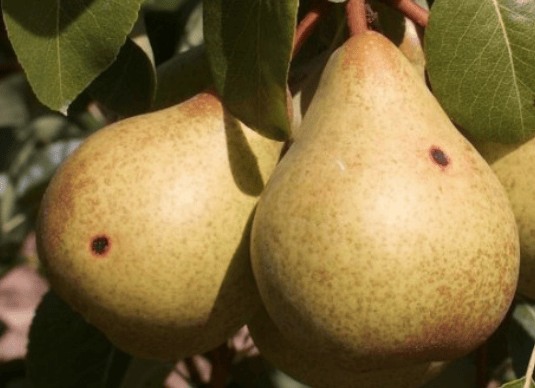
Rocha pear stenosis
Image credit: Voz do Campo
Pedro Fevereiro concluded his presentation at the Ciência2020 meeting with a summary of InPP's agenda for the coming months. In this regard, he revealed that InnovPlantProtect, the only one in Portugal working in this area of innovation, intends to develop a biopesticide to control the Xylella fastidiosa, a molecular strategy to control stenphyliosis in Rocha pears, tools based on geographic information systems to assist public and private decision-making in pest and disease control, an Artificial Intelligence-based early detection system for the early detection of the decline of cork oak forests produced by Phytophthora, Finally, to identify bread wheat alleles resistant to the new “Warrior” race of yellow rust and mobilize them in the desired varieties.
InnovPlantProtect will be present today at the Science 2020 Meeting, which is taking place at the Lisbon Congress Center in a hybrid format (in person and online). Pedro Fevereiro, CEO of InPP, will talk about the activity of this Collaborative Laboratory and its objectives in protecting agricultural crops from pests and diseases.
After 18 of the 26 Collaborative Laboratories (CoLAB) recognized in Portugal were presented in two sessions yesterday, the Science 2020 Meeting continues today with the presentation of eight more CoLAB, including InnovPlantProtect, a private non-profit association based in Elvas that is trying to develop innovative biological solutions for crop protection.
In today's session, dedicated to Biodiversity and Forestry and Agri-food (session 3), InPP's CEO, Pedro Fevereiro, will give a seven-minute presentation in which he will talk about the importance of InPP's activity, the products and services that its team of researchers is trying to develop to protect agricultural crops from biotic and abiotic factors, including climate change and new emerging pests and diseases that, due to the increase in global average temperature, are moving and settling in regions where they didn't exist before.
Session 3, moderated by the National Innovation Agency, will take place between 11.30 and 12.30.