
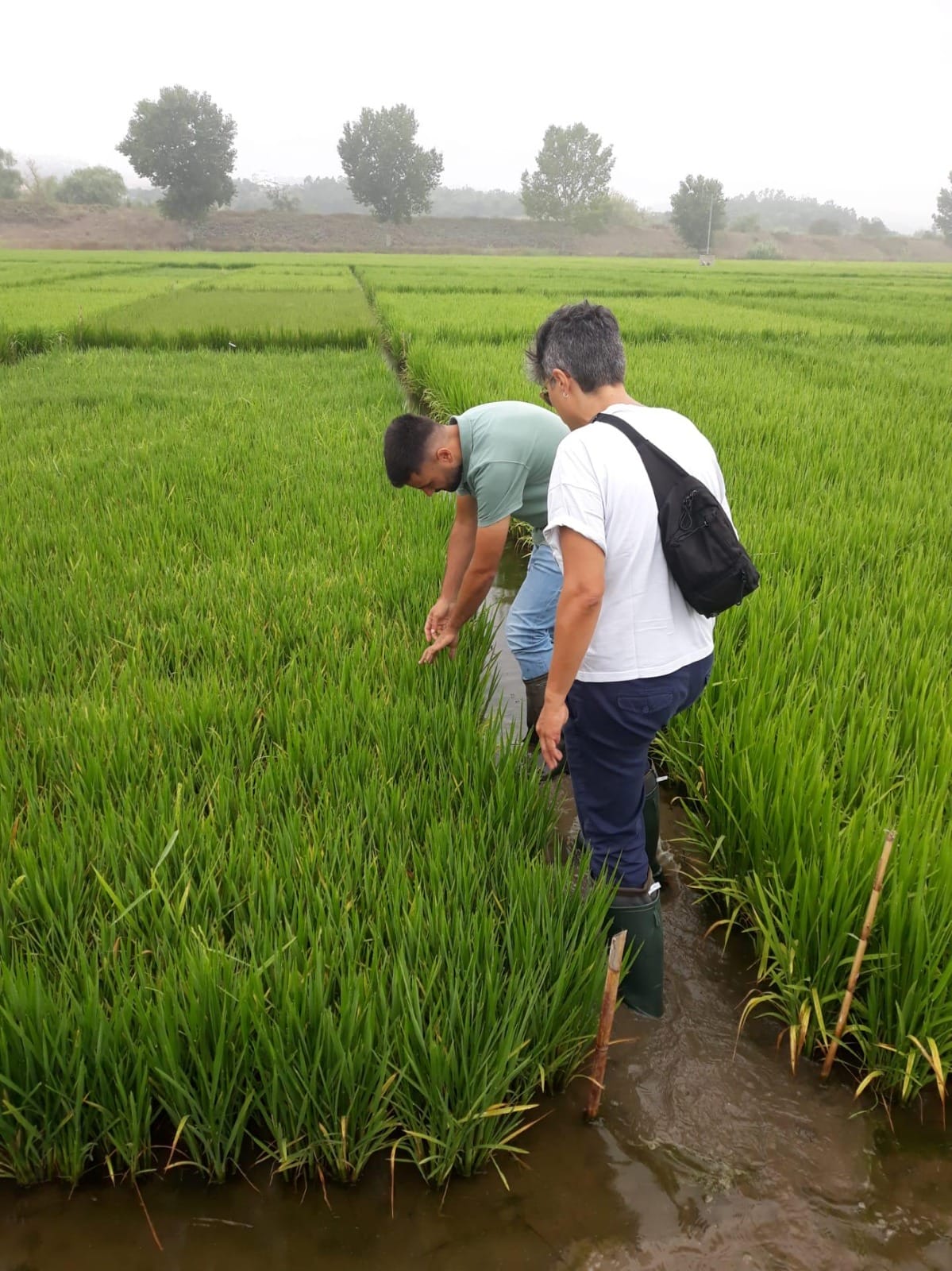
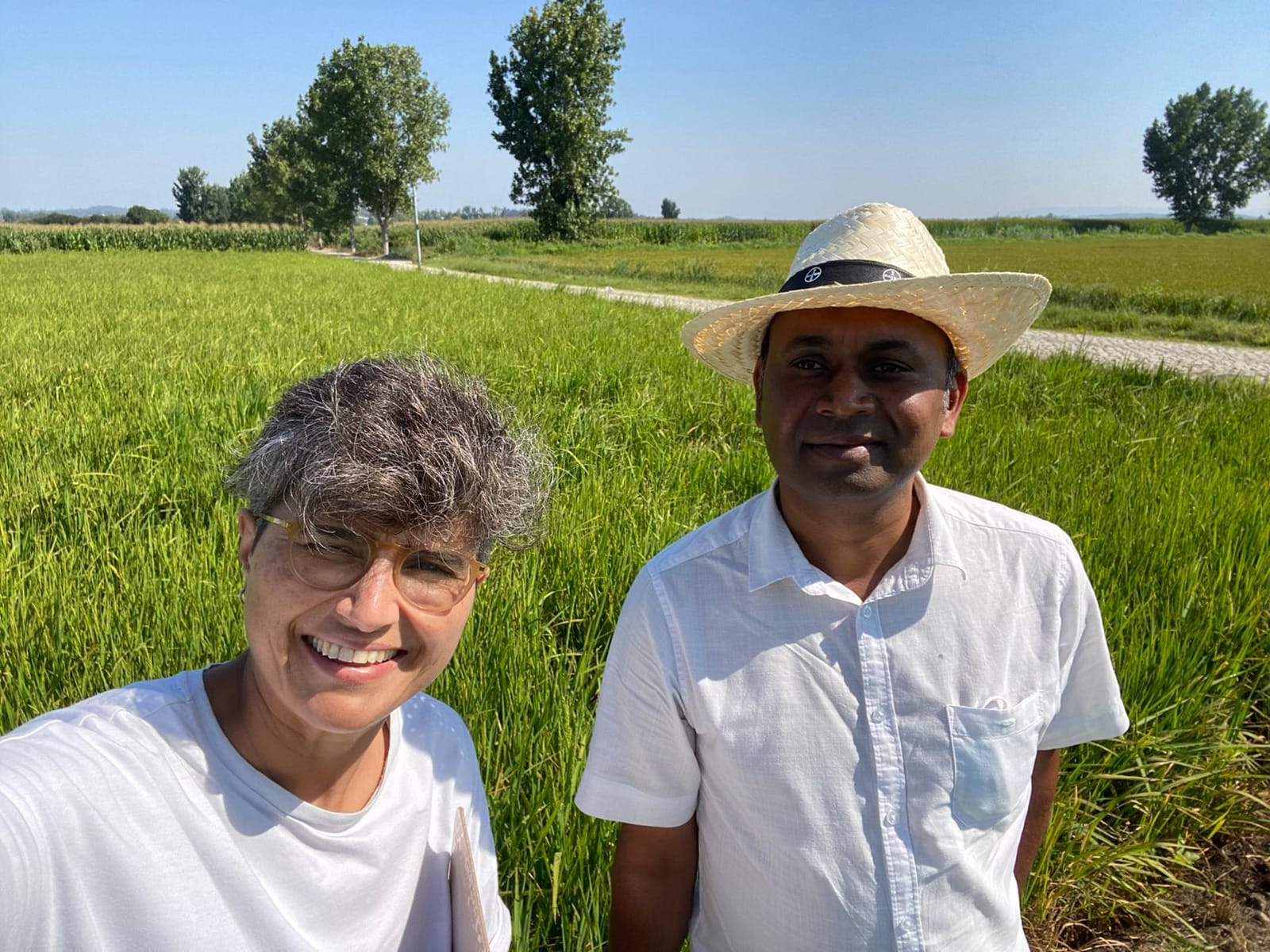
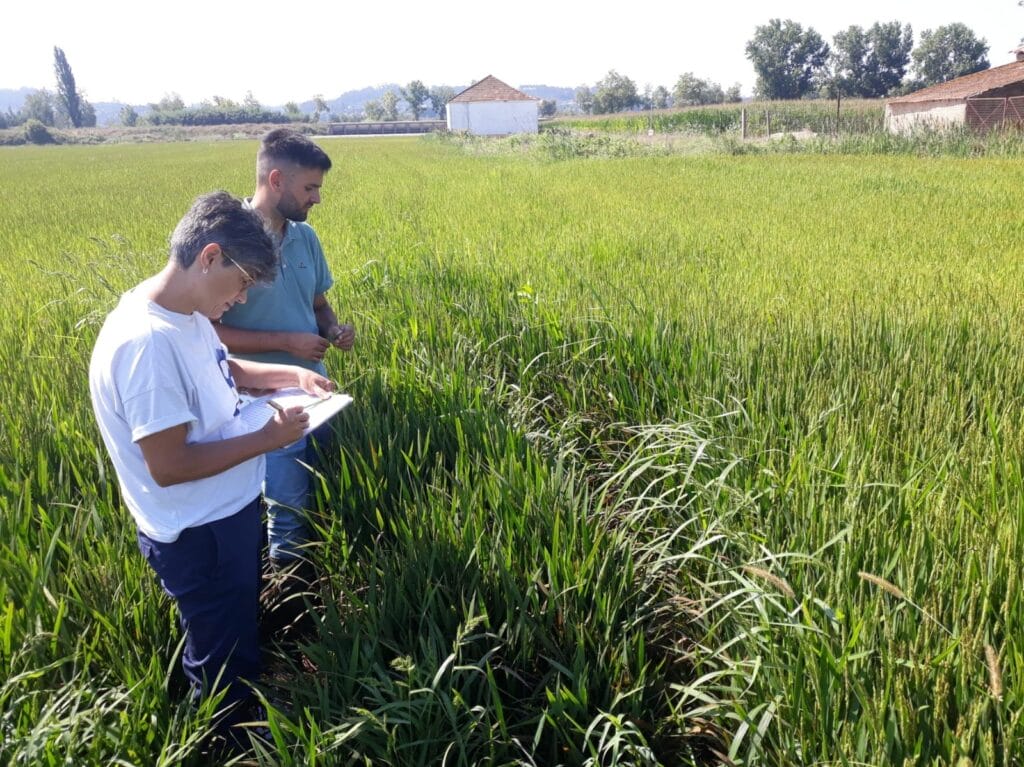
On August 1st, researchers from InnovPlantProtect (InPP).., Cristina Azevedo e Rupesh Singh, traveled to the Mondego area, in Montemor-o-Velho, to collect samples of rice infected with the fungus Magnaporthe oryzae, This is the cause of pyriculariosis, one of the most common diseases of this cereal all over the world and also in Portugal. The crops were harvested as part of the BlaSTOP project - Developing integrated solutions to combat rice pyriculariosis.
The InPP team, which has been working on the development of biopesticides against rice pyriculariosis, will now analyze the collected rice samples in the laboratory, with the aim of isolating and genetically characterizing the isolates (the cultures of microorganisms) currently present in the Mondego basin, in order to know the current genetic diversity of Magnaporthe oryzaein Portugal.
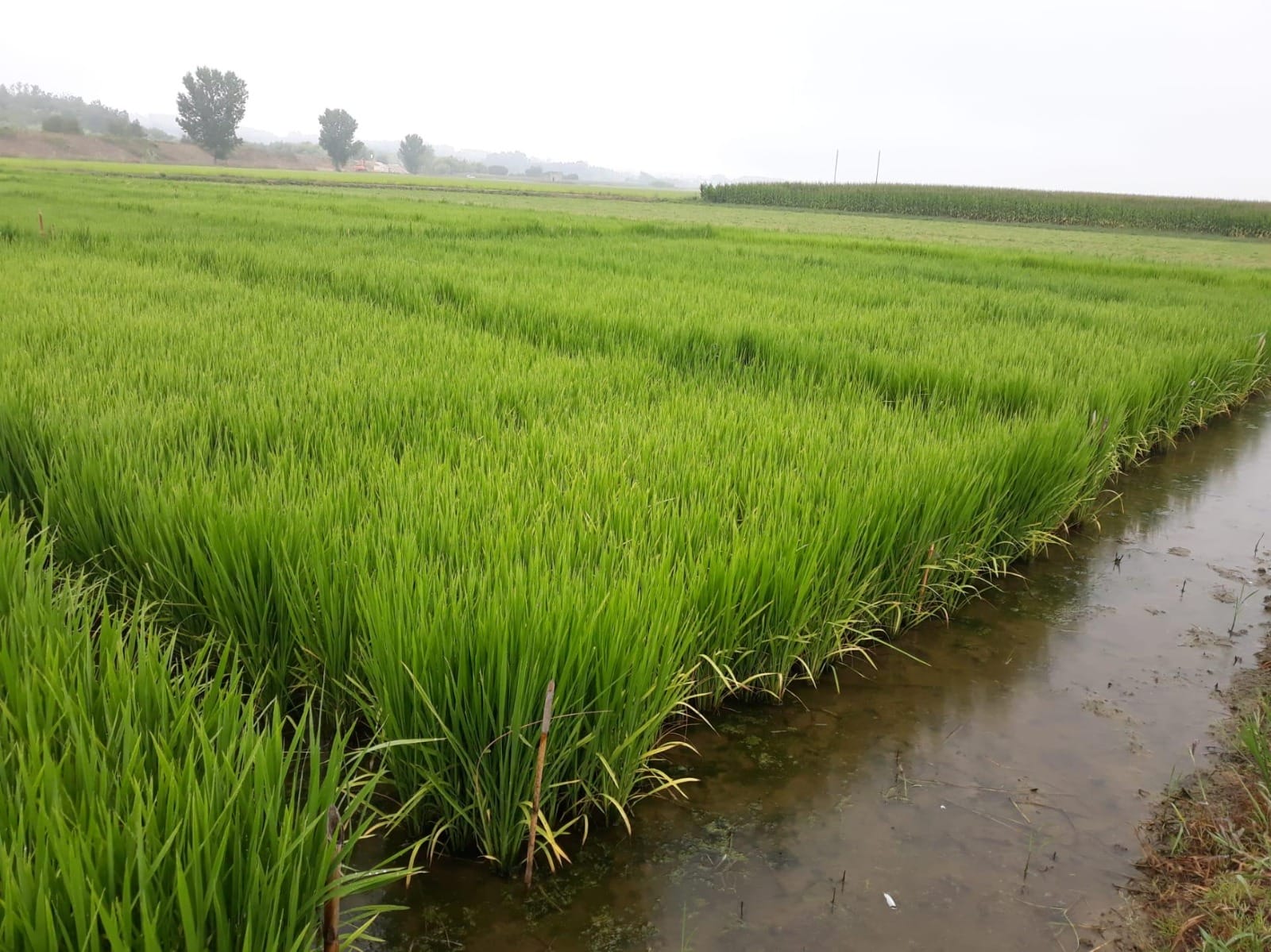


In the future, these collections will allow researchers to carry out a genetic analysis that compares the cultures of microorganisms from Magnaporthe oryzae currently present in this area of the Mondego and those isolated in the 1990s by the team from the INIAV in the national rice breeding program, in order to study the evolution of virulence, i.e. the degree or capacity of this fungus to cause the disease.
The fieldwork was carried out with the collaboration of António Jordão, a technician from Regional Directorate of Agriculture and Fisheries of the Center (DRAP Centro), and Danny Carvalheiro, a Master's student at the Higher Institute of Agronomy (ISA).
The BlaSTOP project aims to develop a sustainable and effective solution for controlling rice pyriculariosis caused by this fungus. The project has the support of COTArroz - Operational and Technological Center for Rice and Casa do Arroz, in the Tagus basin, and the Aparroz - Agrupamento de Produtores de Arroz do Vale do Sado Lda, in the Sado basin, where the team hopes to collect in the near future.
 Português
 English